
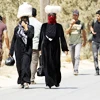

Mr. Obama, humanity is not an election promise,” is the message from the citizens of Aleppo, Syria, to the American president after his shock announcement that he will seek Congressional approval for military action against Bashar Assad’s regime. The war drums have been beating loudly since news of hundreds of deaths and thousands more injuries from poison gas broke in the early hours of Aug. 21.
Obama’s decision not to take unilateral action is seen as being in no small part influenced by the failure of the UK’s Prime Minister David Cameron to secure parliamentary support for military action in a vote on Thursday.
As the citizens of the United States and Britain have debated the possibility of their countries becoming involved in the drawn out and bloody conflict, nobody has been more conscious of the possible impact of these strikes than Syrians themselves.
Cars loaded with the worldly possessions of Syrian families have been flowing over the border with Lebanon. In Iraqi Kurdistan too, large camps have formed in Erbil, housing thousands of refugees who have fled Kurdish-ISIS in-fighting in the north of the country. Militant groups have issued instructions to their commanders to move their bases and prepare for imminent strikes.
In Aleppo, Syria’s largest city, which is divided between regime and rebel-held areas by an active front line that cuts the city in two, reactions reflect the opinions of people once imbued with hope — hope for a democratic revolution, hope for humanitarian intervention — but replaced now with resignation and cynicism.
“You know it’s a political strike more than a martial one,” says Mahmoud, an agricultural engineer from Deir Ez-zour, who now lives in Aleppo. “The country is already destroyed by war; there’s already fighters from every nationality. It will cost a lot: especially it will cost the blood of the unarmed civilians. And it may cost the dream of the revolution to not happen.” Civilians in rebel-held areas of the city unanimously agree that chemical weapons were used in Damascus by Assad’s forces.
Living under the will of a regime that is unpredictable and often times vengeful when provoked, now that the international rebuke of the regime has been issued, citizens fear a lack of action may leave them exposed to increased violence. Kawa, a teacher from east Aleppo, suggested that if attacks now were not forthcoming “the regime is going to seek revenge on all the Syrian people just for requesting protection for civilians”. Mahmoud agrees, suggesting that a one-off bombing may reach the desired aim of halting the chemical threat, but says “it’ll make Assad more ferocious”.
None of the proposed plans discussed since Aug. 21 have included on-the-ground assistance or plans for addressing the living conditions of those caught in the conflict, whose circumstances will possibly be compromised by air strikes.
Many argue that targeted bombings fail to address the real and growing humanitarian crisis within the country. In Aleppo, electricity is intermittent; medical services delivered by small, makeshift field hospitals; schools, where they exist, are conducted in small apartments with volunteer teachers; small local councils try to manage civil services where and how they can. The majority of international aid is channeled through the Syrian government who delivers it predominantly to regime-held areas. Robbie, an aid worker, would prefer to see the international community intervening in other ways. “Spend the money on charity instead of military intervention,” he says.
“The international community can help by accepting more Syrian refugees and students and unite to take a decision to stop the war in Syria.”
United is one thing the international community is not, on the subject of what to do about Syria. And with the US Congress not due to return to session until Sept. 9, pushing back the timing of any intervention; the people of Syria seem destined to live in limbo, speculating about their fate for days, if not weeks.
.• The Media Line


