


Civilizations rarely collapse because of a single event. More often, they become fragile long before they realize it. Around 1200 BCE, some of the most sophisticated societies of the ancient Mediterranean began to unravel. Palaces were abandoned. Trade networks broke down. Cities burned. Political structures disappeared. In parts of the region, writing itself was lost for generations. Historians still debate what caused the Late Bronze Age Collapse. Climate stress, migration, warfare and trade disruption all appear to have played a role.
But another lesson is hidden in the ruins. The civilizations of the Late Bronze Age had become remarkably interconnected. And the complexity that made them prosperous may also have made them vulnerable. That should sound familiar. We are living through another transformation in which complex systems are becoming interconnected, automated and dependent on infrastructures that most people neither see nor control. We call it the Artificial Intelligence revolution. Perhaps the most useful comparison is the Bronze Age.
The Bronze Age world depended on something deceptively simple: metal. Bronze required copper and tin. Neither resource was necessarily available where it was needed. Materials moved across considerable distances through networks of trade, diplomacy and political relationships. Metal was not simply a commodity. It was an infrastructure of power. Weapons, agriculture and political authority depended on the ability to organize its production and distribution.
And this created a paradox: The more interconnected the system became, the more efficiently it could operate — but also the more ways there were for disruption to spread.
When those networks began to fail, the consequences did not remain confined to one sector. Political, economic and social systems began to weaken together. This is one of the most important lessons the Bronze Age offers the AI age.
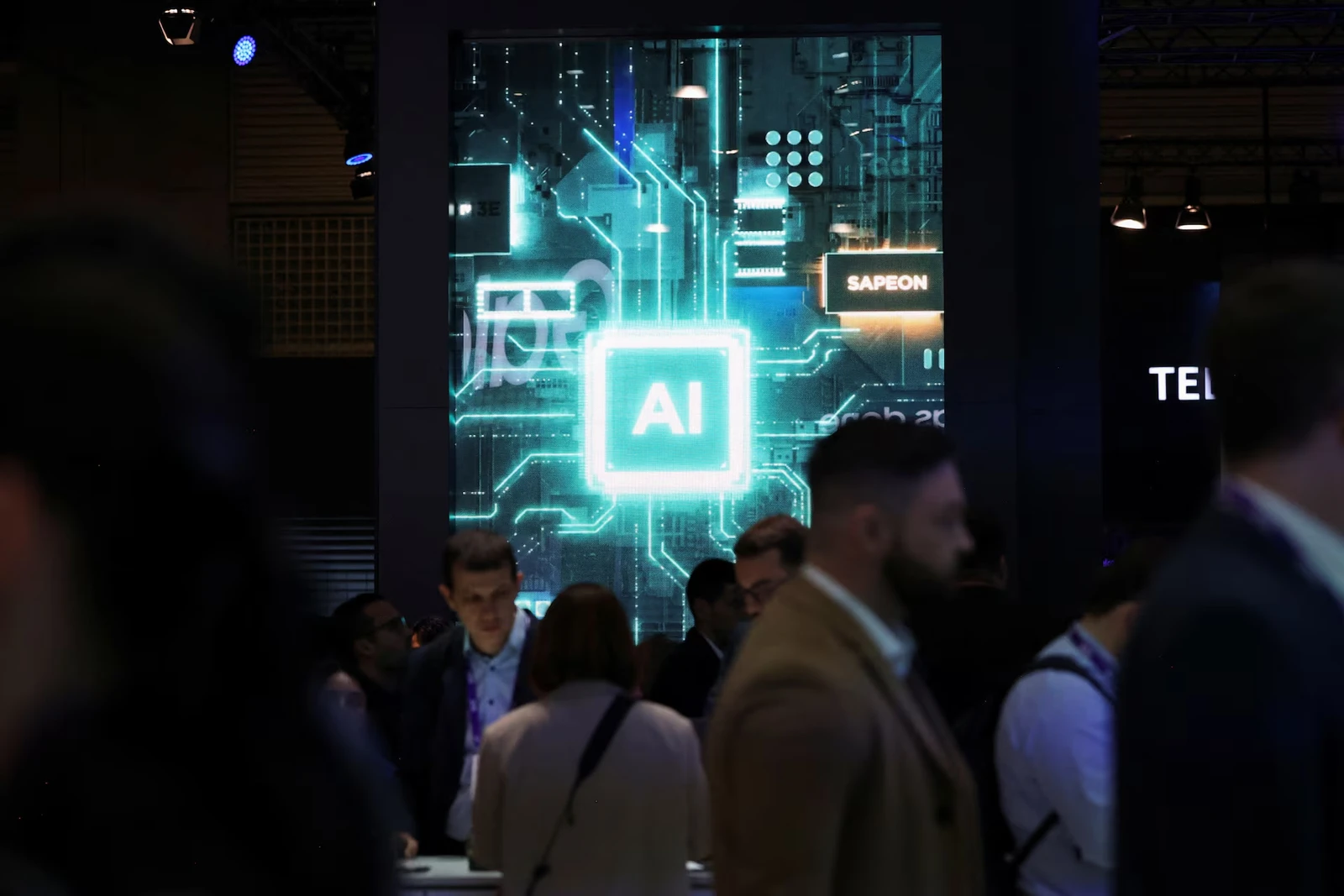
Artificial intelligence is often discussed as if it were simply another tool: software that will make certain tasks faster, cheaper or more efficient. That description is becoming inadequate. AI is moving into finance, healthcare, logistics, defense, communications, manufacturing, education and government. Algorithms increasingly influence how resources are allocated, how information is distributed and how institutions analyze complex situations. AI is therefore becoming something more consequential than an application. It is becoming infrastructure. And infrastructure creates dependency.
A modern economy may function perfectly when its digital systems operate as expected. But the same integration that creates efficiency can also create systemic exposure. What happens if an AI system used across financial markets produces a significant error? What happens if autonomous systems are compromised during a military crisis? What happens if critical logistics become dependent on a handful of providers? The important question is no longer simply whether an AI system works. It is whether the system around it remains resilient when it does not.
The Bronze Age world competed for copper and tin. The AI age competes for semiconductors, computing capacity, energy, data and human expertise. Countries and companies capable of designing advanced chips, building computing infrastructure, developing frontier models and attracting specialized talent occupy an important position in the global technological hierarchy. This concentration creates dependencies. A country may possess excellent universities and talented engineers but remain dependent on foreign computing infrastructure. Another may possess manufacturing capabilities but lack access to advanced semiconductor technology. The result is a new technological geography of power. Control over the foundations of AI may increasingly shape the international order of the 21st century.
The Late Bronze Age palatial economies depended on highly specialized administrative systems. When those systems disappeared, many professions and institutions associated with them disappeared as well. AI could produce a different but conceptually related transformation.
The technology is increasingly capable of performing tasks once considered the exclusive domain of highly educated professionals: analyzing legal documents, producing financial models, interpreting datasets and writing software. This does not necessarily mean mass unemployment. It does mean that the economic value of certain skills may change dramatically. The central challenge may therefore not be whether AI replaces humans, but whether institutions can adapt to a world in which expertise is changing. Institutions will have to reconsider what they teach, hire for and regulate. And individuals will have to reconsider what uniquely human capabilities remain indispensable: judgment, responsibility, creativity, empathy, moral reasoning, human dignity. The ability to understand not merely what can be done, but what should be done.
The Bronze Age analogy should not be taken literally. AI will not cause a second Bronze Age Collapse. It reminds us that systemic crises often emerge from interacting dependencies. A cyberattack may affect communications. A communications disruption may affect logistics and energy. A financial shock may then amplify the consequences. The danger lies in the cascade. Modern technological systems are efficient because they are interconnected. But interconnectedness means failures can travel faster and farther. The challenge, therefore, is not to eliminate complexity. That would be impossible. It is to build resilience into complexity. This means protecting critical digital infrastructure, diversifying dependencies, establishing safeguards for high-risk AI systems and ensuring human oversight where automated decisions have profound consequences.
The ruins of the Bronze Age do not tell us that technological progress is dangerous. They tell us something more subtle. A civilization can become extraordinarily advanced while simultaneously becoming extraordinarily dependent on systems it does not fully understand. And that is where our story begins. Because the next question is not simply how artificial intelligence will transform our economies. It is who will control the foundations of that transformation and what happens when technological power crosses borders faster than governments can respond.
The Bronze Age has another story to tell us. And this time, the ships are already on the horizon.
Rafael Hernandez de Santiago, viscount of Espes, is a Spanish national residing in Saudi Arabia.


