
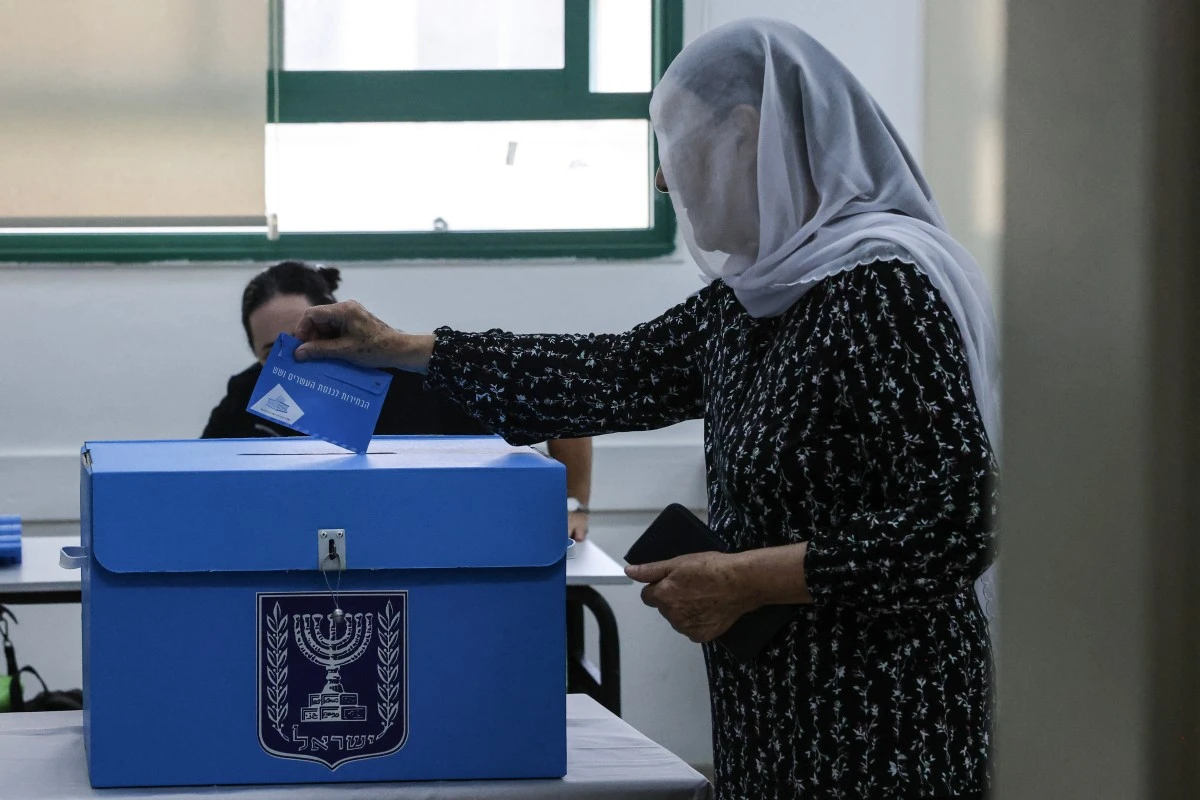

For those who, naively, I hasten to say, hoped that Israeli voters would deliver a clear-cut result at the ballot box, disappointment was inevitable. As has become customary, the electorate has delivered an inconclusive outcome, leaving politicians to cobble together a coalition government. Yet Israelis have left enough clues to indicate the direction in which they want their elected representatives to head.
Since no single party in the country’s history has ever won an absolute majority of 61 out of the 120 seats in the Knesset, Israel and its politicians are well practiced in the dark art of forming coalition governments through tough negotiations and political horse-trading, often beginning even before the results are officially announced.
It is not simply that no party has ever secured an absolute majority. The party winning the most seats has also been steadily losing ground, making the results increasingly puzzling and the task of assembling a coalition government more complicated. In the previous general election, the largest party, Benjamin Netanyahu’s Likud, won 32 seats, while the second largest, Yair Lapid’s Yesh Atid, secured 24. This time, Likud has fallen to 27 seats, while Gaddi Eisenkot’s Yashar, a party that has existed for barely more than a year and whose Knesset members are mostly newcomers to elected politics, has come second with 21. In all, 11 parties will be represented in the new 26th Knesset, several of them being amalgamations of more than one political faction.
Yet this is not to suggest that the Israeli electorate, collectively, failed to send some clear messages about what it wants from its representatives over the next four years, or that the current political landscape offers no possibility of forming a new coalition government.
First, the decline in support for Likud, although not as steep as many expected or as the party arguably deserved, together with the losses suffered by the parties that formed the outgoing coalition, amounted to a clear vote of no confidence in the current prime minister and the direction in which he and his government have been taking the country. The loss of 15 members of Knesset, reducing the outgoing coalition from a majority of 68 to a minority of 53, reflected in the corresponding decline in its share of the vote, was an unmistakable signal that Netanyahu and his far-right, ultra-nationalist government had been given their marching orders.
Now that the results have been confirmed, it is up to the opposition leaders to roll up their sleeves and learn one lesson from Netanyahu: the importance of being utterly determined, even ruthless, when it comes to forming a coalition government.
Yossi Mekelberg
Second, the parties which oppose the current government, who are mainly supported by the Jewish electorate, did not perform as well as opinion polls had suggested. Nevertheless, they still hold the key to forming the next coalition. Much of this is because the wild cards in this election were the two Arab parties: the Joint List and Ra’am. Together, they hold 19 seats. Anyone who chooses to ignore them in the process of forming the next government does so at their own political peril. By all indications, neither party will support a government that looks anything remotely like the current one.
It takes a week in Israel for the Central Elections Committee to announce the official results and present them to President Isaac Herzog. He then begins consultations with all the parties to establish whom they recommend he should first entrust with the task of forming the next government, a responsibility most likely to fall to Eisenkot. That intervening week has also provided Netanyahu and his coalition partners with an opportunity to launch an ugly campaign questioning the legitimacy of the election, targeting the Arab vote in particular. They have claimed, without a shred of evidence, that the Arab parties’ success has been secured through foreign funding, an illegal practice. Eventually, all these allegation were rejected by the Central Elections Committee.
Now that the results have been confirmed, it is up to the opposition leaders to roll up their sleeves and learn one lesson from Netanyahu: the importance of being utterly determined, even ruthless, when it comes to forming a coalition government. Unlike Netanyahu, however, they are going to do so in the interests of the country and not personal ones.
The results may not be straightforward, but they have opened up numerous possibilities. From the outset, the talk of a Netanyahu bloc versus an Eisenkot bloc, as though both were united and monolithic entities, was an oversimplification. Equally artificial was the treatment of the Arab parties as a separate bloc, as though they did not belong in, or were not an integral part of, the country’s political system.
Both the Joint List and Ra’am are more than willing to bring Netanyahu’s and the far right’s time in government to an end and support an alternative. For some, this would mean joining the coalition; for others, supporting it from outside. The meeting earlier this week between Yair Golan, leader of the Democrats, and the Arab parties’ leaders, which took place with the agreement of most of his fellow leaders in the “change bloc,” suggests that this could become an important partnership. It could go much further than simply replacing Netanyahu, and offer an opportunity to consign the ultra-nationalist, messianic forces to the margins of Israeli politics, where they belong.
With the two ultra-Orthodox parties having suffered setbacks, there may be room for a more pragmatic approach. United Torah Judaism, the Ashkenazi party, has only just managed to retain its previous number of seats, while Shas, its Sephardi counterpart, has lost almost half its representation in the new Knesset. Both may therefore be more inclined to take a pragmatic view of the contentious issue of drafting young Haredi men into the military, as well as the financial support they receive from the state.
The public has punished both Likud and Shas for their failure to reach an agreement on this sensitive issue. The resentment is particularly strong among those conscripts, regular soldiers and reservists who have had to bear the burden of the wars this government sent them to fight, including those members of the government who represent the ones who have declared that they would “rather die than enlist.”
Whether it be a minority government or a majority one, there is no reason why a new government should not be formed with the support of some representatives of the Arab community and some of the ultra-Orthodox parties. Such an arrangement could be the first step toward Israel beginning a process of national healing and moving in a new direction.
The people have spoken, and although their message may have produced some cacophony, a determined and courageous new leadership can and should come to play a more harmonious political tune. Such a leadership could take Israel away from its exclusive reliance on military force and from the politics of a leader and government that have normalized divisiveness, poor governance, and corruption.
Yossi Mekelberg is a professor of international relations and an associate fellow of the MENA Program at Chatham House.
X: @YMekelberg


