
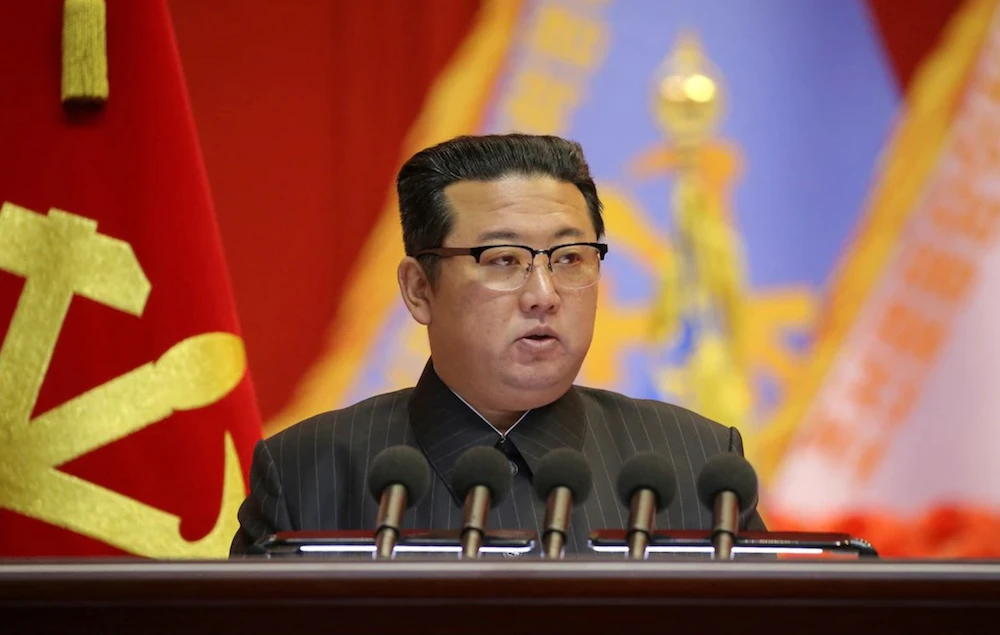

North Korean leader Kim Jong Un has been largely absent from the global limelight in recent months, but his domestic power and ability to cause trouble abroad appear stronger than ever.
During his decade of rule, Kim has delivered a potential game-changer for international relations in the 2020s and perhaps beyond — the significant advance of his nation’s nuclear armed ballistic missile force.
The destructive capability that Kim now has, even though North Korea’s economy is smaller than a decade ago thanks to a pandemic lockdown, international sanctions, and natural disasters, has significantly altered the US and wider Western view of the regime. The new arsenal could provide Kim with massive leverage to extract concessions in future disputes, and also make foreign-instigated regime change more difficult.
Another notable Kim achievement is his emergence since 2019 as a key international political player. He outsmarted Donald Trump in three meetings in Singapore in 2018, then in Vietnam, and on the border between North and South Korea in 2019. With little in the way of concessions to the US president, Kim became the first North Korean leader to meet a White House incumbent and was able to spin that in domestic propaganda.
Kim also benefits from the likelihood that, with the downturn in US-China relations since the pandemic, he will receive stronger support from Beijing. If times do get tough for him, this will prop up his regime.
These developments, along with the way he has ruthlessly consolidated domestic power, show that this is a man whose determination should not be underestimated. That creates a policy headache for US President Joe Biden and his allies in the region, including South Korean President Moon Jae-in, as they grapple with how to curb the growing nuclear danger posed by Pyongyang.
The Biden team’s Korean policy review called for a focus on practical steps to reduce tensions, while maintaining the goal of removing the North’s nuclear weapons. While South Korea broadly welcomed this outcome, Moon wants to move faster with key initiatives with the North, including several inter-Korean projects such as reconnecting road and rail links, plus tourism.
The destructive capability that Kim now has, even though North Korea’s economy is smaller than a decade ago thanks to a pandemic lockdown, international sanctions, and natural disasters, has significantly altered the US and wider Western view of the regime.
Andrew Hammond
The challenge for Moon is that, with less than six months of his presidency left, his timeframes for action are not aligned with Biden, who is playing a longer game. The Washington-Pyongyang mood music has turned almost uniformly negative since the stalling of their peace dialogue under Trump, and it’s unclear whether anything in the short term can turn that around, since Kim insists it is the US that must make concessions first if Washington wants to renew nuclear talks.
Even if unexpected new energy enters the dialogue, there remain big differences between the two sides. Asduring the Trump presidency, the central challenge is differing US and North Korean interpretations of what exactly would constitute “denuclearization” on the peninsula.
To Trump this appeared to mean unilateral disarmament. For Kim it appears to be much more about possiblylengthy negotiations in which Pyongyang should be treated as an equal to the US, giving him further propaganda victories. In this context, it is little surprise Kim has been wary about making concrete commitments, wanting to win further economic and political concessions from Trump (and now Biden) before any reduction in nuclear capabilities, let alone committing to full denuclearization in its literal sense.
The chief issue for the Biden White House to resolve is what, if any, sequencing is possible to move the process forward. After the Vietnam summit, North Korea disputed Trump’s account that the talks collapsed because Kim asked for full sanctions roll-back. Pyongyang claims it asked for only partial sanctions relief, and offered to permanently halt nuclear and long-range rocket testing.
One reason Pyongyang will probably not move far or fast in its positioning is that Kim emerged as the beneficiary of the US engagement process. The North Korean leader gave little away, but Trump called off joint military exercises with South Korean forces, and held out the prospect of an easing of sanctions on Pyongyang if it did “something meaningful” on denuclearization.
It is this diplomatic mess that Trump left for Biden to navigate. While the tensions on the peninsula are not as bad as in 2017, when conflict was a realistic possibility, the situation is fragile and key risks remain that could yet tip the peninsula into crisis again as soon as 2022, especially if there is a major miscalculation by one or both sides.
- Andrew Hammond is an Associate at LSE IDEAS at the London School of Economics


