

The closure of the Strait of Hormuz earlier this year exposed a gap in global governance that four years of post-Ukraine policy debate have done little to address. Fertilizers, an industrial input as fundamental to modern food production as seeds and water, have no strategic reserve, no multilateral monitoring system and no emergency-sharing mechanism comparable to those built around oil.
When the Strait of Hormuz effectively closed in February, governments were once again confronted with the same blind spot: the architecture of global food security begins at the farm gate, while paying far too little attention to the critical inputs and chokepoints that determine whether farmers can plant in the first place.
Approximately 30 percent of globally traded fertilizer transits the strait annually: urea, ammonia and sulfur, the inputs without which crop yields can collapse across entire growing seasons.
Oil shocks are immediate and visible. Fertilizer shocks are harder to see and that makes them easier to underestimate
Zaid M. Belbagi
Urea prices rose from $400 per tonne to more than $850 per tonne between February and April, an 80 percent increase in eight weeks. UN Food and Agriculture Organization Director-General Qu Dongyu warned in July that the resulting fertilizer scarcity would reduce yields and tighten food supplies not only through the end of 2026 but into 2027. The consequences of this spring’s disruption are therefore already being locked into harvests, even if they have yet to fully appear in food prices or in the food security assessments of the governments most exposed.
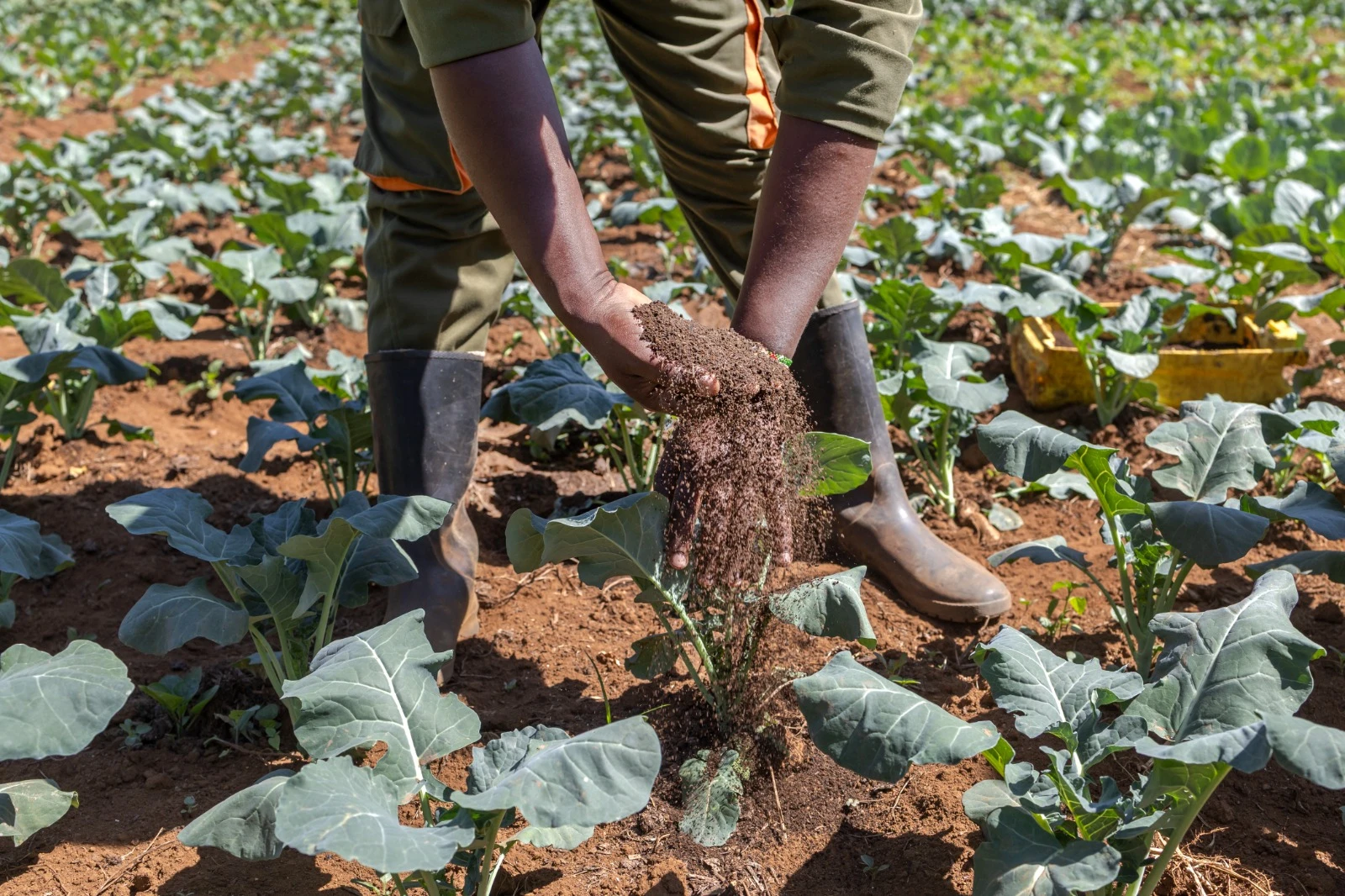
Oil shocks are immediate and visible. They show up at the petrol pump, in electricity bills and across financial markets. Fertilizer shocks are harder to see and that makes them easier to underestimate. They work their way through purchasing decisions, depleted stocks, planting choices and lower application rates, only becoming visible months later, when yields fall and food supplies tighten.
This lag has left fertilizer security far lower on the policy agenda than hydrocarbons. By the time governments see the impact on harvests and food prices, the decisions that caused it have already been made and the planting season has already passed.
The Ukraine war should have been the moment when that gap became very apparent. Russia’s 2022 invasion, alongside the disruption of Belarusian supplies, removed two major sources of fertilizer from global markets and triggered the familiar policy scramble: emergency subsidies, bilateral procurement deals and disputes over export restrictions.
Any conflict capable of closing the Strait of Hormuz is also capable of becoming a food security crisis
Zaid M. Belbagi
Yet, unlike the oil shocks of 1973 and 1979, the crisis did not produce a lasting institutional response. Those earlier shocks ultimately led to the creation of mechanisms such as the International Energy Agency, strategic petroleum reserves and emergency oil-sharing arrangements, built on the recognition that markets alone cannot absorb a supply disruption of such scale quickly enough. Fertilizer supply has now faced two major shocks in four years. It still has no equivalent system.
The distribution of costs follows a pattern that should inform any serious policy response. Africa and South Asia — where farmers already apply fertilizer at a fraction of agronomically recommended rates, where governments carry the least fiscal capacity to absorb input price spikes and where fixed crop calendars leave no room for delayed planting decisions — bear the deepest consequences. The World Bank has assessed fertilizer affordability for farmers in these markets as the weakest since mid-2022. In Egypt, urea prices jumped 28 percent within days of the strait’s closure. These are constraints on planting decisions that determine food availability for the populations least equipped to manage a shortfall.
Washington’s response in June offered the clearest indication that at least one major government was beginning to treat the issue differently. The White House suspended duties on Moroccan phosphate fertilizers on national security grounds, arguing that US domestic production was insufficient to meet agricultural needs and that imports were necessary to safeguard food production and, by extension, economic and national security.
The significance of the decision lies in the framing. Fertilizer was treated as strategic infrastructure. That shift also reflects a broader reality: companies such as Morocco’s OCP have become central to global food security because the availability of phosphate-based fertilizers depends not only on farmers and governments but on the industrial producers and supply chains that move these essential inputs across borders at scale. The question now is whether that logic remains a bilateral response to a specific disruption or if it becomes part of a broader multilateral framework capable of addressing the vulnerability itself.
The contrast with other strategic commodities is increasingly difficult to ignore. Oil has the International Energy Agency, strategic reserves and established emergency-sharing mechanisms. Grains benefit from Food and Agriculture Organization early-warning systems and a body of international rules governing export restrictions during food emergencies. Fertilizer has neither.
The case for building equivalent safeguards is straightforward. In fact, any conflict capable of closing the Strait of Hormuz is also capable of becoming a food security crisis, while any government preparing for an energy disruption without accounting for fertilizer supplies is preparing for only half of the shock.
The institutional gap is not the result of a lack of warning. It is the accumulated consequence of treating fertilizer as a commodity until a crisis exposes its strategic importance. By then, the costs are no longer abstract. They are carried through higher input prices, lower application rates and weaker harvests, often by the farmers and consumers with the least capacity to absorb them and who had no role in creating the vulnerability in the first place.
The role of major players like OCP in the global phosphate fertilizer system therefore illustrates why food security can no longer be understood solely in terms of what happens on farms. The resilience of fertilizer supply chains increasingly depends on strategic producers, infrastructure and international trade relationships. The world’s leading phosphate producers should sit at the intersection of agriculture, trade and national security — making the resilience of such supply chains a matter of global food policy rather than simple commercial activity.
Zaid M. Belbagi is a political commentator and an adviser to private clients between London and the Gulf Cooperation Council. X: @Moulay_Zaid


