

US President Donald Trump was seemingly in a strong position when he entered the first of three scheduled debates with his Democratic rival, former Vice President Joe Biden.
The nation was still reeling from the violence that accompanied the Black Lives Matter protests, which began following the police killing of George Floyd in front of an Arab grocery store in Minneapolis on May 25. In the days, weeks and months that followed the killing, protesters took to the streets in cities across America. Although the majority were peaceful, some of the protesters engaged in violence and looting. In Chicago, for example, 12 Arab American-owned stores were looted and several of them were burned down. Stores were seriously damaged across the country, from Los Angeles to New York, and many individuals were assaulted.
The surge in violence fueled fears among many voters that the protests for racial justice were being eclipsed by the rising violence. While Biden was identifying with the protesters, Trump was advocating for a crackdown and defending the police. A Pew Research Center study last month showed that public support for the protests had dropped significantly, from 67 percent in June to only 55 percent of respondents showing “some support.” The figure for those who strongly supported the protesters had been 38 percent, but that had dropped to only 29 percent.
This offered Trump an easy position from which to build a re-election campaign, advocating a tough-on-crime posture that many already associated with the president. However, that changed during and after the Sept. 29 debate. The structure of the debate made it difficult for Trump to forcefully advocate his policies. In fact, the message that he would do more to protect Americans than Biden flopped and was overshadowed by other issues, which became the focus of post-debate discussions and reporting.
These issues included Trump’s waffling when asked to denounce racist groups like the “Proud Boys” and his criticism of Biden, including how he scoffed at the fact his opponent wore a face mask everywhere he went. There was also the bitterness on both sides and Trump’s constant interruptions, which violated the debate rules he had agreed to follow.
Less than three days later, it was announced that Trump had contracted the coronavirus disease (COVID-19). The confirmation of his infection was aggravated by photographs showing the president at White House events in which very few members of his administration wore face masks. One photo in particular showed Trump introducing his Supreme Court nominee Amy Coney Barrett on a stage at the Rose Garden on Sept. 26. There was a tightly packed audience of some 300 people, the majority of whom were not wearing face masks and not adhering to social distancing guidelines. In the same photo, journalists covering the event from the sidelines were wearing face masks, though they were crammed into a media section that saw them sitting shoulder to shoulder. More than a dozen White House personnel have now tested positive for COVID-19.
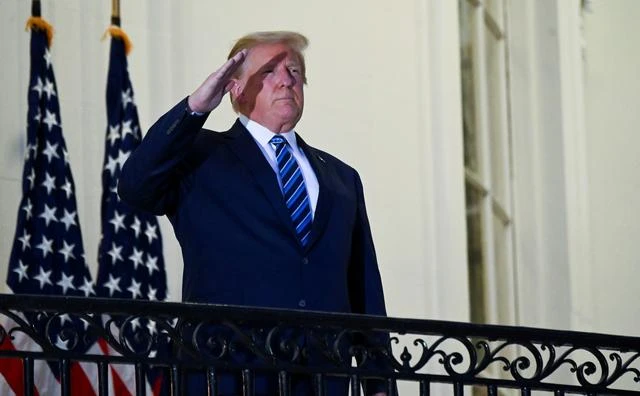
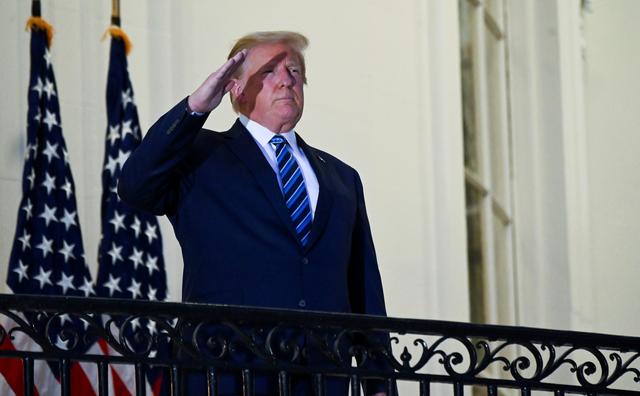
Trump spent last weekend in hospital as the world wondered if he would survive. The president was then released from Walter Reed National Military Medical Center on Monday night. Trump tried to make light of his hospitalization by ripping off his face mask and assuring that he was safe. He urged the public “don’t be afraid.” However, more than 35 million people in the world have contracted the coronavirus and there have been more than a million deaths. More than 215,000 Americans have died from the virus, a fifth of the world’s total.
Rather than assuring the public they are safe and that they shouldn’t fear the virus, Trump’s hospitalization has put COVID-19 center stage as the presidential election campaign enters its final four weeks. As the death toll continues to rise, the focus has shifted from concerns of violence to concerns surrounding the pandemic. That benefits Biden more than it does Trump.
The president could have handled himself better during the debate and he missed several opportunities to win audience support. The weakening of public support for the Black Lives matter agenda has put a damper on the issue and there have been fewer and fewer protests.
The next presidential debate is scheduled for Oct. 15, to be held at the Adrienne Arsht Center for the Performing Arts in Miami, Florida. It was supposed to be held at the University of Michigan, in a state critical to the election outcome, but university officials canceled the debate over concerns about the COVID-19 pandemic.
Waning support for protesters offered Trump an easy position from which to build a re-election campaign.
Ray Hanania
The focus of the second debate, if it takes place, is expected to be foreign policy. It will give Trump a chance to stress his policies and achievements in the Middle East, including the brokering of historic peace accords between Israel and two Arab Gulf states, the UAE and Bahrain.
But Trump’s Middle East achievements might not be enough to steer the public focus away from the pandemic and back to fighting crime. After all, moving the US Embassy in Israel to Jerusalem, the Abraham Accords, and Trump’s plan for Israeli-Palestinian peace don’t directly impact many Americans the same way the pandemic has slammed the public and fueled health fears.
In fact, many Americans might tune in to watch the next debate mainly to see if the Commission on Presidential Debates will impose controls, including allowing moderators to turn off a candidate’s microphone — a critical response to Trump’s repeated interruptions of Biden’s speaking time during the first debate.
Prior to that debate, Trump had a strong chance of riding to victory and a second term in office on the back of a vow to protect Americans from uncontrollable violence. But, in the wake of his brush with COVID-19 and the spread of the virus through his administration, his chances of success have been negatively impacted.
- Ray Hanania is an award-winning former Chicago City Hall political reporter and columnist. He can be reached on his personal website at www.Hanania.com. Twitter: @RayHanania


