

Since 2011, Turkiye’s relations with neighboring Syria and Iraq have been strained. However, 2024 was a milestone in its ties with both countries. Bashar Assad’s regime in Syria collapsed toward the end of that year, ushering in a new era in Turkish-Syrian relations. Earlier in the year, a new chapter also opened in relations between Turkiye and Iraq. In 2024, Turkish President Recep Tayyip Erdogan paid a historic visit to Iraq, his first since 2011, accompanied by a large entourage. Erdogan is now planning to visit Syria in what will be the first visit by a Turkish president since 2011.
Since improving its relations with Baghdad and Damascus, Turkiye appears to have been following a dual-track strategy with both: strengthening state-to-state cooperation through security and economic engagement, while pushing Damascus and Baghdad closer to each other in a way that serves its core security and economic interests. These two tracks are closely interconnected.
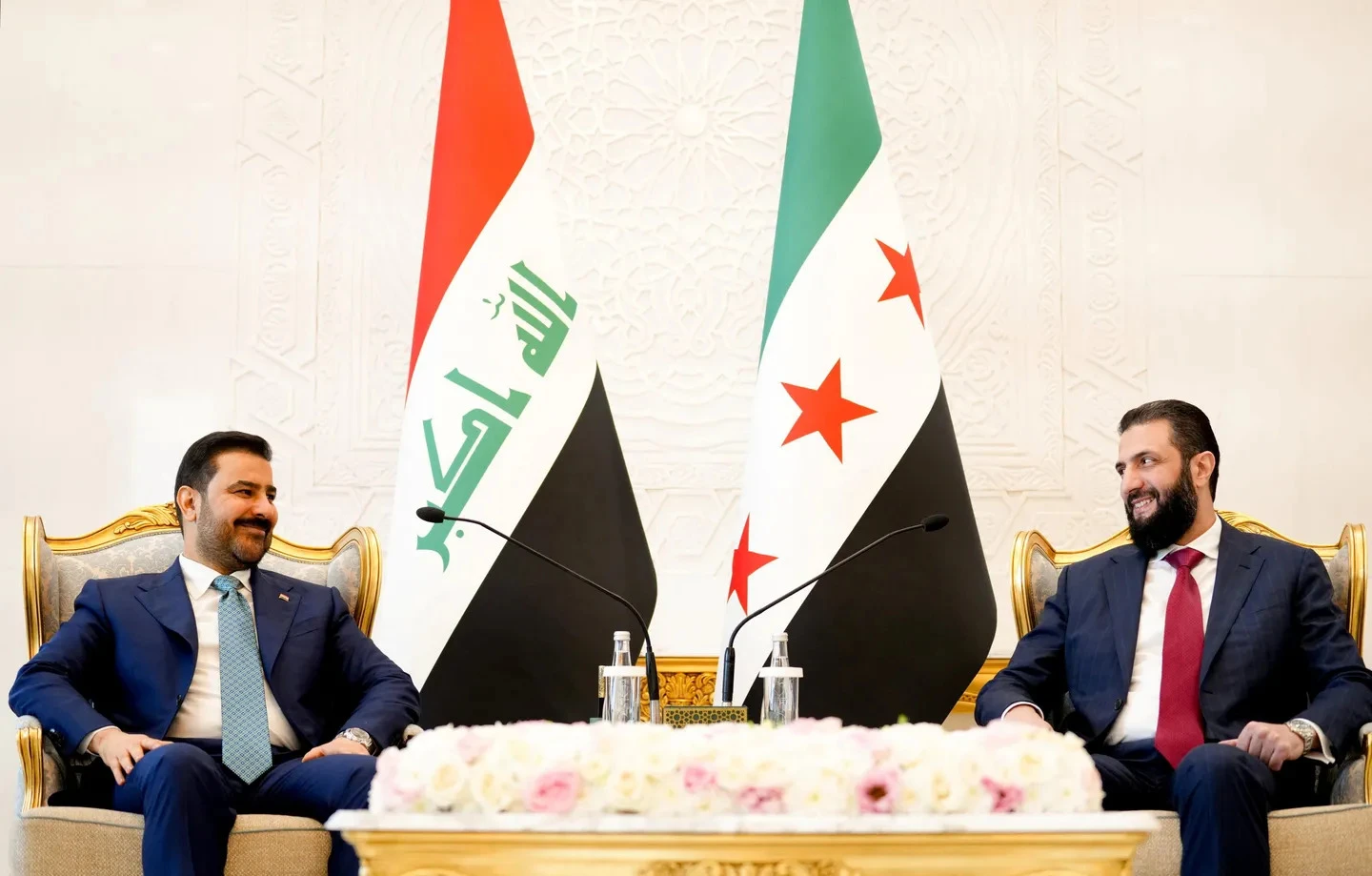
This week, Iraqi Prime Minister Ali Al-Zaidi visited Damascus, marking the first visit by an Iraqi leader to Syria since the fall of Assad’s regime. He met with Syrian President Ahmad Al-Sharaa, and agreed to push ahead with energy, trade, and security cooperation in order to transform a decades-long adversarial relationship into a strategic partnership.
Three key factors are driving closer relations, or at least preventing antagonism, between Damascus and Baghdad: the US push for greater regional consensus; security; and economic interests. Regarding the US factor, Washington aims to bring Syria and Iraq into closer alignment with regional states, particularly Turkiye and the Gulf states, in a bid to contain Iran’s influence.
Regarding security, Syria and Iraq both have an interest in building strong states capable of protecting themselves against security challenges. In this regard, Al-Sharaa expressed support for the Iraqi prime minister’s efforts to bring weapons under state control. Closer relations between Iraq and Syria are vital for regional security since the two countries share a 600 km border, making close cooperation essential to preventing the cross-border movement of militant groups and tracking remnants of Daesh.
Ankara knows it can gain significant economic, strategic, and security benefits by better relations between Baghdad and Damascus.
Dr. Sinem Cengiz
Here, Turkiye, as a stable neighbor with strong military capabilities, appears to be a potential partner in supporting both countries as they seek to build stronger armies and institutions. Turkiye is already supporting Damascus. Turkiye and Syria have signed a significant military cooperation agreement aimed at bolstering Syria’s defense capabilities and strengthening its national institutions in the post-Assad era. This partnership aligns with Turkiye’s broader objective of fostering a secure and stable Syria, free from terrorism. By providing military support and expertise, Turkiye aims to position itself as a key partner in Syria’s reconstruction and security reform.
Turkiye and Iraq have also recently agreed on a gradual handover of a military camp in northern Iraq to the Iraqi government. The development, which comes amid the withdrawal of US forces from Iraq, signals the beginning of a new era for Iraq and Turkiye. Ankara said that the handover of the base did not mean an end to cooperation with Iraq. On the contrary, Turkiye will continue to support Iraq’s security and stability.
Turkiye’s security cooperation with Damascus and Baghdad runs parallel to its economic engagement plans. Turkiye wants to have a more predictable neighborhood in which it can expand its role as a regional trade, energy, and transport hub.
As a result, Turkiye has been placing Iraq and Syria at the center of alternative connectivity corridors: Syria through the Hejaz Railway and Iraq through the Development Road Project. While pursuing these initiatives, Turkiye is also seeking partnerships with Gulf states. At the heart of Turkish-Iraqi interests lies the Development Road Project, an ambitious regional infrastructure initiative designed to enhance economic integration, with funding expected from Gulf partners such as Qatar and the UAE. Meanwhile, Saudi Arabia appears willing to cooperate with Turkiye on the Hejaz Railway. Last year, Turkiye, Syria, and Jordan agreed to revive the historic rail link and extend it through the Kingdom to establish a new trade corridor linking the Gulf to Europe through Turkiye.
Turkiye knows it can gain significant economic, strategic, and security benefits by better relations between Syria and Iraq. As all three countries are geographically connected, stronger cooperation could turn their shared borders into corridors for trade, and work as a front to counter terrorism. All three also have complementary strengths: Turkiye has an emerging defense industry and access to European markets, Iraq has oil and gas resources, and Syria occupies an important geographical position.
The countries have also significantly expanded their bilateral trade since 2024. In July 2026, Turkiye’s trade minister said bilateral trade with Iraq stood at around $17 billion, with both countries pursuing a $30 billion target. Meanwhile, Turkiye’s Ministry of Trade said that bilateral trade with Syria had reached $3.7 billion in 2025, with a goal of reaching $5 billion and eventually $10 billion.
The three neighbors also share water resources from regional rivers — one of the reasons for tense relations in the past. Managing water scarcity requires joint coordination. Turkiye has signed an agreement with Iraq to improve water management in the Tigris and Euphrates rivers, committing to the fair and equal allocation of shared water resources between the two neighbors. With Syria, as well, there is agreement in this regard.
For Turkiye, a cooperative relationship between Syria and Iraq is vital not only for its national security but also its economy. Turkiye’s dual-track strategy is best understood as an attempt to connect security and economic integration through two key regional capitals, Damascus and Baghdad.
Dr. Sinem Cengiz is a Turkish political analyst who specializes in Turkiye’s relations with the Middle East.
X: @SinemCngz


