

I would not be exaggerating if I said that I sensed this British government is bent on failing Ukrainian refugees. It seems reluctant to relax its visa requirements for their entry and is instead counting on people’s kindness to register their interest in hosting refugees prior to processing the visa applications of those Ukrainians who have been offered a place to stay in the UK.
When I first heard the announcement that Britons were being invited to offer to host refugees, I consulted the government website, which allows you to submit a form with your basic details to become a host. But I felt that few geeks believe that a matchmaking app similar to the many dating apps that people use to try and spice up their social lives could offer the necessary platform through which to process refugees’ applications prior to their admission to live temporarily with their “match” or hosts in Britain.
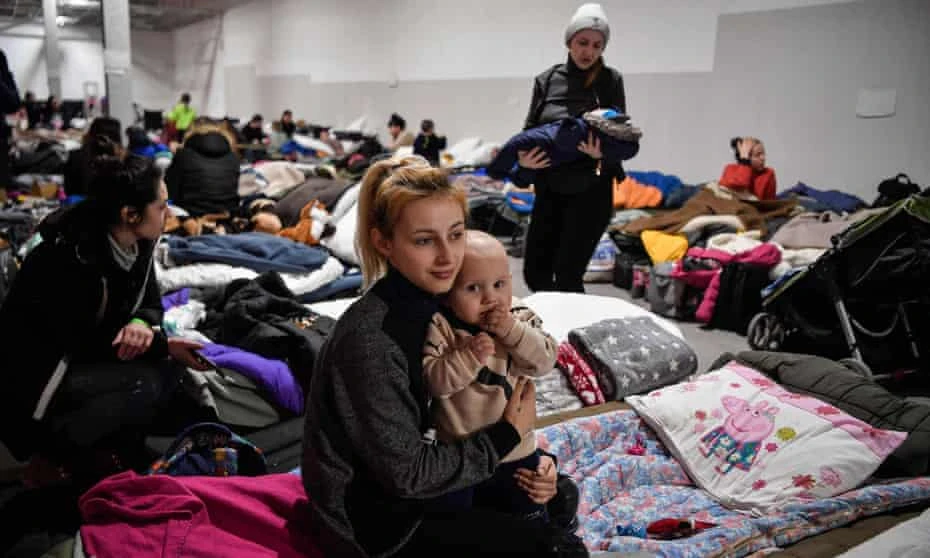
UK TV and media last week witnessed an outpouring of kindness, with thousands of people offering spare rooms, small annexes or vacant properties for use by Ukrainian arrivals. But the matter is more complex than this, as refugees have different needs than merely bed and breakfast-style lodgings that might suit a tourist, a student or someone on a temporary job placement.
The “Homes for Ukraine” scheme proved popular in the initial stages, as more than 150,000 people registered their interest despite concerns about how it might work in practice.
The UN last week reported that more than 3 million Ukrainians have left their country, while more than 6 million are internally displaced, even before the war has entered its second month, making it one of the biggest refugees crises in Europe since the Second World War. The British scheme is open to Ukrainian nationals and their immediate family, and will allow them to live and work in the UK for up to three years with access to healthcare, benefits and education. Hosts will be given a £350 ($463) monthly allowance by the government.
But the government has drawn criticism domestically and internationally for its Ukraine refugee policy, as those interested in coming to the UK have had to crisscross Europe and overcome bureaucratic obstacles in their quest for an entry visa. Many also feel that the West has responded differently to Ukrainian refugees than to the Muslims who had to flee conflicts in Syria or Afghanistan, for example.
Many activists and nongovernmental organizations working with migrants, refugees and asylum seekers believe the UK is not really interested in receiving refugees and that the “Homes for Ukraine” scheme is a mere smokescreen, as it does not waive the requirement for visa and security checks like the EU has, meaning that just a trickle of those wanting to come will get to Britain and only then after they find a sponsor. The Refugee Council has branded the matching process “too slow and complex” and clearly favors those that already have contacts in the UK, who may not necessarily be the most vulnerable or at risk.
The scheme has clearly delegated the responsibility of the state to private initiatives and charitable organizations, which the opposition Labour Party has criticized. It blames the government of Prime Minister Boris Johnson — who was elected after promising to curb EU arrivals to Britain after Brexit — for creating a program with “excessive bureaucracy” and a “do it yourself” nature, freeing the state of key obligations to care for the dispossessed and needy, as per UN conventions and treaties.
Many like myself would love to open their doors to those in need at this time of turbulence in Europe. EU nations have always upheld basic human values based on principles that promote giving help to the dispossessed, despite any cultural, linguistic or ideological challenges that come with opening your nation’s door to refugee communities, and Britain had always played its part — until now.
People fleeing their homes as a result of barbaric shelling and violent attacks need empathy and care. While many in the UK are ready to offer a room to refugees, meeting their other basic needs that go beyond our generosity and humanity might prove difficult. A migrant needs to feel secure and with security comes responsibilities to afford them dignified access to healthcare, education and a potential path to normality and independence. An app to match refugees with hosts could be a supporting tool, but it does not replace the state’s obligation to have a refugee hosting program that is capable of giving refuge to those in need when they need it most, and not allow abuse to lead to it helping those that are not necessarily the ones most in need.
Refugees have different needs than merely bed and breakfast-style lodgings that might suit a tourist or a student.
Mohamed Chebaro
In an open society, a minority tends to abuse the trust and take advantage of the kindness of any official or private scheme, capitalizing on loopholes within them. This happens in any refugee or asylum system across the globe. Post-Brexit Britain is a nation that has made it a priority to “take back control” and largely shut its doors to both refugees and migrant inflows. Yes, the UK is a small island country and its basic services and universal healthcare have always been under strain, but this is not a reason to launch a program that is based on individual goodwill solving a refugee crisis at the scale of what is happening in Ukraine.
Dating-style apps for dealing with refugees is yet another example of how this government is squandering its image and demonstrates that it lacks a mature approach to dealing with Ukraine’s human catastrophe.
- Mohamed Chebaro is a British-Lebanese journalist, media consultant and trainer with more than 25 years’ experience covering war, terrorism, defense, current affairs and diplomacy.


