

Nothing lasts forever. Last week, the US held highly consequential midterm elections — part of the cycle of elections held every two years in which all members of the House of Representatives, a third of the Senate and a number of state governors are elected.
Important as it is, the election remains an ordinary exercise of democracy and experience has taught us that every election has its circumstances and its heroes, just as it has its issues and its casualties.
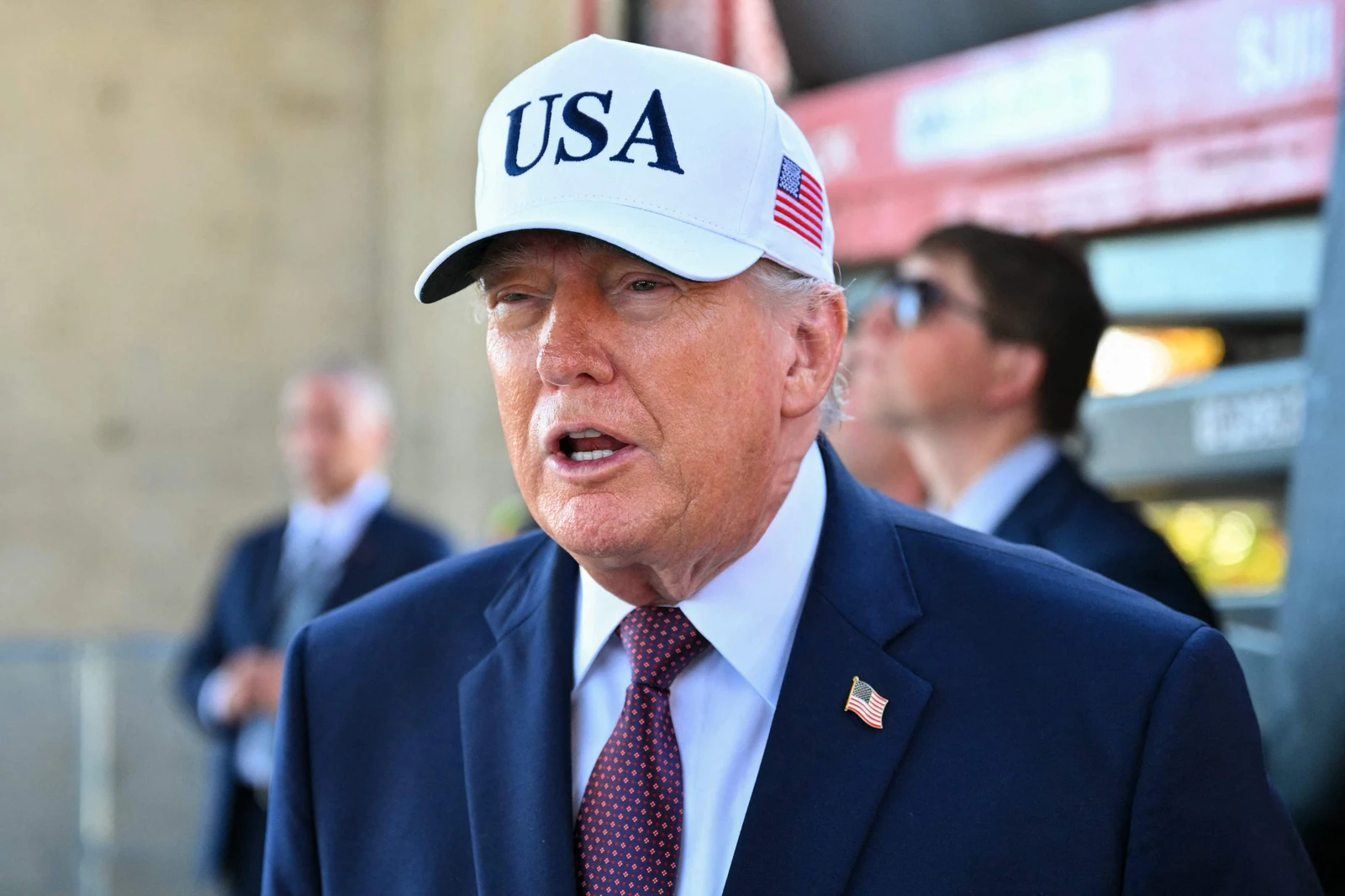
In my estimation, President Donald Trump had not been expecting these results. Indeed, I would almost swear that many Democrats, politicians and supporters alike, did not dare take such an optimistic view of what their candidates actually achieved across the length and breadth of the country. The Democrats were not content with changing the balance of power in Congress by seizing the majority in both the House and the Senate; they also won striking victories among state governors, including surprising political and cultural breakthroughs.
In the House, at the time of writing, the Democrats had won a landslide: 252 of 435 seats, against 162 for the Republicans.
There had been signs before polling day that they would take the House but the margin exceeded expectations. So did the Senate result, as Democrats now control 54 of 100 seats, against 44 for the Republicans, with the official results from Mississippi and Alaska still to come.
The shift in Congress was mirrored in the governors’ races, where the surprise was arguably bigger and more painful for the Republicans. They lost the governorship of Texas, their greatest stronghold of all and the apple of the right-wing trillionaire Elon Musk’s eye.
In Texas, a state with a long history of hostility toward its neighbor, Mexico, the right-wing Republican Gov. Greg Abbott — one of the heroes of Trump’s campaign and of the “Make America Great Again” movement against illegal immigration from Latin America — lost to his Democratic challenger, the Latina progressive Gina Hinojosa.
The Democrats won the popular vote by nearly 13 points, the largest margin for either party since 1976. Yet their real test begins now.
Eyad Abu Shakra
Texas, the second most-populous state after California, also gave a national platform to James Talarico, who won one of its two Senate seats.
To appreciate what Hinojosa and Talarico achieved, consider that Musk had come to see Texas as a safe haven for the investments of the tech oligarchs who were fleeing California’s taxes, as the last time a Democrat won a Texas Senate seat was in 1970. That year, Lloyd Bentsen, a future Cabinet minister, defeated George H.W. Bush, who nonetheless ultimately went on to win the presidency, as did his son George W. Bush, a former governor of the state.
Trump’s plan for a separation wall along the Mexican border has also suffered a painful setback: the Democrats now control all four border states — Texas, New Mexico, Arizona and California.
As for the broader picture, which may or may not shape the 2028 presidential race, women had a large and influential showing. Among the winners was the physician Annie Andrews in South Carolina, who took the seat of the late Republican Sen. Lindsey Graham, while Native American Democrats won a Senate seat in Minnesota and the governorship of New Mexico.
The Democrats now hold 28 governorships to the Republicans’ 20, including most of the largest states — Pennsylvania, Ohio, Michigan and Georgia, alongside Texas, as well as their impregnable strongholds of California, New York and Illinois.
A clear majority of Latino/Hispanic voters also turned against the Republicans this time, reversing the pattern of the presidential election two years ago. And a cohort of young Democratic leaders has emerged, some of them so-called radical progressives from ethnic and religious minorities, led by Georgia’s new governor, Keisha Lance Bottoms, the first African American woman to govern the state.
Overall, the Democrats won the popular vote by nearly 13 points, the largest margin for either party since 1976. Yet some argue that their real test begins now.
In politics, where there are no certainties but plenty of paradoxes, the Democrats will soon face two real problems, both rooted in the divide between their young radicals and the old guard led by Chuck Schumer in the Senate and Hakeem Jeffries in the House.
The first is that Schumer and Jeffries are men of compromise and of lobbies, the pro-Israeli lobby foremost among them, which will make it easier for the Republicans to exploit their differences with the new generation.
The second is that Trump has chosen to stand up to this Democratic hurricane rather than bow before it, appointing Stephen Miller, the closest of his hard-line advisers, as White House chief of staff.
The days ahead will bring a great deal, whether in peace or in war.
Eyad Abu Shakra is managing editor of Asharq Al-Awsat, where this article was originally published.
X: @eyad1949


