
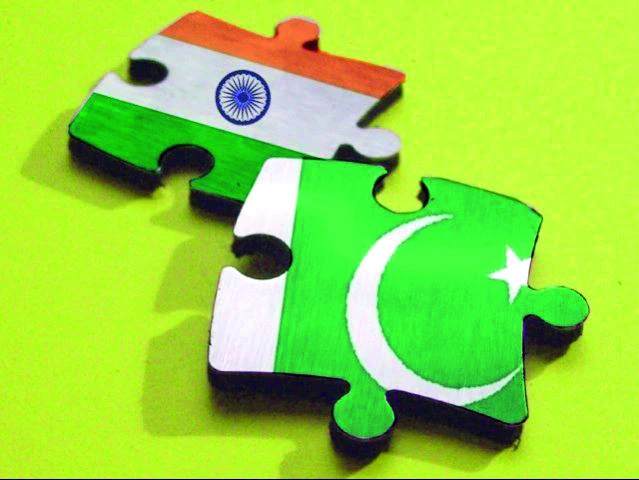

Kargil, like every other meaningless war that we have fought, brings home lessons we continue to refuse to learn. Instead, we proudly call it our history written in the blood of our children. Indeed, our children penning down our misdeeds with their blood! Medals for some, few songs, a crossroad renamed, and of course annual Remembrance Day and a memorial for those who sacrificed their tomorrow for our today; thus preparing more war fodder for our continuing misadventures. Since nothing went wrong, so there is nothing to learn. We shall do it again. We decide. You die. We sing.
Cut off from the reality of pain and affliction that would be brought upon the nation, the decision maker takes the course most suited to his whimsical ambitions. Possible hurdles are sidetracked, on the basis of “need to know,” or merely bulldozed. Never has there been an institutional decision for the bloodshed. And at the end of each fiasco, original objectives are redefined to cry, “Hurrah! We have won.”
Our leaders seek personal glory, and desire honor in the eyes of other nations. Sadly, that has become our definition of national honor; but how can we be respected when we have little self-respect? So concerned have we become about how they perceive us that we openly deride our religion and all social values that we once stood for.
The whole truth about Kargil is yet to be known. We await the stories of forgotten starved soldiers hiding behind cold desolate rocks, with empty guns still held in their hands. What stood them there could only be a love higher than that of life. Some refused to withdraw even when ordered, and stayed to fight the proverbial last man last round. Such precious blood spilled without cause!
Whatever little I know, took a while to emerge, since Gen. Musharraf had put a tight lid on Kargil. Three years later, a study commenced by the GHQ to identify issues of concern at the lowest levels of command, was forcefully stopped by him. “What is your intent?” he asked. His cover-up was revealed many years later, on publication of his book.
An unsound military plan based on invalid assumptions, launched with little preparations and in total disregard to the regional and international environment, was bound to fail. That may well have been the reason for its secrecy. It was a total disaster. The question then arises why was it undertaken? Were there motives other than those proclaimed, or was it only a blunder, as I had assumed for many years?
It certainly wasn’t a defensive maneuver. There were no indications of an Indian attack. We didn’t pre-empt anything; nothing was on the cards. I was then heading the Analysis Wing of Inter Services Intelligence (ISI) and it was my job to know. Our clearly expressed intent was to cut the supply line to Siachen and force the Indians to pull out. This was not a small result we sought and cannot be classified as a tactical maneuver, where no one other than the local commander needed to be aware. Gen. Musharraf himself writes, “800 sq.km of area was captured.... and it created strategic effects.” To say that occupying empty spaces along the Line of Control was not a violation of any agreement and came under the purview of the local commander is astounding. This area was with the Indians as a result of Simla Agreement, and there had been no major violation of the Line of Control since 1971.
The entire planning and execution was done in a cavalier manner, in total disregard of military convention. In justification, to say that our assessment was not wrong, but there was, “unreasonably escalated Indian response” is a sorry excuse for not being able to assess Indian reaction. Assumptions were made that they would not be able to dislodge us and the world would sit back idly.
The operation, in any case, didn’t have the capacity to choke Siachen. When this truth surfaced, the initial aim was quickly modified. Now the book reads, “I would like to state emphatically that whatever movement has taken place so far in the direction of finding a solution to Kashmir is due considerably to the Kargil conflict.” Glory be to the victors.
We continue to indulge in bloody enterprises, under the hoax of safeguarding national interest. How many more medals will we put on coffins? How many more songs are we to sing? And how many more martyrs will our silences hide? If there is purpose to war then yes, we shall all go to the battle front, but a war where truth has to be hidden, makes one wonder whose interest is it serving?
- The writer is a retired lieutenant general and former corps commander of Lahore.


