
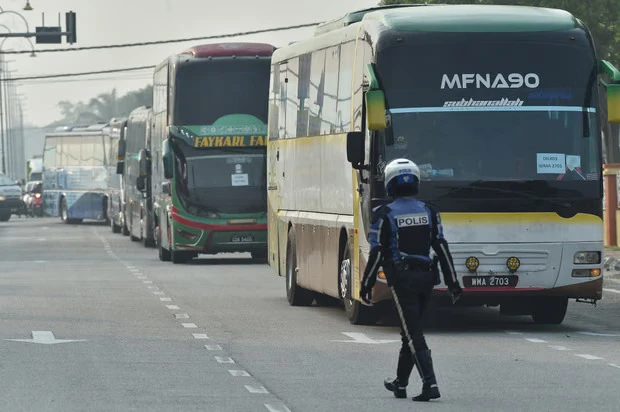

Malaysia says the recent return of 1,476 Myanmar nationals was voluntary. The UN Refugee Agency is less certain. Those returned had been held in immigration detention, the UN was not given access to interview them beforehand and it warned that some may have required international protection. The disagreement raises a much larger question that extends far beyond Malaysia and Myanmar: What does voluntary return actually mean when all the choices available to displaced people are bad?
In theory, voluntariness is simple. A person is presented with options and chooses to go home. In practice, refugee decisions are rarely made under such clear conditions. A refugee may be deciding between continued detention and return, between legal insecurity and return or between prolonged poverty in a host country and the dangers of going back to a state still experiencing conflict. In each case, the individual may technically agree to leave. But the existence of a choice does not necessarily make that choice genuinely free.
This distinction is becoming increasingly important as governments around the world face mounting political pressure to reduce refugee and irregular migrant populations. Malaysia illustrates the dilemma particularly clearly. It has hosted large numbers of people fleeing Myanmar, while also confronting legitimate concerns about immigration management, public services, security and the social pressures associated with prolonged displacement. Prime Minister Anwar Ibrahim said this week that about 10,000 Myanmar nationals had been sent home since January. Malaysia, like every state, has a right to manage its borders. But refugee protection requires a different standard from ordinary immigration control.
Governments around the world are facing mounting political pressure to reduce refugee and irregular migrant populations
Dr. Azeem Ibrahim
The central issue is not simply whether a person agrees to return. It is whether the circumstances allow that decision to be free, informed and meaningful. Myanmar remains engulfed in conflict, with millions internally displaced and continued reports of airstrikes and fighting across the country. That does not mean that every Myanmar national faces the same level of danger or that nobody can ever choose to return. Some may have strong family, economic or personal reasons for doing so. The point is that return decisions must be judged individually and against the conditions each person is likely to face.
This is why obtaining a signature or verbal agreement is not enough. A genuinely voluntary decision requires access to independent information about conditions in the country of origin, an opportunity to understand the risks and a realistic ability to refuse without facing punishment or indefinite confinement. The UN Refugee Agency’s own voluntary return processes are built around this idea. Refugees are supposed to receive information and counselling so that they can decide with a clear understanding of both the risks of return and the alternatives available to them.
Detention fundamentally complicates that process. If the alternative to return is continued confinement for an uncertain period, returning home may become the least intolerable option rather than the preferred one. This is what might be described as coerced choice. The coercion does not need to involve threats or physical force. It can arise from the circumstances in which the decision is made. A person who chooses to return because every other option has been made unbearable may technically have consented, but that is very different from exercising genuine freedom.
This problem is likely to become more common. Refugee crises that were once expected to last months now increasingly last years or even decades. Host countries face understandable frustration. Resources become stretched, local populations become resentful and political pressure for return grows. Yet international protection cannot function if governments respond by narrowing refugees’ alternatives until return becomes the only realistic option. At that point, voluntary repatriation risks becoming little more than an administrative label.
There is a need to distinguish between return that reflects genuine agency and return produced by desperation
Dr. Azeem Ibrahim
A stronger standard of meaningful consent is therefore needed. At a minimum, individuals should receive independent information about conditions in the places to which they would return. Their circumstances should be assessed individually rather than through blanket assumptions about whether an entire country is safe. Where possible, decisions should also be made outside detention, because confinement itself can distort consent. These safeguards are not obstacles to return. They are what make voluntary return credible.
There is also a fundamental legal and moral principle at stake. Under the principle of non-refoulement, people should not be sent back to places where they face persecution, torture or serious threats to their lives or freedom. Governments should not be able to avoid that obligation simply because a refugee has agreed to board a ship or aircraft after months in detention. The crucial question must be what produced that agreement.
Malaysia should therefore not be treated as uniquely culpable. Its experience exposes a dilemma that many governments will increasingly confront. States cannot be expected to host unlimited refugee populations indefinitely without political, financial and social consequences. But the pressure on host states does not remove the need to distinguish between return that reflects genuine agency and return produced by desperation.
That distinction matters because the language of voluntariness carries moral and legal weight. If a government says refugees returned voluntarily, it implies that they chose return over meaningful alternatives. Where no such alternatives existed, the description can become misleading.
A refugee choosing between two viable futures is exercising agency. A refugee choosing between detention, destitution and danger is doing something very different.
Voluntary return should therefore mean more than the absence of physical force. It should mean the presence of a meaningful choice.
Dr. Azeem Ibrahim is the director of special initiatives at the New Lines Institute for Strategy and Policy in Washington. X: @AzeemIbrahim


