
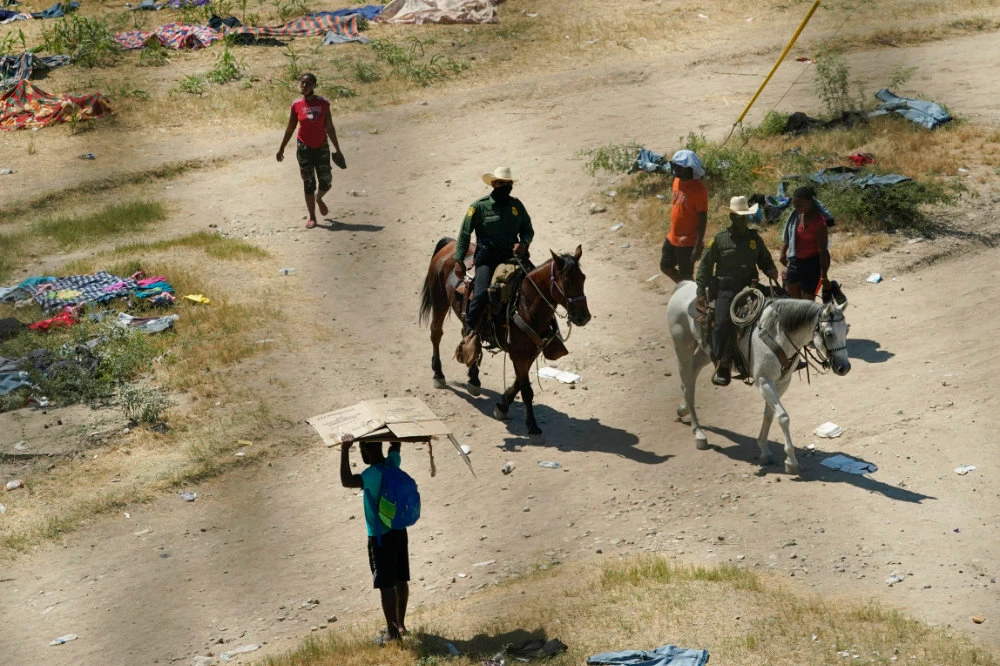

World Population Day, which will again be marked next week, has long been a moment to celebrate human progress. But it comes this year against the backdrop of a grim milestone, with a record 100 million people now displaced.
Driven by violence, persecution and human rights abuses, this massive number of people forced to flee their homes equates to about one person in every 78 across the world. It is larger than the population of many countries.
The data comes from the UN refugee agency’s annual “Global Trends” report, which was released last month. While the data has worsened each year for a decade, 2022 has set new records, not least with the Ukraine war, which has caused one of the largest forced displacements since the Second World War.
More than 7 million Ukrainians have been displaced within the country and more than 6 million have fled the country as refugees. This builds on existing tensions that have escalated, driving further displacement in nations from Burkina Faso to Myanmar.
Taken overall, UNHCR says the latest forced displacement figure includes 26.6 million refugees, 50.9 million internally displaced people, 4.4 million asylum seekers and 4.1 million Venezuelans displaced abroad.
Ukraine aside, the report says that more than two thirds of refugees come from just five countries: Syria, Venezuela, Afghanistan, South Sudan and Myanmar. Turkey hosted the largest refugee population in 2021, with nearly 3.8 million.
It is possible that environment-related crises will make this displacement calamity ever worse.
Andrew Hammond
Going forward, it is possible that environment-related crises will make this displacement calamity ever worse. This in the context of the anticipated continued growth of the world’s population, which is today about 7.7 billion, to 10 billion in the next three decades, with more than half of this growth expected to be concentrated in only nine countries, mainly in the developing world.
Growing populations are driving the megatrend of urbanization through migration. In 1800, less than 3 percent of the population lived in cities, but by the end of 2008 this had risen to more than 50 percent and there were 26 megacities (cities of 10 million or more inhabitants). That proportion is expected to increase from about 55 percent as of 2018 to 68 percent by 2050, which, combined with the overall growth of the world’s population, could add another 2.5 billion people to urban areas by the middle of this century.
Governments are increasingly preparing for the risks these massive urban areas pose. Key questions being addressed include whether it will be possible to continually meet residents’ everyday needs of food, water and health, while also dealing with the growing vulnerability of large urban areas to environmental stresses exacerbated by the effects of climate change.
Because of the failures to deal with some recent hazards impacting megacities, governments are planning for multiple challenges and developing strategies for managing the range of environmental factors that could emerge.
• Andrew Hammond is an Associate at LSE IDEAS at the London School of Economics.


