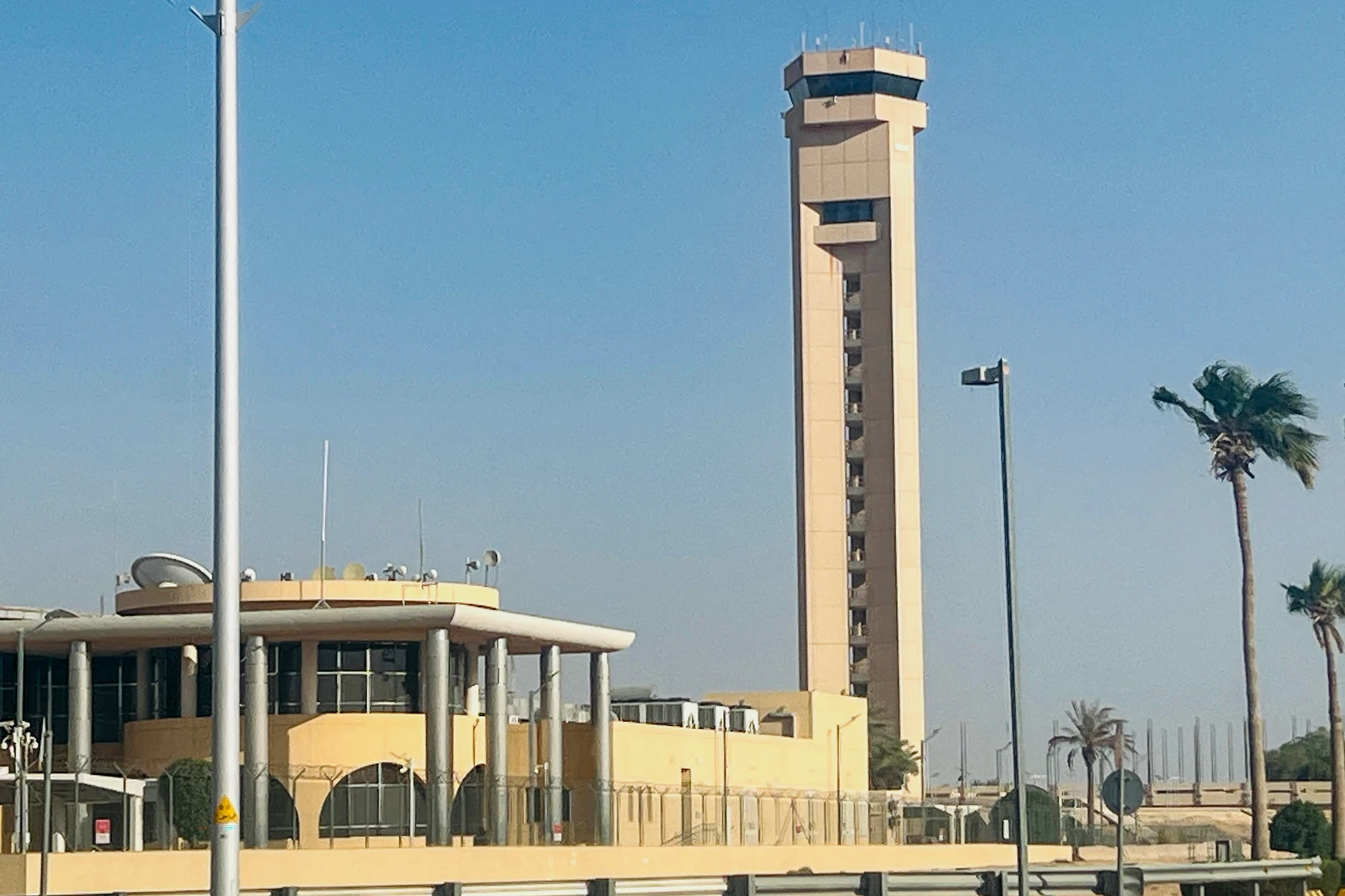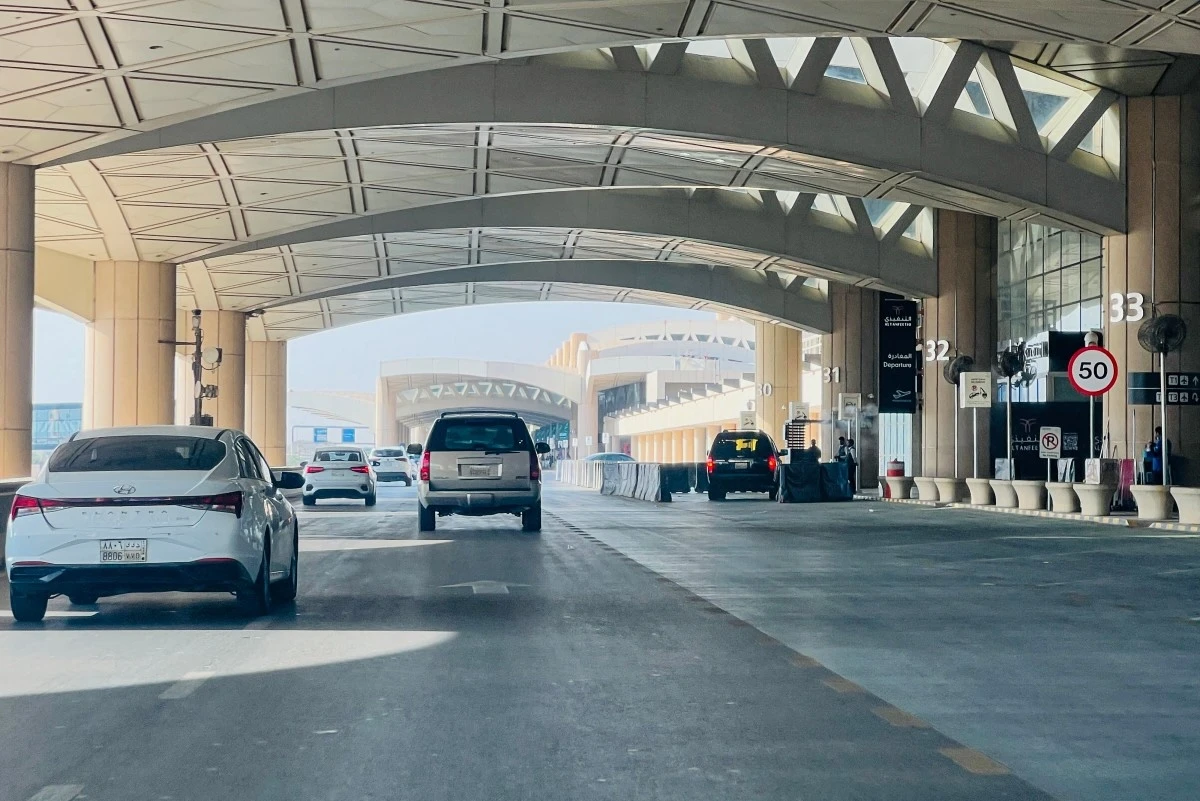
- Saudi Arabia’s civil aviation authority says operations at the airport in Riyadh have been suspended while the damage is assessed
- The strike follows Houthi attacks on the airport on Thursday and Wednesday that killed four people
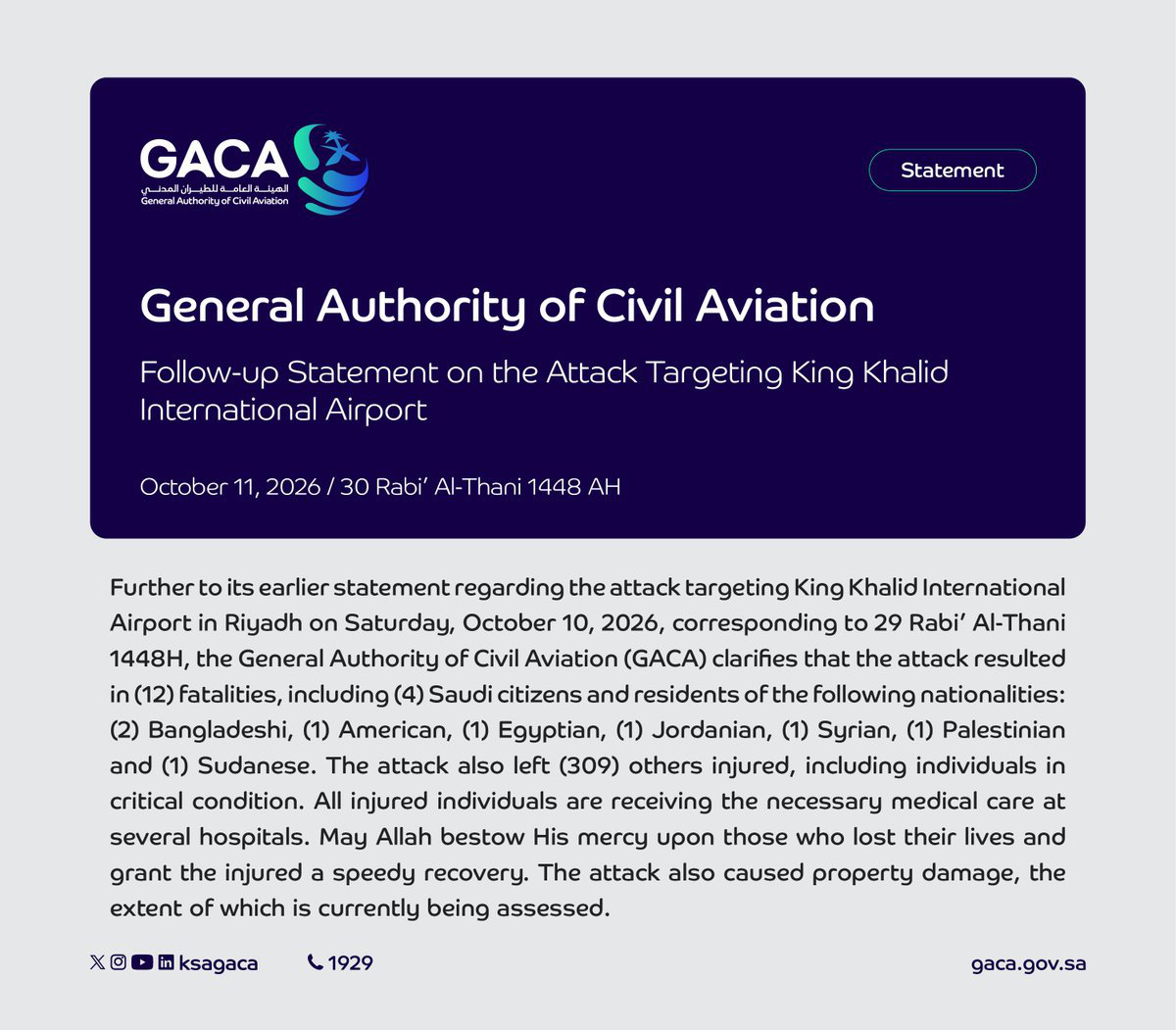
RIYADH: Twelve people were killed and over 300 more were wounded in Saturday's attack targeting King Khalid International Airport in the Kingdom's capital, the General Authority of Civil Aviation (GACA) announced early Sunday.
In a statement, GACA said the dead included four Saudi citizens as well as two Bangladeshi nationals, a Palestinian, a US citizen, an Egyptian, a Jordanian, a Syrian and a Sudanese.
"The attack also left (309) others injured, including individuals in critical condition," the statement said.
Hours after the attack, the spokesman for the Coalition to Support Legitimacy in Yemen indicated that the King Fahd International Airport in Dammam, Saudi Arabia’s main eastern airport, also came under attack.
Maj. Gen. Turki Al-Maliki announced the incident in a post on X.
It was the first time King Fahd International Airport, one of the Kingdom's busiest transport hubs, had been targetted since the Iran war erupted on Feb. 28.
Following the attack on KKIA on Saturday, GACA said operations at the airport were temporarily suspended while an assessment of the damage is carried out.
“This attack comes amidst ongoing blatant assaults targeting civil aviation facilities in the Kingdom,” the authority said.
“The attack resulted in a number of injuries, the exact number of which is currently being determined.”
Saudi Arabia’s foreign ministry said those who had been unable to reach their destinations in the Kingdom from abroad because of the disruption should contact the Saudi missions in the countries where they are located to request assistance.
King Khalid International Airport earlier advised passengers to contact their airlines before traveling to the airport.
The attack comes after three people, including a Saudia pilot, were killed on Thursday in strikes on the airport by Houthi militants in Yemen.
Another attack on King Khalid International on Wednesday killed a Sudanese man, and a day earlier two women were killed when the militants hit Abha International Airport in Asir province.
The attacks have drawn widespread international condemnation, with calls for the Iran-backed group to stop targeting civilian infrastructure.
The Coalition to Support Legitimacy in Yemen announced on Friday that it had launched “large-scale operations” against the Houthis, destroying more than 130 targets.
The Houthis have ramped up their attacks on Saudi Arabia in recent weeks, targeting Riyadh, Abha, Khamis Mushayt, Jazan and Najran.
Last month, the group attempted an attack on Makkah and hit an electricity distribution station supplying the Prophet’s Mosque in Madinah, the coalition said.
This week the group has targeted the Kingdom’s civilian aviation infrastructure with deadly strikes.
A Moroccan woman and an Algerian woman were killed in Tuesday’s attack on Abha airport, not far from the Yemen border. A day later they hit Riyadh airport, killing the Sudanese man. Dozens of people were injured in the attacks, including many foreign nationals.
Then on Thursday, the Houthis carried out another two attacks on Riyadh airport. The first strike hit airport facilities, GACA said, and killed two Saudi nationals.
The next attack hit a Saudia aircraft while it was on the ground, killing pilot Capt. Hamoud Ali AlKalthami.
Saudia CEO Ibrahim Al-Omar paid tribute to AlKalthami, saying his career was full of “dedication and sincerity.”
The shockwaves from such blatant attacks on key civilian infrastructure rippled around the world, sparking an outpouring of anger.
GCC chief Jasem Mohamed Albudaiwi called for serious international action to deter the Houthis.
European Commission President Ursula von der Leyen said attacks on civilian infrastructure are unacceptable and called on the Houthis to stop their reckless and violent acts.
Saudi Arabia’s Permanent Representative to the UN, Abdulaziz Alwasil, told the Security Council on Friday that Riyadh will not allow Yemen to become a launchpad for attacks against the Kingdom or threats to shipping in the Red Sea.