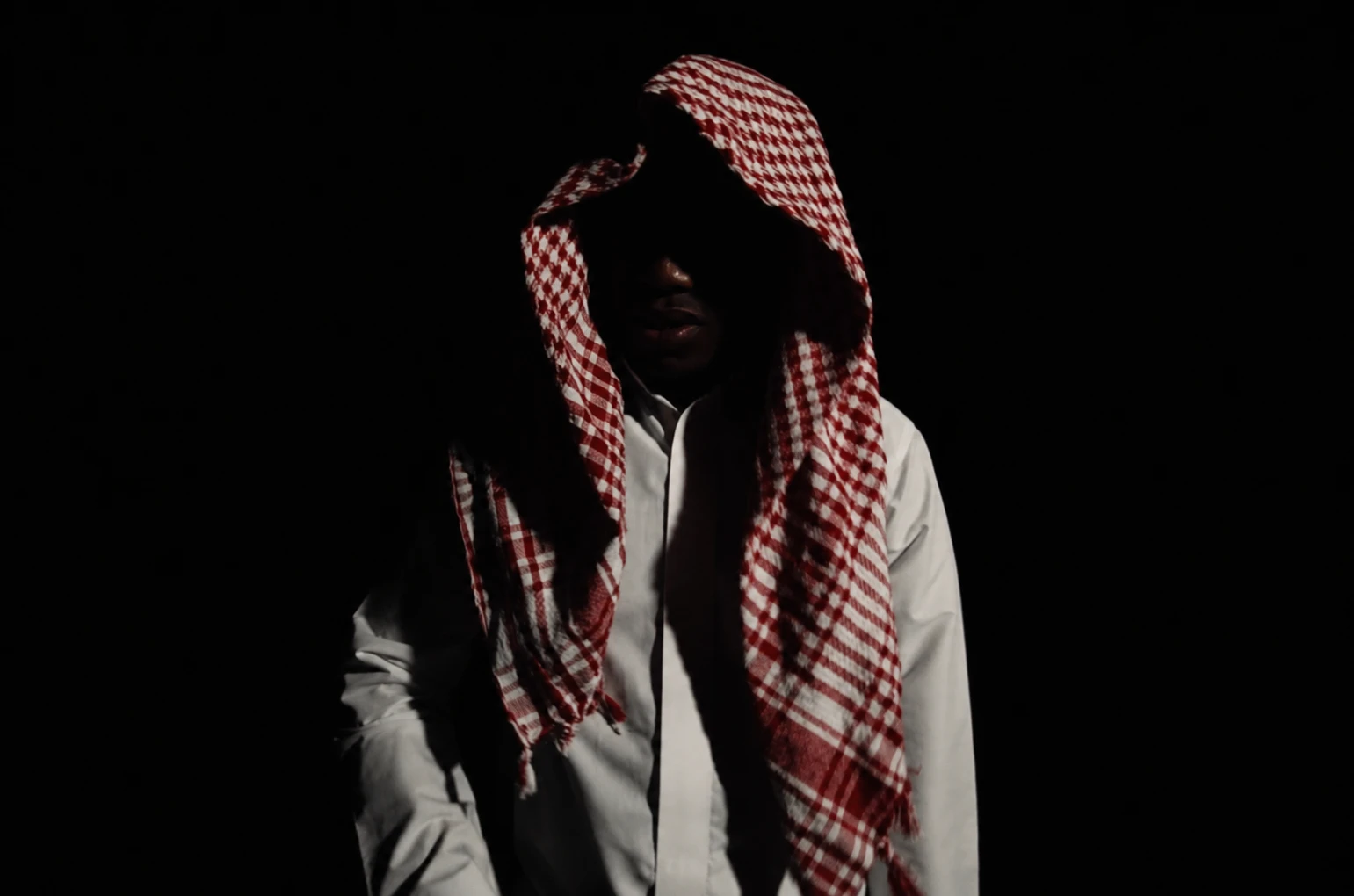
- Yousef Al-Hawsawi, 22, performs in a thobe and shemagh and has sampled Saudi singer Mohammed Abdu
- Earlier this month, Grammy-nominated rapper PlaqueBoyMax invited him to his Rising Star competition in Los Angeles
RIYADH: In 2025, ahead of his university graduation in London, Yousef Al-Hawsawi asked his mother to bring him thobes from Saudi Arabia. It was the start of the look the 22-year-old has become known for.
Now performing as Hawsa, taken from his family name, he pairs the thobe with a shemagh draped loosely around his head and face. He never learned to tie it properly, he said, so he wears it like a scarf.
“I don’t need to be more than what I am,” he said.
Al-Hawsawi was born in Halifax, Canada, and lived in New York before moving to Jeddah around 2012. He began writing music at the age of 8. In high school, he posted recordings of his songs on Instagram, and later on Triller, a short-form music video app popular around 2020.
After moving to London in 2022 to study finance, Al-Hawsawi found his footing in the city’s underground rap scene. He lived with members of Booth Troop Militia, a rap collective in northwest London. He calls the group his “home away from home.”
His latest mixtape, “Only1,” released on Oct. 23, brought his biggest surge yet, passing 700,000 streams on Spotify and nearing a million across platforms.
The momentum continued earlier this month, when Grammy-nominated rapper PlaqueBoyMax called to invite him to Rising Star, a competition for emerging artists in Los Angeles. PlaqueBoyMax has built a large following with livestreams that spotlight up-and-coming rap talent.
Like his look, his music includes references to Saudi Arabia. His most popular song, “Jeddah,” is named after the city where he grew up. On “Welcome Home,” he chopped up the first minute of a Mohammed Abdu vocal, applying one of hip-hop’s oldest techniques to Saudi music.
The rappers who influence him most are American. He names Playboi Carti and Veeze, citing Carti’s consistent innovation and Veeze’s lyricism.
To some listeners, he brings a welcome Saudi perspective to trap and rage rap. To others, he said, he is getting it wrong, from how he wears the shemagh to whether he is Saudi at all.
The criticism holds him to a standard of authenticity he never set out to meet. “My goal with this wasn’t even to represent anybody,” he said. His music draws on everything he is, and that includes Saudi culture.
He is also careful about what his lyrics promote. He avoids glamorizing harmful themes, he said, and when he does touch on them, he presents them negatively.
Kids are listening, he said, along with “easily influenced people.” If even one listener might be tempted to copy what he raps about, “that’s wrong.”
His next single, out Nov. 27, is called “Homicide,” though not for the reason it sounds like. The title, he said, is a play on “killing it,” slang for succeeding.
Asked whether he plans to return to Saudi Arabia eventually, he said, “I will, 100 percent.”