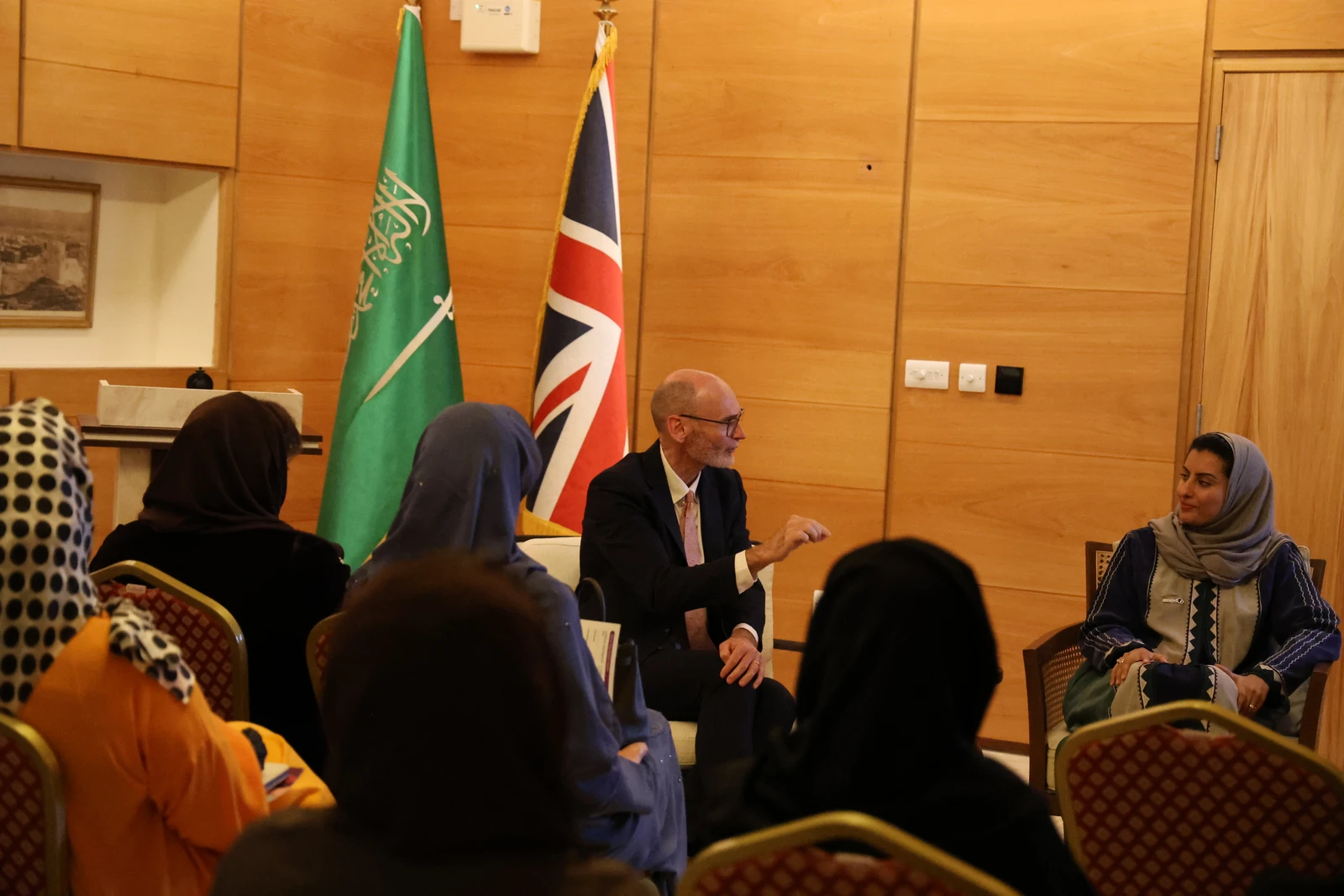
- Panel discussions spotlight support resources, legal frameworks
Saudi, UK advocates join forces to tackle gender-based violence
Lama Alhamawi
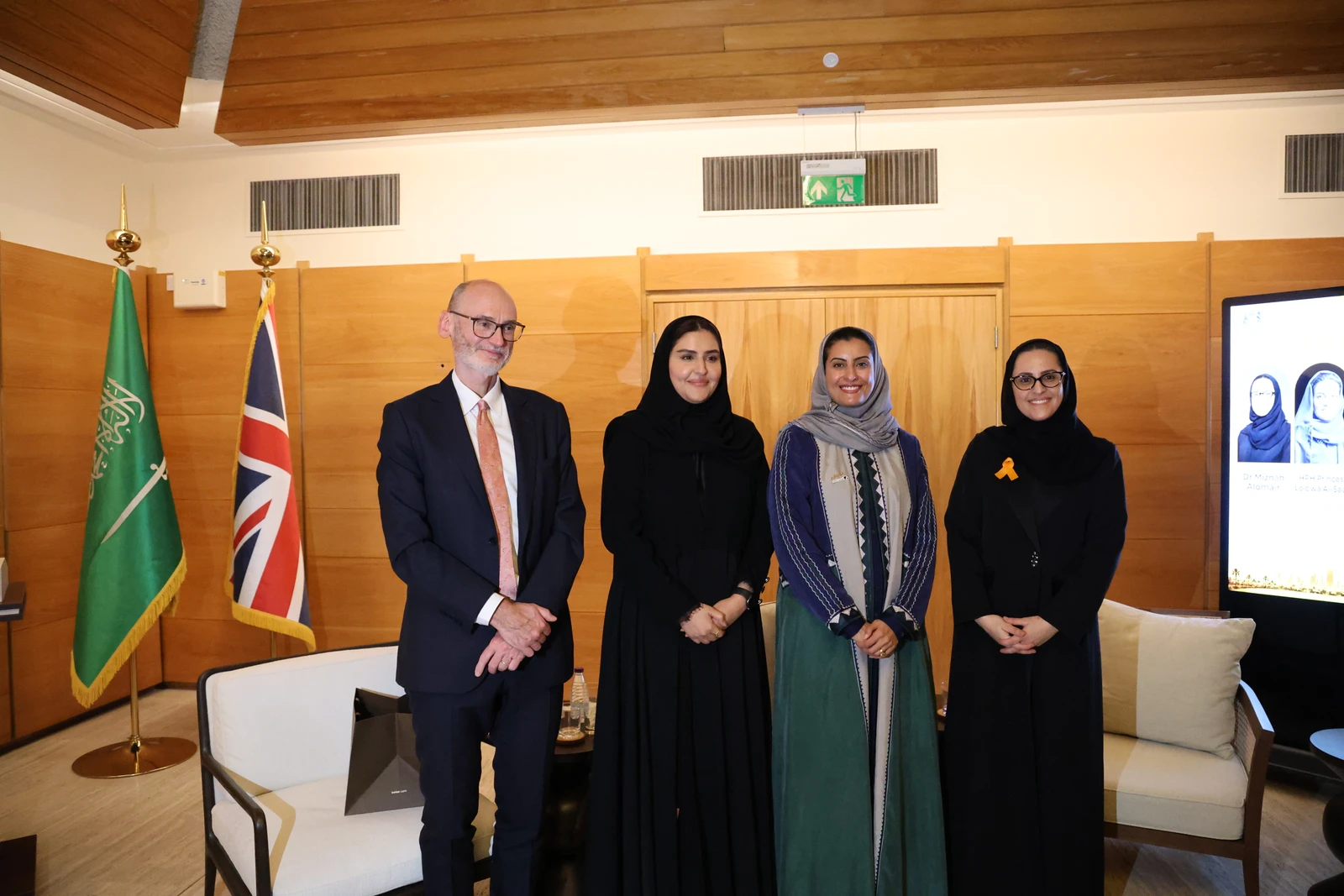
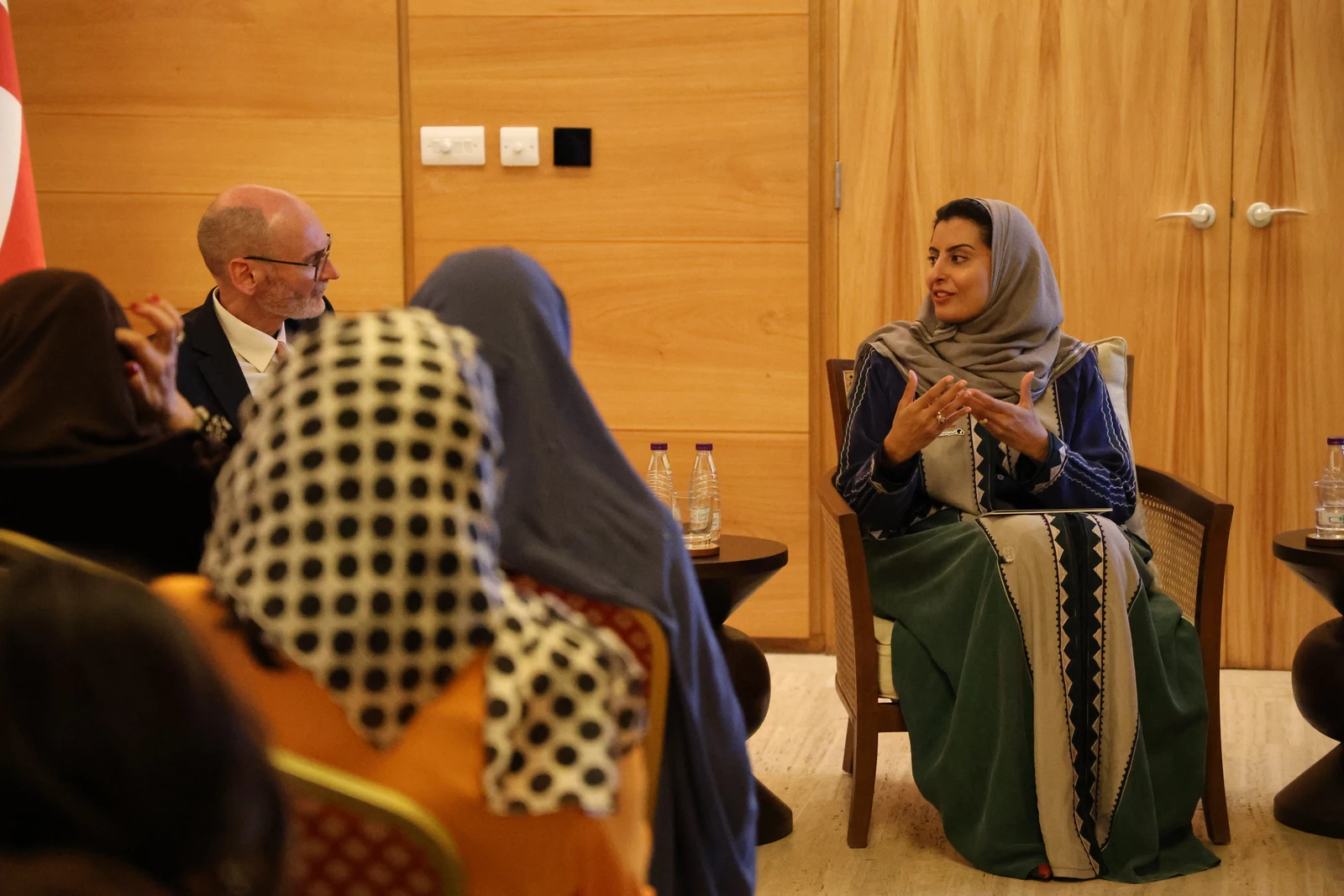
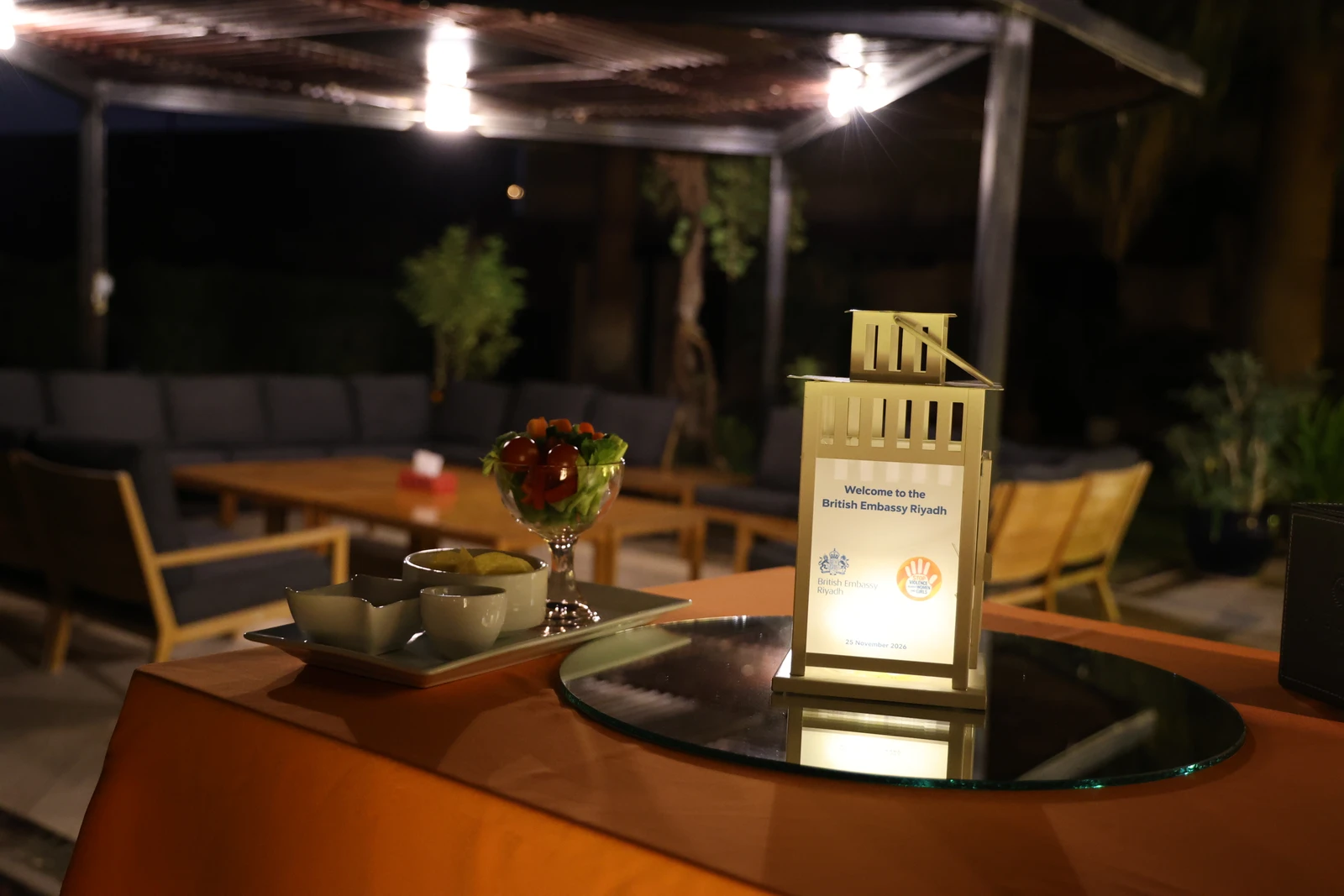
RIYADH: Marking the 16 Days of Activism against Gender-Based Violence, UK Ambassador to Saudi Arabia Stephen Hitchen hosted a panel session at his residence in Riyadh, bringing together prominent Saudi leaders in women’s advocacy to spotlight support resources, legal frameworks, and joint efforts to end violence against women and girls.
“This event was a reminder of just how much we can learn from one another when we bring people together to talk openly about tackling violence against women and girls,” Hitchen told Arab News.
“The UK has an ambitious goal to halve this violence within a decade, and we want to work with partners in Saudi Arabia and around the world to share what works, learn from each other and help make sure every woman and girl, everywhere, can live free from violence,” he added.
The session brought together senior experts in advocacy against gender-based violence and the protection of women and children, including Dr. Miznah Alomair, CEO of Al-Nahda Society, a non-profit focused on women’s social and economic empowerment; Princess Lolowa Al-Saud, chair of Mawaddah Association, a charitable organization dedicated to family stability and protection; and Dr. Nouf Al-Roqaiba, general director of the Sara Sudairi Center for Women’s Studies at Princess Nourah bint Abdulrahman University.
Discussions underscored the importance of awareness, data sharing, and research in strengthening protection mechanisms.
Alomair drew attention to an often-overlooked and under-addressed dimension of gender-based violence: the misuse of artificial intelligence to perpetrate and incite abuse against women and girls.
“Violence will impede the economic empowerment of women, which is the core work of Al Nahda,” she said.
“If the violence is there, they're not going to be able to advance, they're not going to be able to achieve their goals, they're not going to be able to even sustain in their jobs,” Alomair added.
“What I think needs to be addressed is that with the advancement of technology, it's very alarming how AI can perpetuate the violence against women and girls,” she continued. “Utilizing images without the consent of girls, women, and that they're using AI and utilizing for blackmail, for deepfakes.”
The session also examined Saudi legislation protecting against all forms of gender-based violence.
Princess Lolowa underlined the comprehensive legal framework in place, highlighting Saudi Arabia’s anti-harassment laws designed to safeguard women against all forms of abuse.
Speakers also highlighted the network of accessible resources established under the Law of Protection from Abuse and the Child Protection Law.
Bringing together confidential 24/7 hotlines, law enforcement channels, medical teams, and school reporting mechanisms, the system offers multiple avenues for immediate assistance.
Panelists pointed to key services such as the Domestic Violence Reporting Center, managed by the Ministry of Human Resources and Social Development, where women, children, and witnesses can call 1919 around the clock for confidential support.
They also emphasized support channels operated by the National Family Safety Program, including the Saudi Child Helpline at 116111 — which serves children under 18, parents, and teachers — and the Women's Support Line at 199022, which offers dedicated psychological guidance and empowerment resources.
Additionally, speakers noted the oversight role of the Human Rights Commission, which individuals can reach by calling 19922 or visiting hrc.gov.sa to file complaints and access legal advocacy.
Awareness repeatedly emerged as a central theme, with participants emphasizing the need for joint research, training initiatives with local and international partners, sharing methodologies, developing public policies, and launching coordinated national and global campaigns.
Al-Roqaiba highlighted the critical role of data and research, noting that accurate findings are often hindered by underreporting driven by fear among both victims and key stakeholders across sectors such as education and healthcare. She underscored that everyone shares a responsibility to report violence whenever they witness it, adding that measures are in place to continuously protect whistleblowers.
Princess Lolowa echoed that point, explaining that legislation already protects medical workers and professionals who report suspected cases, supported by specialized training on how to recognize, document, stop, and prevent abuse.
Under this year’s theme, “UNITE to End Violence Against Women and Girls: Ensure Justice, Protect Survivors, End Impunity,” the British Embassy underlined that the UK stands alongside Saudi Arabia and global partners in working toward a future free from violence.
According to UN Women’s 2026 figures, an estimated 840 million women — nearly one in three globally, or 30 percent of women aged 15 and older — have experienced violence in their lifetime.
Following the UK government’s commitment last December to halve violence against women and girls within a decade, its strategy takes a multi-sector approach.
In education, efforts focus on supporting teachers to discuss consent and healthy relationships with young people, recognize controlling behavior, and challenge online misogyny.
In healthcare, general practitioner teams are being equipped to identify signs of domestic abuse and refer patients directly to specialist support.
Faith-based engagement also plays a central role. Following a September symposium in Jeddah organized by the Muslim World League — which unequivocally affirmed that there is no Islamic justification for violence against women and girls — a joint guidebook bringing together multi-faith voices to reject any justification for abuse will be launched in January alongside faith leaders, academics, civil society organizations, officials, and diplomats, with local partners in Saudi Arabia invited to collaborate.