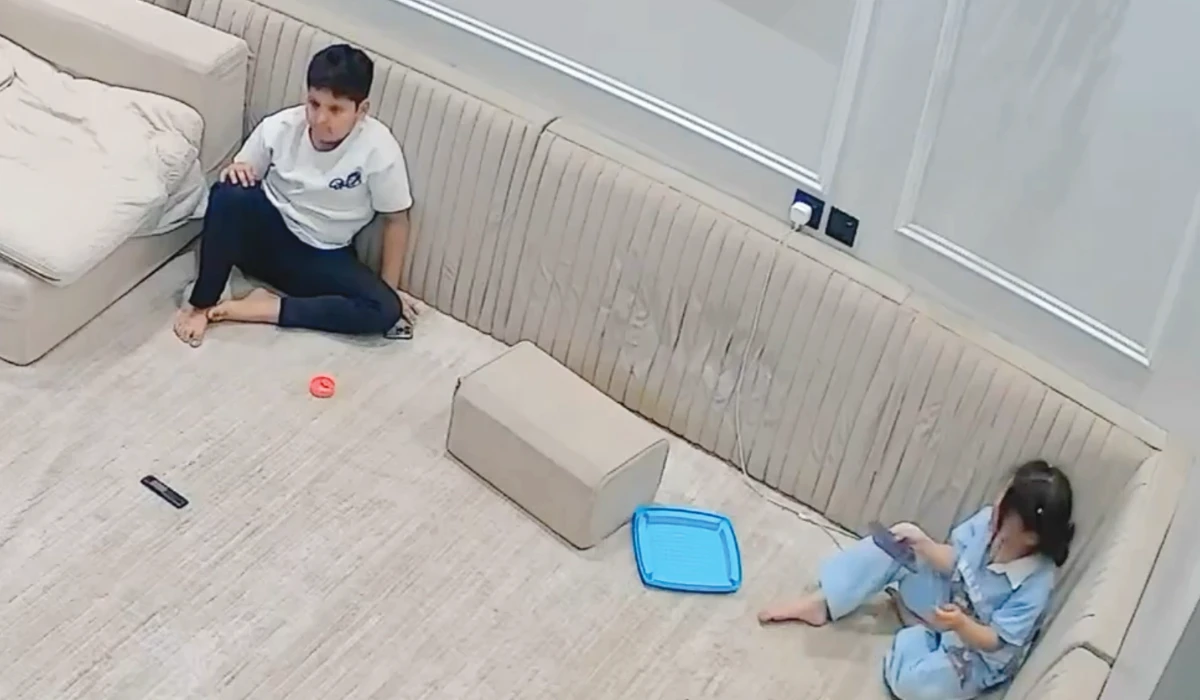
- Viral video on social media shows calm response of young boy who reassures others during emergency alert but reactions among children can vary widely, from curiosity to fear
- Challenge for parents is how best to explain unfamiliar situations and threats to youngsters, balancing the need for safety with a desire not to cause unnecessary anxiety
ALKHOBAR: When an emergency alert rang out on a mobile phone inside a house in Saudi Arabia, a young boy responded with a few words of reassurance: “We’re in Saudi Arabia, don’t be afraid.”
The moment, captured in a video that circulated on social media on Tuesday, showed two children relaxing at home when a security warning sounded. Rather than appearing alarmed, the boy sought to reassure another child beside him.
The video, shared on X by the account @labeebhubb, attracted more than 650,000 views within 12 hours, with users impressed by the child’s confidence and spontaneous words of reassurance.
But beyond this widely shared moment, the reactions of children to emergencies and threat warnings raise questions about the understanding among young people of potential dangers, what makes them feel safe, and how parents can explain unfamiliar situations.
With Saudi Arabia’s National Early Warning Platform sending out notifications to residents about potential threats amid recent attacks on the country during the wider regional conflict, families are navigating conversations that many children might be encountering for the first time.
For some of the youngsters, the alerts prompt curiosity. Others might be frightened by the unfamiliar sounds or reactions of the adults around them.
While the calm response of a child can be reassuring, psychologists say children can process uncertainty differently depending on their age, understanding and previous experiences.
The first thing 10-year-old Abdullah Al-Qahtani said he noticed when an alert arrived was the sound.
“I was sitting with my family when the phones started making noise,” he told Arab News. “I didn’t know what it was at first, so I asked my dad. He told me it was a warning and that we needed to stay inside.”
When I heard it, I asked my mother if we had to leave the house. She told me we should stay inside and wait until it was safe.
Reem Al-Dossari, Nine-year-old
Asked whether he was frightened, Abdullah said he initially felt nervous but became more calm after his father explained what was happening.
“I was scared for a little bit because the sound was loud,” he said. “But when my dad told me what we should do, I felt better.”
His mother, Maha Al-Otaibi, said the experience had reminded her how closely children observe their parents during unfamiliar situations.
“When the alert came, my first reaction was to check what it said,” she said. “But I could see my son watching me. He wanted to know if something bad was going to happen.”
Rather than simply dismissing his questions, she said she explained to him that the warning was intended to help people stay safe.
“I didn’t want to frighten him but I also didn’t want to tell him there was nothing to worry about when we were receiving an alert,” she explained.
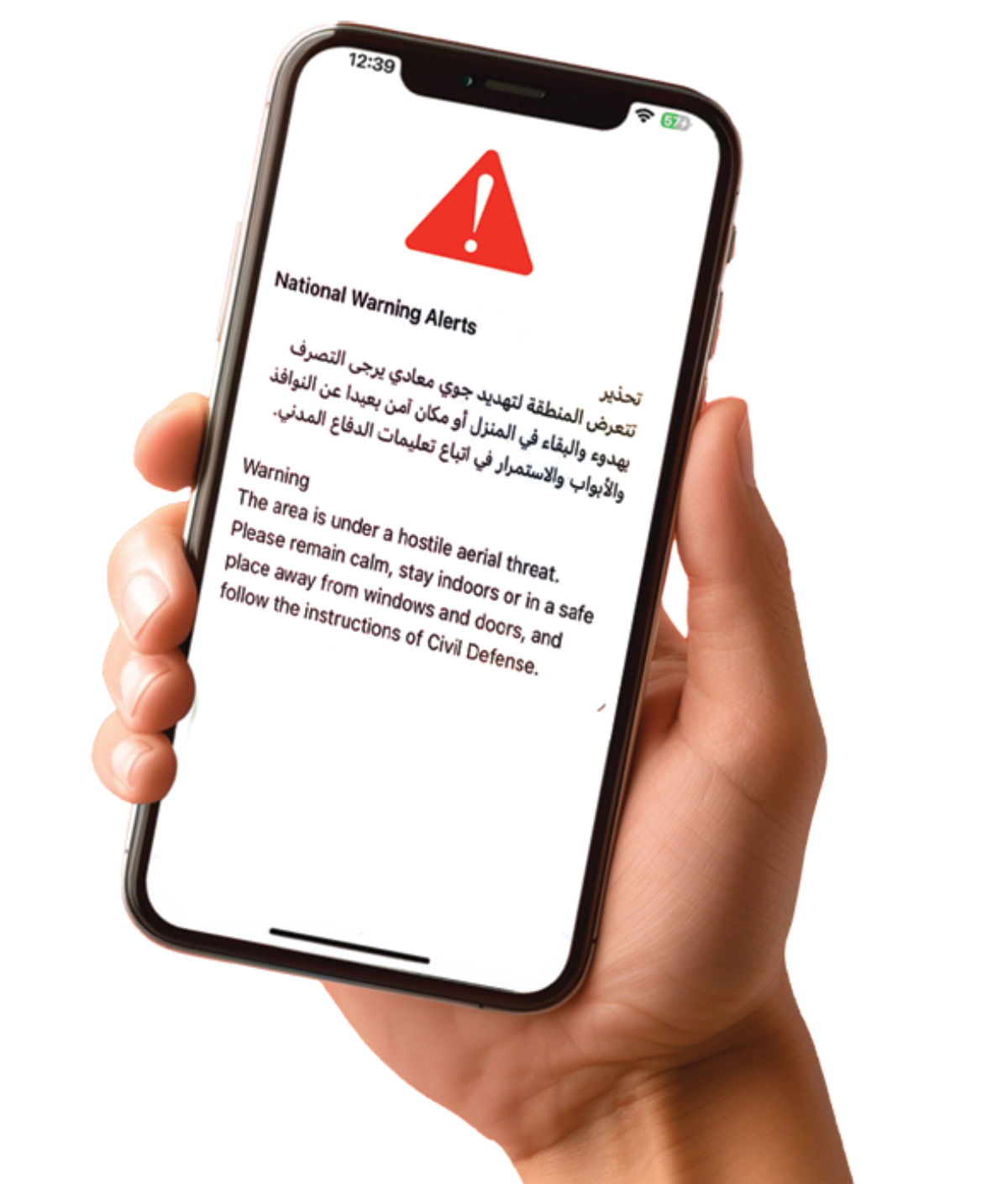
The National Early Warning Platform, which is operated by the Saudi Civil Defense, uses cell broadcast technology to send warning messages directly to mobile phones. The alerts are accompanied by a distinctive sound, and designed to quickly inform residents about potential hazards or threats and the actions they should take to protect themselves.
For families with young children, however, receiving an official alert can involve more than simply following instructions. Parents must also decide how much information their children need to know.
Nine-year-old Reem Al-Dossari said she had heard emergency alarms but did not pay too much attention to them.
“When I heard it, I asked my mother if we had to leave the house,” she said. “She told me we should stay inside and wait until it was safe.”
However, Reem said she had been concerned about the safety of family members who were not with them.
“I asked about my grandmother because she lives somewhere else,” she said. “I wanted to know if she heard the same sound.”
Reem’s mother, Huda Hussain, said the questions continued even after the all-clear was given.
“She wanted to know why the alert happened, whether everyone received it and what we would do if it happened again,” she said.
“I realized that explaining what happened once wasn’t enough. She needed to understand what we would do next time.”
The differing responses to the alerts illustrate how different children can interpret the same situation in different ways; one child might focus on the sound of an alert, another might worry about the safety of relatives, ask about the source of the danger or seek reassurance from adults.
The video of the young Saudi boy drew attention because of the confidence he expressed in his response, but it is important to realize that children react to emergency situations in differing ways. Some might feel reassured by familiar surroundings and the presence of their families, others might need additional explanations, more comfort or time to process what they have heard and seen.