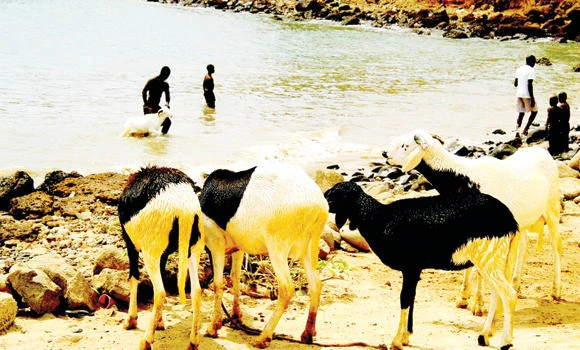
As a desert guide once told me, there are three kinds of ‘Gazelle’ in Senegal, two of which are the animal and the beautiful women. Both of these are likely to leave a strong impression on you during your travels throughout this welcoming West African country. Indeed, Senegalese people are extremely proud of their quintessential ‘teranga’, meaning ‘hospitality’, so it’s hard not to feel at home as you explore this incredible place. Without a doubt, this country packs a punch for every open-minded traveler willing to get off the beaten tourist tracks of Europe and the Americas to try their luck in the African continent.
Senegal is a coastal country bordered by Mali, Mauritania, Guinea and Guinea-Bissau, and fully engulfs The Gambia. Since gaining independence from the French in 1960, it has remained one of the most peaceful and stable countries in the region, and has also managed to avoid the recent Ebola outbreak that has affected nearby areas thanks to its very early border closures and vigilant entry checks. Overall, Senegal is largely a progressive, tolerant country that invites a range of foreigners for whom the first point of contact is usually Dakar.
Dakar city
Dakar is Senegal’s bustling seaside capital that somehow manages to retain a laid-back character, despite its endlessly busy streets and market places. If you look beyond the crowds and traffic, you’ll get a sense of Dakar’s calmly pulsing heartbeat that is manifest in every friendly coffee stallholder, in the musical rhythm of the passing horse-drawn carts, and amongst the contented chatter you’ll find in most street-side traditional restaurants.
While the majority of Dakar’s attraction is found in the lifeblood of its alleys and streets, and not necessarily in specific tourist sites, one place worth visiting is the Mosque of The Divinity. Unlike the better-known Grand Mosque of Dakar, this mosque is ideally located right on the coastline overlooking the ocean. The view from the cliff above the mosque is absolutely breathtaking at sunset, so be sure to make a special trip here. Additionally, the Monument de Renaissance — a tribute to Africa’s emergence from the oppressive colonialism of European regimes — should feature on your ‘to-do’ list. Standing at 49 meters (taller than the Statue of Liberty in New York), the monument was completed in 2010 amid much criticism about its $27 million price tag, among other controversial disapprovals.
Another place of interest is the Institut Français, which is a language center, cinema, exhibition venue, concert arena and restaurant all in one. Head there at dinner time so you can appreciate the great atmosphere created by the soft lighting, excellent menu and regular live music performances to sing and dance along to. Be sure to head out to busy Dakar’s market places as well — notably, the Kermel Market where Senegalese locals do their food shopping, as well as the Marché HLM which specializes in an array of colorful fabrics to help you keep up with the local fashions.
Dakar is perhaps most famous for its incredible nightlife where the music doesn’t start until 1 a.m., and the main band wont even contemplate arriving before 2 a.m.
Most tourists choose to stay in the inner city hotels near the Place d’Independence, which are thoroughly westernized and generally provide every imaginable comfort. If you’re more of a simplistic traveler, bring a little more authenticity to your stay by opting for a homestay or a more basic accommodation choice outside of central Dakar. No matter where you choose to stay, getting around Dakar by taxi is cheap and easy, meaning you can be back in town in 10-15 minutes at a cost of only 1000-1500 CFA (about US $2-$3).
The Islands of Greater Dakar
Once the late evenings in Dakar have taken their toll on you, give yourself some rest by making a lazy day trip to the islands off the coast. If you only choose to see just one, let it be the Île de Gorée, where you can learn about Senegal’s important history as a former French slave colony. The lasting colonial architecture and various monuments of a dark past will stay with you as you do your best to try and understand France’s mid-1800’s decision to simply help itself to Senegal, and its people. Set aside a good hour or two to visit the ‘Maison des Esclaves,’ or the House of Slaves, where men, women and young children were kept in dark, crowded dungeons to await their export abroad. A short information session at the Maison can help you get a more full picture of this eerie island.
If you have some more time up your sleeve, be sure to make a trip out to the Île de Madeline, a pristine nature reserve located 15 minutes by boat off Dakar’s coast. A half-day will allow you to truly appreciate this authentic Senegalese coastal environment, where a charismatic guide will show you around for a few dollars. It’ll be a cleansing breath of fresh air after being in busy Dakar. The Île de Ngor offers similarly breathtaking views of the Dakar coastline from its South-Western edge, causing you to lose track of time sitting on a cliff-top bench watching the water roll in. The restaurants here are a great place to grab a bite to eat while you watch the sun retire for the day.
Access to all three Islands is possible by motorboat. While this form of transport will generally get you there in one piece, lets just say it’s likely to be a special kind of ‘adventure’, so hold on to your knickers! Tell your taxi driver which island you’re heading to, and he’ll get you to your pick-up port for the Island for no more than 1500CFA (US $3) from anywhere in Dakar.
Lac Rose
Located some 30 km north-east of Dakar, Lac Rose, also known as Lake Retba, is a Dead Sea on some very, very serious steroids. Estimated to be even saltier than Palestine’s Dead Sea during the dry season, Lac Rose is a sight not to be missed. Due to the high level of Dunaliella Salina bacteria in the water that produces a red pigment when absorbing sunlight, this natural lake takes on a fierce pink color when the sun is overhead. Take a boat ride out into the lake with some locals to fully appreciate the depth of the rich, milky color. Yet beware: it might look surprisingly like a happy strawberry milk drink, but don’t let this water anywhere near your face or you’ll have a burning sensation of regret (quite literally) for the rest of the day if it gets near your eyes!
Lac Rose is also the finish line for the Paris-Dakar Rally, so if your need for speed is feeling particularly pronounced, you can hire a 4x4 and recreate your own rally along the waters edge. Take advantage of the unique souvenirs on offer around Lac Rose before heading home, and be sure to bargain well. As a general rule of thumb, halve the seller’s initial price, take a little extra off, and then counter offer with that. Once you get into the bargaining game, you’ll often be in for a long haul, so don’t be in too much of a rush that you forget to properly engage with these bubbly, charming vendors, as each certainly has a story or five to tell. Even if you leave without souvenirs, ensure that you don’t leave without having learnt the names of at least three new friends, two pieces of local history, and perhaps one new quirk to tell your friends and family back home.
Beyond the Greater Dakar region
Senegal really does have so much more to offer than the few sites in Greater Dakar mentioned here. Other must-see places include St. Louis (a vibrant UNESCO World Heritage site and the former capital of Senegal), the Lompoul desert, where you can stay overnight in the sand dunes to experience true serenity, the coastal town of Toubab Dialao, which is one of the best places to enjoy pristine beaches and a lively local atmosphere, and of course the lush tropical environment of the southern Casamance region, where the sights, smells and sounds are well worth the journey.
Most of all, Senegalese people are anything but rushed. Let their characteristic calmness get under your skin in order to fully appreciate the gentle ebb and flow of this remarkable country. At every possible opportunity, make the time to take a few cups of sweet green tea with those you meet, as it is these quiet encounters that will allow you to understand true ‘teranga,’ and will reveal to you the real Senegal that many tourists tend to miss.
—
Email: [email protected]
Tea and ‘teranga’ in Senegal