Where in the world is the best holiday destination for culture lovers? The Taj Mahal in India? The monuments of Rome? The Great Pyramid in Cairo? Or perhaps the vibrant city of Berlin, Boston or Beijing? We have prepared a list of eight destinations for those who love cultural exposure to feed their soul.
1) Rome, Italy:
Wonderful, chic, carefree, chaotic Rome! From the ruins of her ancient glory, to St. Peter’s legacy, from the Renaissance and Baroque to Zaha Hadid’s contemporary temple of art, Rome is crammed with monuments and places that are nonchalantly absorbed into her daily life.
There is no need to go sightseeing: a morning coffee might have the Pantheon or a Bernini fountain as a backdrop; a shopping spree will take in the Spanish Steps and the house where Keats breathed his last; dinner might overlook the Piazza del Popolo; the best gelateria in town is but coin’s throw from the Trevi Fountain. The Eternal City has been a scene-stealer ever since Tosca leapt off the battlements of the Castle Sant’Angelo, inspiring cinematographers from Fellini’s 1960 paean to gorgeous decadence, La Dolce Vita, to gladiatorial epics in the Colosseum and films of fanciful intrigue in the very Vatican.
Best explored on foot, serendipity reveals, pleasures at every turn. And, on the subject of pleasure: Romans have always had an epicurean bent. Lark’s tongues and cock's crests may be off the menu, but in Rome one still dines like Caesar, whether in the Michelin-starred La Pergola, or at that little pizzeria beneath the fig tree.
2) Berlin, Germany:
When it comes to buildings by the giants of 20th-century architecture, few cities rival Berlin, a city of such energy and dynamism it feels constantly in flux.
From Mies van der Rohe’s sublime low linear Neue Nationgalerie to Norman Foster’s Reichsrag dome, by way of Alvar Aalto, Walter Gropius and Oscar Niemeyer, all of whom contributed to the area known as the Hansaviertel on the edge of the Tiergarten (The city’s main park) and living starchitects such as Frank Gehry (The DG-Bank on Pariser Platz, best looked down on from the Reichstag roof terrace), Richard Rogers (the unmistakable offices on Linkstrasse), Zaha Hadid (apartments on Stresemannstrasse), almost every big name is represented.
British architect David Chipperfield has recently transformed the Neues Museum (home of a spectacular collection of Egyptian antiquities, notably the famous Nefertiti head), the must-see of the museums on the Museumsinsel, an island in the river spree.
3) Boston, USA:
Given it’s one of the oldest cities in the US, situated on a natural harbor; it is not surprising that most visitors come to Boston to take in both its historical culture and pretty shoreline. It’s one of America’s quaintest cities: a mix of handsome brick houses and colonial architecture set on cobbled streets, backed by soaring 21st century skyscrapers and fronted by a network of paths along the coast, taking in attractions from historical sites (The USS Constitution, the oldest commissioned warship in the world) and politics (at the Boston Tea Party Ship and Museum) to art.
Popular walks include The Freedom Trail which is a 2.5 mile tour of the city’s key colonial-era sites, denoted by a red-painted strip on the pavement; the area around Little Italy, with its cake-filled café, and Beacon Hill, the colonial-era suburb with its hidden gardens and grand homes.
Boat trips are the best way to explore the city quickly, with experts, with dozens of options ranging from kayaks for the adventurous and tall ships for history-lovers to Duck Tours’ rather ugly but amphibious craft.
4) Beijing, China:
Not with the best will in the world could anyone ever call Beijing a beautiful city. It sprawls chaotically over 6,900 largely unlovely square miles and at first sight seems totally unmanageable. Beijing, however, does have its jewels and it will surrender them even to the first-time visitor with surprisingly little resistance.
This is largely because of the excellence of the metro, the friendliness and helpfulness of the people, despite a formidable language barrier, and the fact that the vast majority of Beijing essentials are within a mile or two of the heart of the city, the vast palace complex of former emperors, The Forbidden City. The only time you will have to venture further afield is to see the Great Wall, Ming Thombs or the Olympic complex. It is true that in preparation for the Olympics and funded by China’s new-won wealth, the bulldozers have taken their toll on old Beijing, particularly the hutongs, the narrow-allayed quarters which used to buzz with street life. Some, though, such as Nanluoguxiang in the Gulou, or the Drum and Bell Tower district have survived and they complement perfectly the historic sites and Brave New China.
5) Agra, India:
In Noel Coward’s Private Lives, there is a scene in which Elyot, recently returned from India, is asked by his former wife about the Taj Mahal. He replied that it was “unbelievable, a sort of dream…” Not quite convinced, she says, “It didn’t look like a biscuit box, did it? I have always thought it might.”
It’s sad but true that there are unfortunate number of A-list celebrity destinations which, when that are finally visited, simply just don’t justify the years’ anticipation that may have preceded the encounter. The Taj Mahal is not such a destination. The Taj Mahal is the real McCoy.
6) Buenos Aires, Argentina:
Thrumming with the rhythm of the Tango, steeped in the sticky scent of barbecuing steaks and crammed with fiery, life-loving portenos, Buenos Aires is not the city for a low-key getaway. It’s a city that grabs you by the scruff of your stiff neck and gives you a good old revitalizing shake.
The old and the new, the rich and the poor, the refined and the rustic jostle excitedly in this full-of-beans city. Vestiges of colonial Buenos Aires remain in its lavish mansions and places, old-world cafes and pretty Manzana de Las Luces area, which was colonial center of learning and contains the city’s oldest buildings. But modern Argentina is never far away, with contemporary art galleries around every corner (Fundacian Proa is the most cutting-edge) and avant-garde structures decorating the skyline. Don’t miss the mental Floralis Generica, which opens its huge petals every morning and closes them at dusk.
Elsewhere, the clashes continue, with manicured parks and chic boutiques bordering scruffy but captivating market districts and gourmet restaurants battling for customers with sizzling street stalls and packed delis. There is one thing, though, that of all Buenos Aires seems to agree on: when darkness falls, it’s time to tango the night away.
7) Cairo, Egypt:
For many, Cairo is but a grudging pit-stop en route to the pyramids at nearby Giza, before dashing south on a mandatory Nile cruise. But Cairo is a city rich with the legacy of 2,000 years, worth the heat and dust and traffic-clogged effort.
Famed for its mosques and Islamic architecture, from Fatimid to Ottoman rule, this “City of 1000 Minarets” is built of foundations whose earliest surviving monument of note, from the 1st Century AD, is Trajan’s Babylon Fortress then on the banks of the Nile. The area become a center of early Christianity, steeped in legend.
Old Cairo still has a tranquil, biblical appeal. Pottery is sold by the roadside, where sheep graze and their owners sit in the shade smoking shisha. In Islamic Cairo, by contrast, the muezzin yodels above the bazaars of Khan el Khalili and klaxons blare, while literary cafes fade back into Cairo’s heyday as an intellectual center. The timeless Nile, coursing past the 4,500-year-old pyramids and through the center of Cairo’s history, simply flows on unperturbed.
8) Cape Town, South Africa:
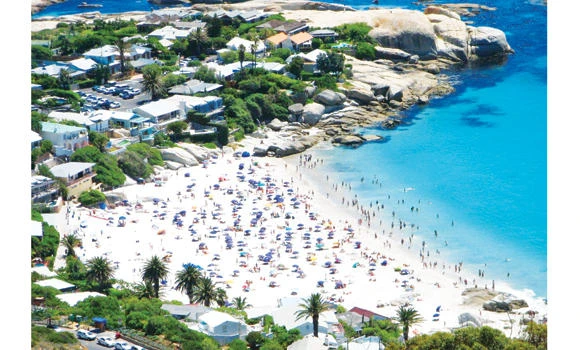
South Africa’s oldest city, founded by the Dutch East India Company in 1652, is surely the most beautiful and cosmopolitan in Africa. Urban style, design and sophistication have come to nestle in a dramatic wilderness setting between mountain and ocean, further enchanted by a National Park where wildlife roams free. In this city with the atmosphere of a holiday resort, white-collar workers are never far from a beach populated by muscle-bound surfers; nevertheless, extreme poverty does rub shoulders with extreme wealth.
Constania, Franschhoek and Stellenbosch have become Cape Town’s main tourist attractions. Beautifully maintained and easily accessible, they extend down from the slopes of the dramatic Table Mountain into the plain, offering excellent food, Cape Dutch architecture and art — all in a spectacular natural setting.
—
Email: [email protected]
Will travel for culture? Here’s where you should go