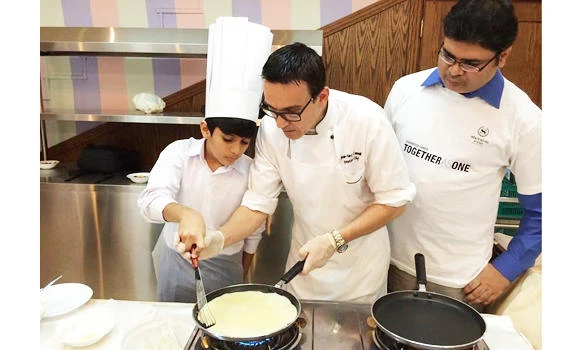
With summer break here, finding suitable activities for a child with special needs may be daunting for some parents. While holidays are indisputably a time to relax and reset, they are also a great opportunity to consolidate what has been learned over the academic year.
“As a family with strong ties to Saudi Arabia, we do not spend a lot of time outside the Kingdom and find that the desolation of activities and stimulation for my needy daughter weighs heavily on her each long summer due to lack of proper facilities and offerings for children in her category. In the past, over the summer, she usually just sat and watched TV, forgetting many of the things she learned during the school year,” said Dr. Mariam Gard, mother of a young special needs child.
“I work at a university and find that the attitude of the government toward special needs children and adults is changing, but it needs to change more rapidly so that these angels can get the tools to contribute what they can. Most of them are ready and willing and want to make a difference. Let’s not hide our special needs daughters and sons away in the house all day; let’s make them true members of our society,” she said.
Nandini Ashok, senior teacher at HOPE Center for Exceptional Needs, Jeddah, has suggestions for making the most of your time off. “Continue with life skills and therapies at home. Base these around your child’s IEP and ask your child’s teacher for activity suggestions. Keep your child moving as much as possible, be it in the form of structured play or free play and restrict TV time. Ensure that your child is not glued to the screen all day long,” she said.
Nandini advised ensuring that activities are appropriate. “If your child has sensory processing disorder, choose activities that are sensory related. Involve the child in activities in and around the house – helping with the dishes, the laundry, setting the table, putting away their toys and clothes, watering the plants, etc.,” she said, adding, “Once a day decide on a fun-filled activity that involves the entire family. This could include going for a short walk, reading stories aloud or any simple board game that your child enjoys.”
If you are staying in Jeddah over the summer holidays, you may want to consider enrolling your child in specialized activities. HOPE Center has announced its “Summer of Therapies” program. Running between June 21 to Aug. 20, the center is offering a variety of therapeutic activities for young people.
HOPE Center director Dr. Uzma Raheem said: “This is the first time something exclusively for special needs will be available in the Kingdom during summer. As an alternative to summer camps, we’ve designed a structured program to help bridge the time between the holidays and academic year in a constructive way.”
“Places offering therapeutic interventions should not be closing throughout the year, except for public holidays. People with special needs risk regressing. It’s important that parents carry out the recommended follow-up activities with their children.”
“We understand that people may travel during the summer, so parents may choose to select sessions on a day-to-day basis.”
Parents should remember that they are a child’s most immediate role model and good behavior starts with what a child sees at home, said Kim Lyon, head of student affairs and counseling at the HOPE Center.
“There are many simple techniques which a family can use to improve behavior at home. Reinforcing good behavior and using positive language, rather than saying ‘no’ or ‘don’t do that’ can turnaround a child’s behavior and the atmosphere in a household. It is useful to think of a child’s well-being holistically, as diet and activity levels are directly linked to behavior.”
Good nutrition is essential for children’s well-being, healthy living and effective learning. Just as learning doesn’t end when school closes, neither does the need for good nutrition. Children who practice good eating habits learn better, act better and feel better.
“As summer sets in, children tend to snack more due to disruption in maintaining regular meal patterns leading to binge eating habits. To overcome this, they should be encouraged to follow proper eating and snacking schedules such as breakfast, lunch, dinner and two snacks. This helps them stop mindless munching between meals. Inclusion of organic fruits and vegetables, whole grains, nuts, beans, healthy protein and calcium rich dairy products will help the children to meet their nutritional requirements,” dietician Hiba Kaleem said.
Another area of focus is dehydration due to excessive heat and physical activities which causes water and electrolyte imbalance in children. “To replenish their fluid levels, plenty of water, fresh juices, milk, high-water content fruits and vegetables can be given. Calorie rich juices, sodas and sugary beverages should be avoided as they have no effect on satiety.”
Hiba advises: “During the holy month of Ramadan, children who fast need to be closely monitored by their parents. Faulty eating habits during Ramadan can lead to dietary gaps resulting in nutrient deficiencies that may hamper their growth and development.
“Hence, it is important for the children to have a proper suhoor which contains slow digesting fiber rich foods such as whole wheat cereals, fruits and vegetables, milk and milk products so that they can carry the fast successfully throughout the day.”
Hiba said forceful eating or over eating and carbonated drinks should be avoided as it may cause indigestion, bloating and gastric acidity. “During iftar, children should consume dates as they are rich in dietary fiber, along with lentils, hydrating fruits such as oranges, watermelon, grapes, pineapple and mixed salads rich in vitamins, minerals and fiber.”
“A combination of all these foods will help them feel refreshed, enhance their energy levels, facilitate digestion and prevent constipation. It is also important that children drink plenty of water, milk, yogurt (laban) and fresh juices between iftar and suhoor to stay hydrated in the scorching summer heat,” she added.
TRAVEL TIPS
For families who will be traveling, here are some tips on how to avoid or deal with temper tantrums and meltdowns:
If you are traveling this summer, ensure that you put up a schedule for your child either in the form of writing (if they can read) or visuals.
In order to avoid meltdowns while traveling, prepare your child in advance. Talk about it days in advance, role play it out and show it in visuals so that your child is mentally prepared for the change in scenario.
For the airport, equip yourself with iPads that have interactive apps for your child and his/her favorite toy to keep them engaged.
If your child has sensory processing disorder, it is advisable to take along a weighted blanket or a weighted vest. It will help in calming your child.
Before boarding see to it that your child is well-fed, has gone to the toilet, is wearing comfortable clothing and shoes. If your child has sensory processing disorder, use clothing made of soft material and remove all tags
If your child with sensory issues is sensitive to noise, use headphones to filter away unwanted noise.
If your child needs to be sedated before a long haul, please consult your doctor. Do not self-medicate.
If you plan to go near any water body and you have an autistic child, be alert. Having said that, beach side is the best place for children with sensory processing disorder — the sound of the waves, smell of the sea, textures of the sand and the feel of water will help calm your child.
Maintain a scrapbook and make a note of the new places that you have visited, movies that you have seen and activities done during your holidays.
Whatever you’ll be doing and wherever you’ll go, try to keep a positive attitude and know that advice is available if you need it.
—
Email: [email protected]
A special summer for exceptional children