- A total of 33 listed companies and banks updated the market regarding the tax proposal, with 19 still evaluating its financial impact.
- The Domestic Minimum Top-up Tax will apply to multinational groups with revenue of at least €750 million ($823 million) and takes effect on Jan 1.
RIYADH: Saudi Aramco is among several of the Kingdom’s leading companies expecting limited impact from a proposed 15 percent minimum top-up tax, while many major banks and petrochemical firms are assessing their exposure.
In a Nov. 26 filing to the Saudi Exchange, Aramco said that it falls within the scope of the proposed legislation but does not expect a material impact on its consolidated financial results.
Sabic Agri-Nutrients Co. and Yanbu National Petrochemical Co. also expect to be covered, though they have yet to determine the financial implications.
A total of 33 listed companies and banks issued updates on the proposal on Nov. 26, with 19 still assessing its potential financial impact, according to a tally by financial news portal Argaam.
The Domestic Minimum Top-up Tax is scheduled to take effect on Jan. 1, and will apply to constituent entities of multinational groups with consolidated annual revenue of at least €750 million ($823 million) in at least two of the four fiscal years preceding implementation.
The measure is designed to bring the effective tax rate on qualifying profits to at least 15 percent when the rate calculated under the applicable rules falls below that threshold.
Daniel Al-Banna, financial market analyst and wealth management specialist at Hewar Group, told Arab News that falling within the scope of the legislation does not necessarily translate into a higher tax burden.
“The impact will depend on its effective tax rate, existing tax and zakat payments and the adjustments,” he said.
Banking sector
Saudi National Bank, Al Rajhi Bank, Saudi Awwal Bank and Banque Saudi Fransi confirmed they meet the proposed applicability criteria and are assessing the potential financial impact.
The Saudi Investment Bank is assessing whether the legislation applies to it but does not currently expect a material impact on net profit.
Bank AlJazira is assessing the law’s applicability to the bank and its subsidiaries, as well as its potential financial impact.
“I believe investors will increasingly focus on the actual earnings implications rather than whether a company falls within the scope of the legislation,” Al-Banna said.
He noted that this could lead to more differentiated valuations across Saudi-listed companies as investors reassess their future earnings expectations.
Varying exposure
Advanced Petrochemical Co., MBC Group and Seera Group Holding expect no material financial impact, while Americana Restaurants anticipates no material change to its consolidated effective tax rate.
ADES Holding Co. expects no material incremental financial impact, citing its existing exposure to similar international tax requirements.
Meanwhile, Bahri, eXtra, Savola Group, Sipchem and the National Agricultural Development Co. are assessing their potential financial exposure.
Earlier disclosures highlighted varying levels of anticipated tax liabilities, with Almarai estimating additional tax expenses equivalent to between 1 percent and 2 percent of its 2027 pre-tax profit.
Zain KSA estimated an additional tax expense equivalent to around 2 percent of its expected net profit in 2027, which it considers immaterial.
On Nov. 23, Jarir Marketing Co. estimated a potential charge of SR130 million ($34.7 million), equivalent to around 11 percent of an assumed consolidated net profit of SR1.2 billion, stressing that the illustration was not an earnings forecast.
Acwa said on the same day that change-in-law provisions in most of its project contracts are expected to mitigate the potential financial impact, although it has yet to quantify its exposure.
Global alignment
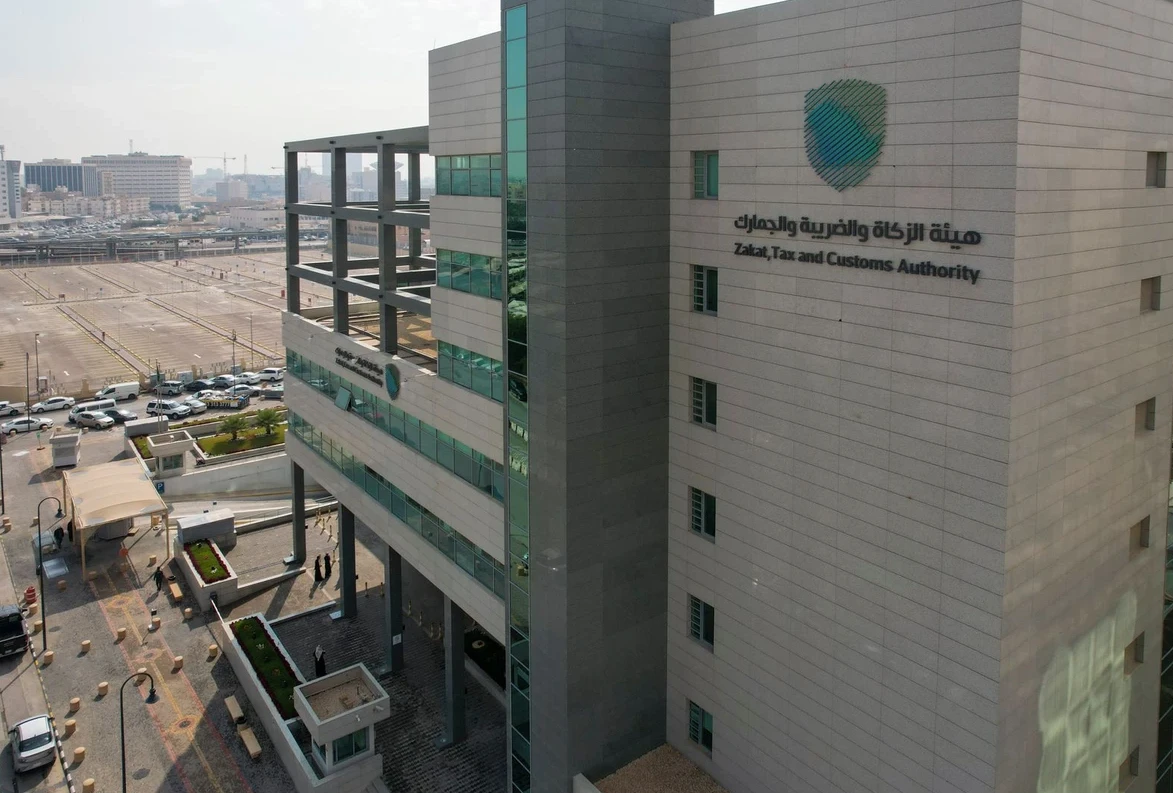
The draft legislation, released for public consultation by the Zakat, Tax and Customs Authority on Nov. 19, aligns with the framework backed by the Organisation for Economic Co-operation and Development and the G20.
Saudi Energy Co., Mouwasat Medical Services Co. and Al Mawarid Manpower Co. expect to fall outside its scope.
Al-Banna noted that aligning the Kingdom’s tax framework with international standards could strengthen transparency, regulatory consistency and long-term investor confidence.