MOSCOW: Finance ministers from G20 states meet in Moscow for the first time today hoping to push forward a stuttering global economic recovery without slipping into a destructive “currency war” of devaluing currencies to boost national economies.
The troubles of the euro zone will for the first time in several international meetings not be center stage and the main concern is expected to be Japan’s controversial plan for “monetary easing” to boost its economy.
The two-day G20 meeting, being hosted by Russia for the first time as it holds the presidency of the world’s leading economies, is also a chance for Moscow to present itself as a reliable global economic player.
The final wording of a Group of 20 communique on currencies may diverge from the language used in a statement by the Group of Seven rich nations, but the intended meaning will be the same, Russia’s finance minister said.
“The language may differ (from the G7), but the intent will remain the same,” Anton Siluanov told Reuters ahead of the meeting .
Russia has set itself the task during its presidency — which will culminate in the G20 summit from September 5-6 in Saint Petersburg — to launch a “new cycle of growth” through investment, transparency and regulation.
But the challenge is huge — the world economy is still only recovering from the devastation wreaked by the 2008 economic crisis and the euro zone debt woes. The International Monetary Fund (IMF) has revised down its global growth prediction for the year to 3.5 percent.
But the room for maneuver is extremely limited with interest rates already at record lows and budgetary rigour the order of the day.
Economists fear that currency devaluations — making the national currency cheaper to stimulate activity — could prove too tempting if governments see no other way out.
“At times of zero rates and high budget deficits, the temptation to resort to this tool certainly increases,” said economist Marco Valli of Unicredit.
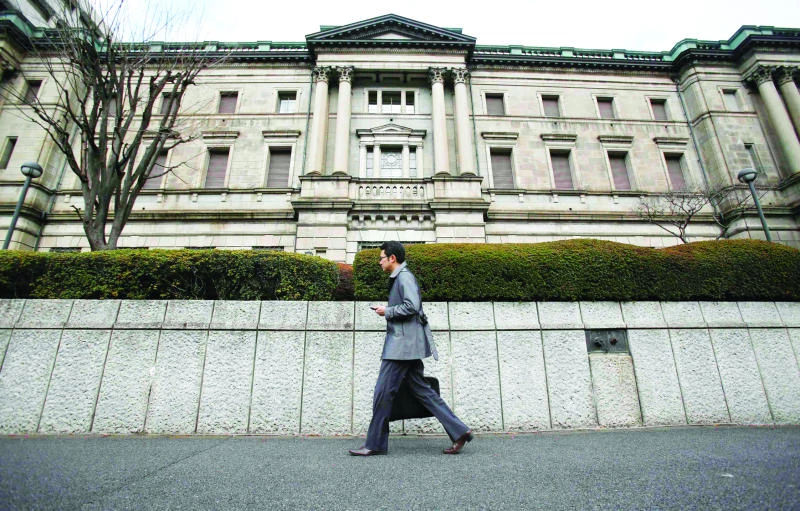
Under heavy pressure from new Prime Minister Shinzo Abe and his ruling Liberal Democratic party, Japan’s central bank recently announced plans for monetary easing which immediately pushed down the yen.
The Japanese answer to the US policy of quantitative easing — the buying by the central bank of bonds held by banks to increase the quantity of money in the economy — would be aimed at helping Japan reach an inflation target of 2.0 percent after years of deflation.
An appreciation of the euro as market sentiment improves could also be damaging for the extremely fragile economy in the euro zone.
The G7 group of the world’s richest nations — including Japan — issued a statement recently to calm markets by declaring a commitment to “market-determined exchange rates.”
“Japan is not in the clear. Everyone understands that this message was addressed to Tokyo as it was not respecting the rules of the collective game,” said a European finance official who asked not to be named.
The US urged the world to refrain from “competitive devaluation,” a message echoed by the EU commission, France and Germany.
Japan has indicated its belief that its partners in the G7 absolved it of any blame in the currency statement, but EU officials have insisted it was namely a shot across the bows of Tokyo’s monetary easing plans.
President Vladimir Putin is expected today to address the finance ministers of the G20 with talks getting underway that afternoon and then continuing into tomorrow.
Russia — whose medium term economic prospects remain decent at a time of high oil prices — had indicated its strong opposition to artificial currency devaluations.
“Trying to change the exchange rate is like trying to cure a serious illness with painkillers — firstly it will not help and secondly it will come back in any case,” Deputy Finance Minister Alexei Moiseyev said recently.
“I think that this is harmful and useless,” he added, saying that the G7 statement had given the right signal.
Senior US treasury official Lael Brainard will lead the US delegation with the Senate confirmation of Barack Obama’s nominee Jacob Lew still pending.
“But the G7 debate is not going to be reduced to being just about exchange rates,” the European finance official insisted.
“We are expecting a richer discussion on the global economic situation than in the past when EU leaders were put on the grill.”
G20 bids to avert ‘currency war’ at Moscow summit