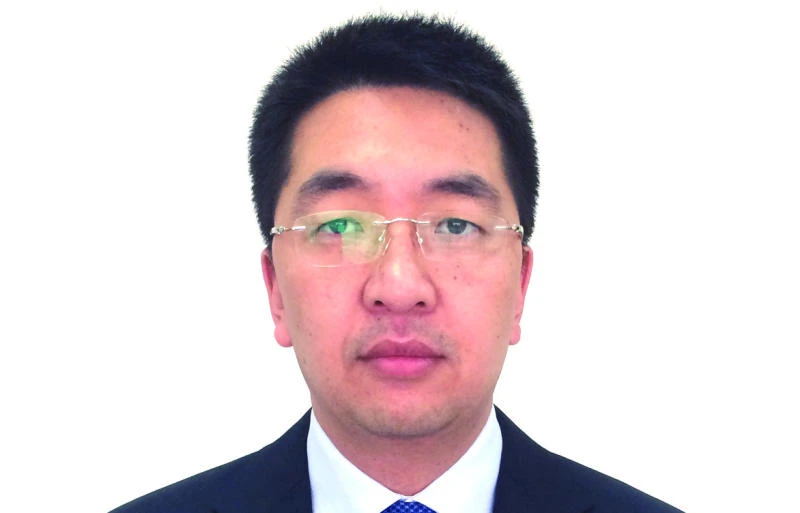
Saudi Arabia was recently ranked 19th globally in terms of creating a competitive market, affordable services and excellent quality of service, Ramadan Ding, CEO of Huawei Saudi Arabia told Arab News recently in an interview.
“With government leaders crafting ambitious plans to diversify Saudi’s growing economy, digital connectivity has proven to be an essential ingredient for powering economic competitiveness,” said Ding who also talked on how recent breakthroughs in information and communication technologies could power a new industrial era.
Following is the text of the interview:
Q; What priorities are set to top the Saudi communications industry agenda in 2015?
A: From virtual reality headsets to self-piloting cars and hybrid laptop devices, an eclectic variety of mobile-powered technologies are cropping up in all corners of the globe. The power of mobile today is building a culture in which people not only want to go online anytime anywhere, but also via any device.
To realize this transformation, more innovation needs to be driven with the Saudi end-user in mind — not just the technology. In a social media era, traditional customer engagement models in retail and commerce are not creating the high-quality service experiences that the Saudi public demands. Furthermore, the overflowing amount of data that businesses now have about customer purchase trends and preferences has yet to be converted into real business value.
Q: How can businesses in Saudi Arabia take advantage of this transformation to drive a competitive edge?
A: Businesses in the Kingdom are already active in transitioning to a digital industrial era. According to Huawei’s Global Connectivity Index, Saudi Arabia was recently ranked 19th globally in terms of creating a competitive market, affordable services and excellent quality of service thanks to the country’s significant investment in ICT.
These investments are driving the upgrade of nearly all traditional industries in the Kingdom. As Saudi Arabia's leadership pushes forward efforts to diversify the national economy, enterprises in financial services, tourism and real estate in particular will be able to use ICT advancements to strengthen their information-analysis capabilities, enhance collaboration, and launch new products into the marketplace in a better and faster way.
Q: What knowledge and skills will be required in Saudi Arabia during this expansion?
A: One of the exciting aspects of Saudi Arabia is that there is a large population of youths that have grown up as digital natives - born into a world where technology and connectivity have always been at their fingertips. It is imperative that we focus on bringing highly skilled young people into the industry. This generation will certainly require traditional skills like field operations and equipment maintenance, but equally important today is the ability to read and write code for the apps that their communities crave.
Saudi Arabia recently climbed 10 spots in the Global Talent Competitiveness Index based on the quality of talent it can produce, attract and retain.
Q: Is this a priority for multinationals like Huawei within the tech sector, and what are you doing today to enable knowledge transfer and nurture local talent?
A: Government leaders and authorities such as Saudi Arabia General Investment Authority (SAGIA) are already committed to creating a more technology-focused economy, unveiling ambitious investment plans across key sectors. In order to transfer Huawei’s own global expertise to the local society, our industry is aiming to increase the scale and depth of our cooperation with local governments and institutions.
We have for example, worked with various institutes such as King Saud University as well as vocational training institutions like Technical and Vocational Training Corporation (TVTC) providing labs and in some cases training students and teachers for specific vertical industries.
Q. With investments in ICT expected to rise to nearly $ 37 billion in Saudi Arabia this year, where do you see that money being spent?
A. I think there is a clear shift toward more joint innovation programs within the Kingdom today. At Huawei, we call this being “smart at scale.” Financial and energy services, health care, education, and transportation are just a few industries where new connections are adding to the benefits of scale.
Last year for example, we set up a Joint Innovation Center in Dhahran Tech Valley in collaboration with Saudi Aramco and King Fahd University of Petroleum and Minerals to develop industry-specific ICT solutions that combine each or our respective strengths being smarter at scaling means connecting individuals to systems in a way that optimizes what every party can accomplish, both separately and together.
Huawei CEO: Digital connectivity key for powering economic competitiveness