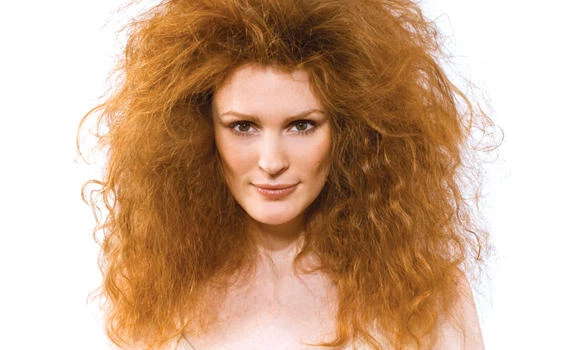
Humidity and heat are a recipe for disaster for both your hair and skin. With moisture overload in the hair, one can have a bad hair day only by being exposed to humid air. Unpleasant, frizzy and unappealing hair effects are caused by the combination of humidity and other dynamics.
Women with long hair, probably don’t need to look up a weather report to get an idea of how much humidity’s in the air, they can simply grab a fistful of hair and see how it feels.
Regardless of hair type, humidity is an almost universal catalyst for frizzy and untamed locks. During the time of high humidity, even people who normally lack the frizz-factor might combat dry, unmanageable and fluffy hair. Tame your mane by learning the effects of humidity and you’ll be able to navigate through even the sultriest days with hair happy confidence.
During hot and sticky weather, the hair is reacting to humidity through molecular changes. “Hair is able to change with time, weather and age. While dry air will extract water molecules from your hair into the environment, humidity has the opposite effect on hair,” said hair stylist Jina Mansour of Lillies Salon in Jeddah. “The hair during humidity will quickly absorb the moisture in the air, which in turn causes swelling of the hair, as much as 16 percent of the diameter in high humidity,” she added.
Humidity can take its toll on one’s hair, encouraging moisture absorption. “Different hair types respond differently to moisture, the steam’s effects, even various factors on the same head can react unpredictably,” said the stylist. “The proteins in the natural hair are not constant with two types — the orthocortex and the paracortex, which react differently to water molecules,” she added.
Uneven water absorption can cause twisting or bending, which can take the curl out of fine hair strands, or alternately cause frizz, depending on the hair type. “The problem is that these areas absorb water differently, so they don’t swell the same. One part may absorb a lot of moisture and swell a lot, while the other stays relatively the same,” said Mansour.
Experts say that human hair is extremely sensitive to humidity — so much that some hygrometers, devices that indicate humidity, use hair as the measuring mechanism, because it changes in length based on the amount of moisture in the air.
With humidity, straight hair goes wavy, curly hair turns frizzier or even curlier. Taming this summer frizz has become a huge industry in the beauty world, with different hair smoothing serums and masks promising to transform and nourish hair without weighing it down. The question is, why does humidity have this strange effect on human hair? “Human hair’s chemical structure, it turns out, makes it unusually susceptible to changes in the amount of hydrogen present in the air, which is directly linked to humidity,” said Mansour.
According to the specialist, the hair as a whole is made up of a collection of keratin proteins and these keratin proteins can be chemically bonded together in two different ways. “Bits on neighboring keratin strands can form a disulfide bond, in which two sulfur atoms are covalently bonded together. This type of tie is permanent, it’s responsible for the hair’s strength, and is not affected by the level of humidity in the air,” she said.
Quick tips to protect your hair from humidity:
1) Moisturize: Dehydrated hair is leaky and absorbs moisture quickly, so if you’re dealing with a humid climate, you’ll want to make sure you deeply condition to restore and nourish damaged tresses.
2) Air dry the hair: Blow drying your hair might have many benefits, but it is not a great tool to use during humid weather. Directing a flow of dry hot air at your locks might cause them to dehydrate.
3) Cold splash of water: After washing your hair with a hydrating and nourishing shampoo, it will be great to splash your hair with cold water and preferably drinking water. This will help close down the hair’s cuticle and seal up the pores so that moisture from the air can’t get in and wreck your style.
4) Applying rich balm: After washing the hair, apply a silicone based hair balm that we promise will work wonders when it’s humid outside. This product will help coat your hair’s strands and seal in natural moisture to prevent atmospheric dampness from interfering. Make sure not to overload your hair with the balm because too much silicone will make your hair feel heavy and lifeless.
5) Night masks and leave-in treatments: Find a suitable deep hair conditioning treatment for you to use once or twice a week. Find one that is has anti-humectant properties, which will help to restore lost moisture in your hair and because you don’t need to rinse it out, you don’t risk exposing your locks to the stripping effects of water.
6) Keeping the length: ‘Beachy’ and wavy hair is a summer statement. Even though many women prefer to cut their long locks when getting their summer look ready for the heat of sticky summer, but experts say it is not the best strategy if you’re looking to counteract the effects of humidity. Longer styles tend to be heavier and the weight of the hair helps to prevent unwanted puffiness. On the other hand, lighter cuts will curl up in the damp air while lengthy tresses will keep their shape.
7) Keeping a hair clip handy: If none of the above tips work and your hair is defeated by heavy humid air, you will be keen to tie your hair up as soon as you can. Always make sure to never leave the house without hair clips to help you to tame your locks when there is a crisis.
—
Email: [email protected]
Humidity: Not your hair’s best friend