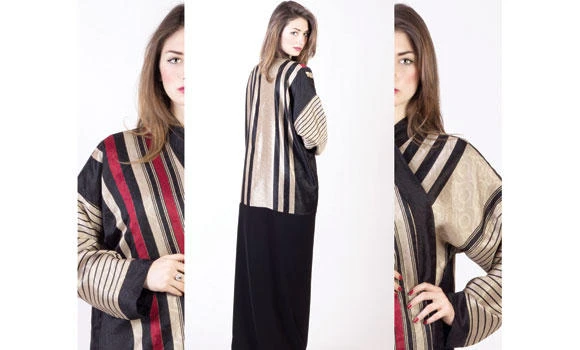
Fashion is the best manner of self representation. Abaya designer Reem Hajar believes her designs are a blend between modernity and traditions to represent the needs of a changing Saudi taste.
The young fashion designer is establishing a sparkling name and career in the abaya industry by incorporating oriental designs from the Far East into the Saudi style.
Although she was born to a designer mother, Hajar didn’t discover her passion for fashion until a bit later. Hajar graduated with a degree in international business administration from King Abdul Aziz university in Jeddah. But her talent and love for fashion has taken her to where her heart belongs.
“I love colors, textures and textiles. I follow the latest international fashion shows and fashion magazines,” Hajar said. During college, her trips to the market were a disappointment as she never liked the abayas being sold in the shopping malls.
At that stage, Hajar decided to switch to fashion with an important question on her mind, “How do I design abayas in a creative and beautiful way, yet keeping their character unique?”
Her mother, a jalabiyah designer, lent her support to her daughter’s new path. She assisted Hajar with capital, directions and skills to kick start an aspiring career.
“My mom was there for me choosing textiles, giving me basic instructions in design, in addition to her financial support in the beginning,” she recalled.
Hajar shined and made a strong impression on women and friends who asked Hajar to design for them, helping the young designer’s name become more noticeable in the market.
Her two-year experience of living in Japan has shaped her passion toward having a unique styling identity. Sporty and colorful abayas has branded Hajar and made her designs recognizable, “I carefully choose my textiles and select the best quality materials, which I usually find abroad,” Hajar told Arab News.
Hajar agrees it’s hard to live in this Far Eastern country and not admire the Japanese fashion style, particularly the colorful kimono. Hajar’s designs always include a Japanese touch such as the latest collection in which she presented a silk-made kimono for elegant style seekers.
Nevertheless, Hajar says the Japanese culture only serves as an inspiration for her to create an original design, “I don’t copy Japanese styles but benefit from their trendy colors and textile and work it in my own design.”
She makes sure the collections have a wide variety of colors as her client base includes both the young and old generations.
She considers Saudi women to be the driving force behind her creativity, “The abaya is one of the most important clothing pieces for Saudi women. It’s a special and valuable piece in her daily wardrobe, and I know it’s hard for international design houses to understand this specialty. So, I provide women with developed themes and designs that respect our traditions,” she proudly says.
Hajar’s designs can be seen in a number of local clothing exhibitions and bazaars, the latest of which is the Libra exhibition.
She says her experience has given her a better understanding of how Saudi women developed their sense of fashion, “I’ve been in the industry for years and I noticed the change in Saudi women’s tastes. They have become more daring and do not shy away from trying out new colors and designs,” Hajar says.
Also, Hajar feels that Saudi women have become more keen on supporting and trusting local designers. “The designers were able to prove their talent and create trendy styles that simultaneously represent Saudi women’s uniqueness and needs,” Hajar said, praising media outlets that introduce the designers to a wider audience. “This trust gives us a responsibility and pushes us as designers to keep giving fashion lovers new and unique designs,” she stressed.
Hajar believes the road to beautiful designs is paved with creativity and practicality. She said she is soon launching T-shirts and clothes for Hijabi women.
—
Email: [email protected]
Is it a kimono? Is it a kaftan? No, it’s an abaya!