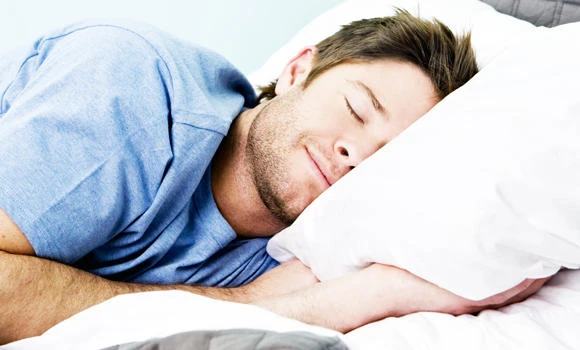
We spend around a third of our lives sleeping yet we do not really know why we need to sleep and how important it really is to our health. The aim of ‘The Healing Power of Sleep: How to Achieve Restorative Sleep Naturally’ is to investigate sleep problems and their causes so we can achieve restorative sleep naturally.
Sleeping is as natural and essential as eating. Most of us believe it is a natural response to fatigue but sleep is much more than that. While we sleep, energy conservation, repair, and growth processes take over and our body starts to produce growth hormone and in adulthood, it enables the body to renew and repair itself.
“Every tissue in the body from skin cells and blood cells to brain cells appears to be renewed faster during sleep than at any time while we are awake.”
It is also believed that sleeping more during times of infectious illness helps one to recover more quickly. This is due to the effect of the immune system’s increased production of certain proteins in response to the infection. An adequate amount of sleep can also help us resist infection.
Sleep has psychological benefits. Psychologists believe that repressed emotional issues are dealt with while we sleep. Psychosomatic illness, a physical illness with a psychological origin is the cause of many disorders such as blood pressure, headaches, and stomach ulcers.
“Dreams may help to prevent repressed emotions such as anger, grief, and jealousy from manifesting as physical symptoms.”
It is interesting to know that until the introduction of brain-monitoring we knew very little about the cycles of sleep. Since the development of the electroencephalogram, scientists have been able to define the different stages of sleep that are mainly the REM (rapid eye movement) and the non-REM sleep. These two types of sleep alternate throughout the night.
It is now accepted that we need both NREM and REM sleep for good health. The high level of growth hormone released during NREM deep sleep is vital for physical health while the increased blood flow for the brain that occurs during REM sleep may be necessary for mental health.
It is accepted that two thirds of the adult population sleeps for an average seven and a half hours a night. About 16 percent sleep more than eight and a half hours and 16 percent sleep less than six and a half hours.
Dr. Jim Horne, a sleep specialist prefers quality over quantity and maintains that six hours is more than enough for good health and anything more than that is optional.
“Personality is believed to play a part in determining sleep need. Short sleepers are characterized as hardworking extroverts, who are energetic, ambitious, and confident. Long sleepers are supposed to be worriers, who are less self-assured, non-conformist, mildly neurotic but also more creative and artistic. The French philosopher Voltaire is believed to have needed only three hours sleep a night and Britain’s Margaret Thatcher boasted of similar needs. Albert Einstein is reputed to have slept for 12 hours at a stretch.”
Losing a couple of hours sleep from time to time will not be damaging to your health. It simply makes you feel tired and slightly irritable. Whatever sleep you lose one day, will be compensated for the following day.
One of the immediate consequences of sleep deprivation is poor concentration and lack of judgment and people also tend to make poor decisions and frequent mistakes. Constant tiredness can also cause irritability, memory loss, depression and stress and in the long term, the body’s defense systems may be affected.
Studies have shown that when healthy young adults are deprived of sleep for even one or two days they produce fewer natural killer cells.
Research has also shown that people naturally enjoy more deep sleep when recovering from illness or an operation and this speeds up the healing process.
Our sleep needs change throughout life regarding the total amount of sleep needed and the times at which it is taken. Newborn babies can sleep up to 18 hours a day. During adolescence the need for sleep increases and an adolescent can easily sleep up to ten hours a night. Between the age of 20 to 30, people sleep an average of seven and a half hours a night. Sleep patterns begin to change around 40 to 45 years of age in men and 50 to 55 in women. After middle age, the amount of sleep gradually reduces and most people over the age of 70 sleep less than seven hours a night.
It should be known that women’s patterns of sleep are affected by hormonal changes and during the first three months of pregnancy. The menopause can also be a cause of sleep disruption as a result of hot flushes and night sweats.
It is important to remember that many of us do not suffer from insomnia but we might simply need less sleep. If you go to bed and lie awake for an hour before you go to sleep, try to go to bed an hour later or get up an hour earlier.
It has also been shown that lack of physical activity can seriously affect the quality of our sleep. Sleep is a natural response to physical tiredness. By including regular exercise into your routine, you are likely to increase your amount of deep sleep. Lack of mental activity and personal motivation can also contribute to light, broken and unrefreshing sleep. People suffering from anxiety and depression also do not sleep well and should seek professional treatment.
Whatever the cause, sleep deprivation quickly shows on your face. The skin is a barometer of health and lack of cell renewal means skin cells do not get replaced quickly enough to keep skin plump and glowing. Sags, bags, and dark circles under the eyes are the most obvious signs of inadequate sleep. It is important to know, however, that most sleep disorders can be cured without professional help.
The golden rule for a better night’s sleep is to pay attention to how to live your life during the day and if you want to sleep at night, get up early in the morning. Our bodies are programmed to get up early. Early risers will tell you that early mornings are the best part of the day.
“There is stillness about early morning that vanishes when the rest of the world comes alive. It provides a period of calm in which to plan the day ahead, go for a walk, swim, meditate… For many people it is also the most creative time of the day, ideas come more easily and problems seem easier to solve.”
Incidentally a recent book “The 5 Am Playbook” which has become a bestseller, highlights the advantages of getting up early. The author, Bryce John Chapman, presents a complete strategy to start an early rising habit.
It is important to remember that a good mattress is essential for good quality sleep. It is not true that firm mattresses are better. A bed that is too hard can cause just as many problems as a soft bed.
The best way to know which mattress to buy is to try it out. When you lie down, slide the palm of your hand under your back, if you have to wedge it between the mattress and your back, it’s too soft, if there is a hollow, it’s too hard.
Finally sleeping pills can be effective as a quick fix. However, while they can be effective as a temporary solution, drugs provide no solution to long-term sleeping problems. Insomnia caused by emotional stresses, such as marital problems, divorce, or financial crisis, are not resolved by swallowing a sleeping pill because sleeping drugs do not cure the problem, they simply help you to forget.
The medical effects of sleeping pills wear off after two weeks because the body learns to tolerate them. The real problem lies in the fact that when people find out that their usual dose no longer has any effect, they take more pills in order to go to sleep.
There are a number of non-addictive sleep remedies that you can take as a temporary measure. Tryptophan, an amino acid which plays an important role in repairing protein tissue and creating new protein, is converted in the brain into serotonin, a natural sleep-inducing chemical. Taking a 1000 to 1500mg supplement before bed has been found to be helpful for some people.
Finally, melatonin, the sleep hormone is now manufactured as a food supplement. Some studies have shown that it can improve sleep and cure jet lag. It should be taken at night as it reaches peak concentration in the blood within an hour of consumption.
This book explains the fundamental role that a good sleep plays in the regulation of alertness, mood, mental processes and performance. “The Healing Power of Sleep” offers hope for a better quality of life.
—
Email: [email protected]
Bye bye sleeping pills, hello sound sleep