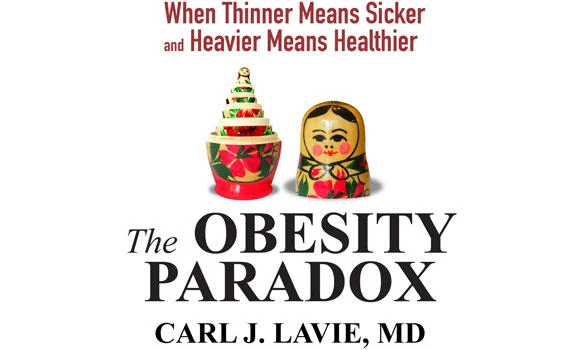
This explosive title 'The Obesity Paradox: When Thinner Means Sicker and Heavier Means Healthier' keeps all its promises from the very first pages. Right from the introduction, we are told things we have wanted to hear for a long time.
Whether we are slim or overweight, we have all at one point wondered why fat no longer means what it used to. In the past, fat has often been associated with the idea of affluence and wealth meaning that overweight people had a good life and didn’t suffer from hunger. Women were also loved for their curvaceous body whereas nowadays fat is considered ugly and unhealthy.
We live now in a world where we are conditioned to lose weight, eat low-fat food and fit in tight clothes. The rate of obesity is going up and at the same time obesity has never been so vilipended by society.
“I’m here to tell you that fatness has been sorely misunderstood and wrongly portrayed in many respects,” writes Lavie.
So, after all fat is not the enemy we are led to believe. This surprising news has been circulating in medical journals in recent years. Yes, indeed, body fat can protect us in more ways that we can think of.
But first, let us find out the cause of obesity. Since the World War II, there has been a plethora of easy-to-get food and at the same time, the jobs we have do not require much physical activity. The number of calories we burn outpace our increasing food intake therefore the real cause of obesity is due to physical inactivity rather than excess caloric consumption. However, what is interesting is that obesity is only seen in humans. Wild animals are never obese. A wild animal which is too fat to run will be easily killed by predators.
More than ten years ago, doctors were noticing that overweight patients suffering from a cardiovascular disease generally have a better chance of surviving an illness potentially fatal in the short term. In other words moderately obese patients suffering from heart disease, arthritis, or cancer often live a longer and better life than normal-weight patients with the same ailments.
One can safely say that if too much or too little fat is destructive to one’s health, the same can be said for too much or too little exercise. So what does it mean to be healthy?
“Regardless of your weight and Body Mass Index, if you’re metabolically sound, you don’t have serious metabolic conditions like uncontrolled type 2 diabetes or lipid disorders such as dangerously high cholesterol or significantly elevated blood pressure, and you are cardiovascularly fit, you are healthy,” explains Lavie.
The problem is that losing weight through exercise is tough. It can take 35 kilometers of brisk walking to shed off a pound of fat, whereas a diet program will have a faster impact. But who can keep up a 1000 calorie-a-day diet for a long run? You are following a restrictive diet which is depriving you of energy and making you feel bad. This not only explains why most diets are unsuccessful but it also emphasizes the importance of exercise.
In fact, researches in top institutions at departments of neurology have noticed that exercise positively impacts the way we metabolize fat, we use calories and we control our metabolism. Physical exercise is one of the most powerful ways to change our genes because it increases the production of a protein, called the growth hormone which triggers the birth of new cells in the brain’s memory center.
So if you have to chose between being fit or fat, go for fit even if it means being heavier. You can gain weight as you age and still be healthy as long as you remain fit. Many heavier people with more body fat who remain as active as possible through out the day can be fitter and healthier than thin people who sit all day and do not exercise.
Fat is one of the basic components that make up the structure of our body. Other elements are muscles, water, bone, and our organs. Fat is essential for our survival. We need fat for warmth, insulation, protection, energy and even to think.
During the course of our world history, arts and literature have reflected the desirability of being plump. By the 20th Century excess fat was losing its aesthetic appeal and fewer people were staying fit due to new technologies and more sedentary jobs. Nowadays, we die twice as much from chronic illnesses like heart disease, stroke, cancer and diabetes.
“Health isn’t all about your physical body; it’s also about your mind and psyche, which are also markedly improved by physical activity and exercise. If we can loosen the reins on our obsession with weight and change the context of the conversation around our obesity crises to our physical inactivity, I think we can all move a little more and rest a little easier… and maybe live a lot longer and healthier,” concludes Lavie.
This groundbreaking book tells us that being moderately obese does not prevent us from achieving greater longevity as well as better long-term health. If you want to understand the whole truth, forget your preconceptions, and start reading “The Obesity Paradox” right now.
—
Email: [email protected]
How you can be both fit and fat