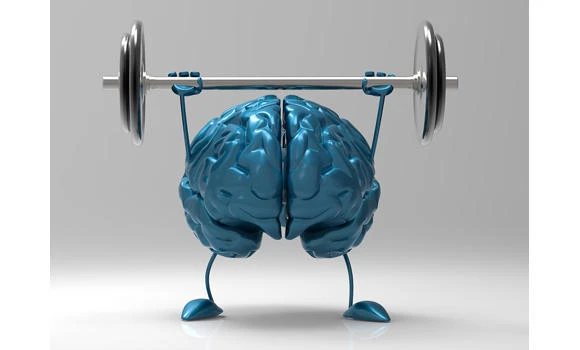
There is a growing interest in preserving and enhancing the brain’s capabilities. Neuroscientists are discovering that it is possible to keep the brain fit and flexible as you grow old. Mild forgetfulness is not a disease like Alzheimer’s and it is possible to fight it. A team of American and Swedish scientists demonstrated in 1998 that new brain cells are generated in adult humans. Moreover, contrary to popular belief, the mental decline most people experience is not due to the steady death of nerve cells. It is due from the decrease of the number of dendrites, the branches on nerve cells that directly receive and process information from other nerve cells that form the basis of memory. Dendrites receive information via connections called “synapses”. If these communication channels are not active, they can atrophy. This not only reduces the brain’s ability to put new information into memory but also makes it more difficult to retrieve information.
For a long time it was thought that dendrites could only grow in children’s brains but recent work has proven that old neurons can grow dendrites to compensate for losses. Therefore the aging brain retains its ability to grow, adapt, and change patterns of connections.
This important discovery has been the starting point of a new theory of exercise known as Neurobics which helps you to maintain a continuing level of mental fitness, strength, and flexibility as you age.
This novel exercise program calls for presenting the brain with non routine or unexpected experiences using various combinations of all your physical senses i.e., vision, smell, touch, taste and hearing.
These exercises stimulate patterns of neural activity that create more connections between different brain areas and cause nerve cells to produce natural brain nutrients, called neurotrophins that can promote the health of these nerve cells. Neurotrophins also make surrounding cells stronger and more resistant to the effects of aging.
Neurobics is very different from other types of brain exercise which usually involve logic puzzles, memory exercises, and solitary practice sessions that resemble tests.
Neurobics exercises use the five senses in novel ways that enhance the brain’s natural drive to form associations between different types of information. Associations such as putting a name together with a face, or a smell with a food, are the building blocks of memory and the basis of how we learn.
The classic example of this associative linking is Dr. Ivan Pavlov’s experiments with dogs. Dogs usually salivate when they see meat. Every day when Pavlov fed the dogs, he rang a bell. After a few days, just ringing a bell caused the dogs to salivate, even if there was no food.
Dr. Pavlov’s dogs made an association within their brains that a certain sensory stimulus, hence the sound of a bell, meant food. In the same way most of what we learn and remember depends on the ability of the brain to form and retrieve associations in much the same way as Pavlov’s dogs learned that a bell meant food.
The smell of a rose might remind you of your grandmother’s rose garden where you used to play with your cousin that you keep meaning to call. Most of the existing programs regarding brain exercise have ignored this powerful means of forming and retrieving memories through associations triggered by a scent, a sound or an image.
Babies use all their senses when they pick up a toy like a rattle for example. They will look at it, pick it up, feel it, shake it to hear a sound, and even stick it in their mouth. Adults, however, miss out on this multisensory experience of new associations because they rely mainly on two of their senses, vision and hearing and use their sense of smell, taste and touch far less frequently.
“In a world increasingly dominated by shrink-wrapped, plastic-packaged and deodorized items, the efforts demanded of our other senses, such as touch and smell, are diminished far more than we’re consciously aware of” say the authors of ‘Keep your Brain Alive’.
However, associations based on odors persist for a very long time unlike those based on other senses. This explains why certain aromas like the smell of fresh-baked bread can trigger an abundance of emotional feelings when we walk in front of a bakery.
Emotions dubbed our sixth sense play also an important role in our interactions with other people. As we age, our social circles tend to shrink, so an important aspect of Neurobics exercise is to find opportunities to interact with others. Moreover, the pace and structure of modern life has reduced the number and intensity of our ordinary day-to-day social interactions. And the computer and the Internet have isolated us even further away from any number of personal transactions.
“There is ample evidence today that being out in the real world, when you’re engaging all the senses, including the important emotional and social “senses”, is essential to a healthy brain and an active memory, especially as you age”.
Neurobics is a scientifically based program that helps you modify your behavior by introducing the unexpected to your brain and enlisting the aid of all your senses throughout the day. Neurobics is recommended as a lifestyles choice; it helps you make small changes in your daily habits which can transform routines into “mind-building’’ exercises. Neurobics can help you keep your brain alive, stronger and in better shape as you grow older.
Many neurotic exercises challenge the brain by reducing its reliance on sight and hearing and encouraging the less frequently used senses of smell, touch, and taste to play a more prominent role in everyday activities.
“Keep Your Brain Alive” suggests a series of exercises which can be done in the form of different activities taking place throughout the day. These exercises can be done when you get up get up in the morning, when you are going to work, while you are working, during meals, when you go shopping and also when you are relaxing.
According to the authors routines are so ingrained in our mornings and evenings, they constitute ideal times to inject a bit of novelty to awaken new brain circuits. You can try for example to shower with your eyes closed. This exercise will wake up the brain and your hands will probably notice varied textures that you were not aware of when you are looking.
Furthermore, instead of waking up to the aroma of coffee, you can smell something different. “By consistently linking a new odor with your morning routine, you are activating new neural pathways” say the authors.
You can also try brushing your teeth with your non dominant hand. This exercise requires you to use the opposite side of your brain instead of the side you normally use. All those circuits’ connections and brain areas involved in using your dominant hand are inactive. Research has shown that this type of exercise can result in a rapid and substantial expansion of circuits in the parts of the brain that control and process tactile information from the hand.
When you are working in your office, you can try moving things around. Just put your wastebasket in a different place. You are bound to notice that each time you have to throw something you will turn to the previous place. However, the moment you remember your wastebasket is in a different place this reflects your brain’s alertness to a new situation.
Brainstorming is another typical Neurobics activity because it encourages us to make associations and then to cross-fertilize them with other people’s ideas. This exercise provides an environment for increasing the number and intensity of unusual associations.
Incidentally, the brain is less active while watching television than during sleep! Watching too much television means fewer social interactions which in turn has long-term negative consequences.
A three-year study conducted at the University of Southern California showed that people in their seventies who stayed physically and socially active retained their mental faculties much better than individuals who didn’t.
Neurobics makes the brain more agile and flexible so it can face any problems. All it takes to keep your brain strong and healthy is to break routines and use all five senses in unexpected ways. The 83 Neurobics exercises in this book contribute to make the brain more agile and flexible so it can take on any mental challenge. “That’s because Neurobics uses an approach based on how the brain works not simply on how to work the brain”.
—
Email: [email protected]
Sharpen your brain with Neurobics