- The guide outlines responsible viewing practices to protect marine wildlife and their habitats
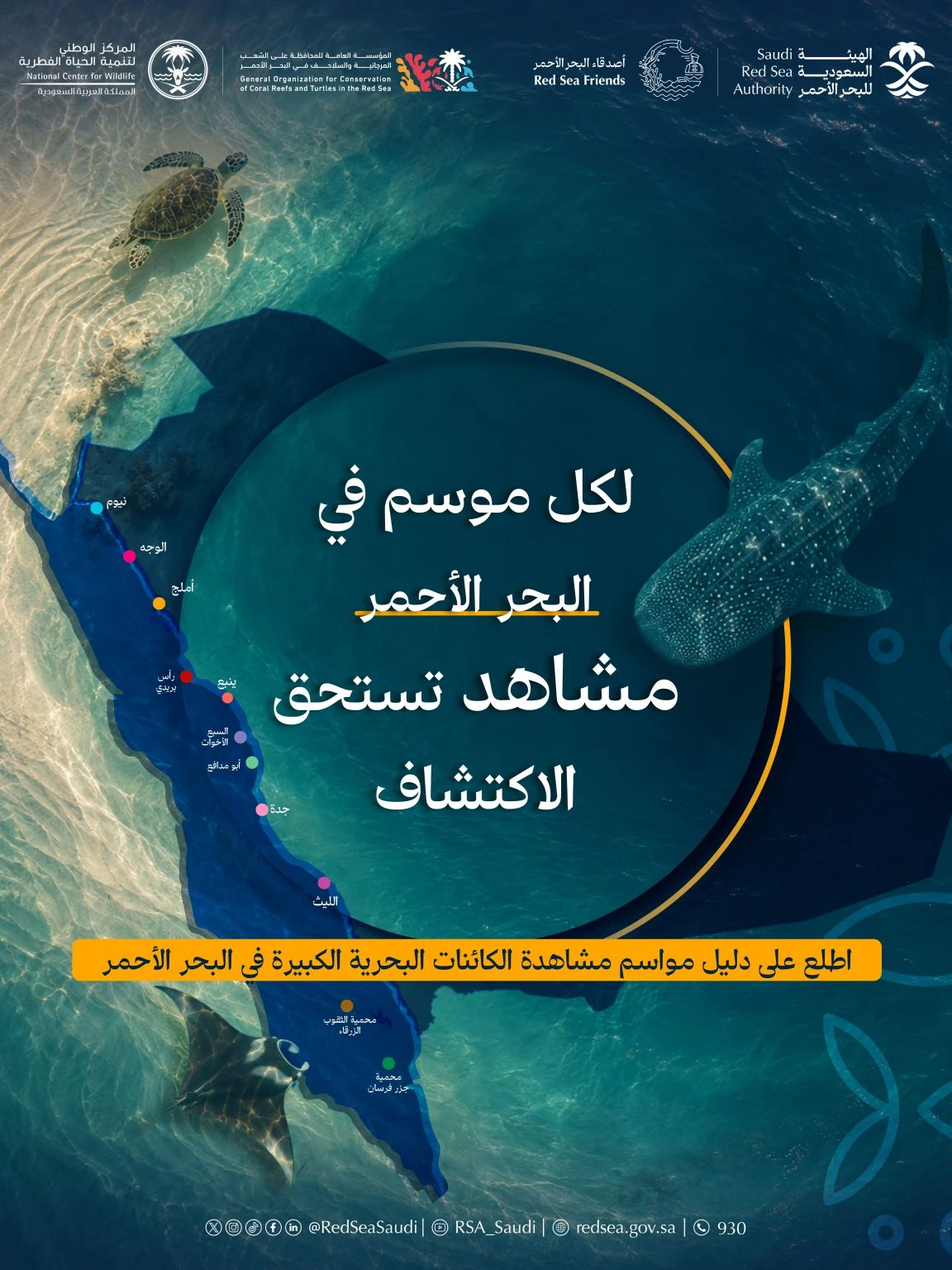
JEDDAH: The Saudi Red Sea Authority has launched the Kingdom’s first seasonal guide to viewing large marine animals, helping visitors to plan wildlife encounters while promoting responsible tourism.
The guide, part of the Friends of the Red Sea initiative, was developed with the National Center for Wildlife and the General Organization for the Conservation of Coral Reefs and Turtles in the Red Sea.
It highlights species found in the Red Sea and identifies when and where visitors are most likely to encounter them in their natural habitats. It also outlines responsible viewing practices to protect marine wildlife and their habitats.
The guide acts as a reference for tourists, wildlife enthusiasts, marine activity providers and tourism operators planning experiences around seasonal sightings.
Dolphins can be spotted year-round in Neom, Al-Wajh, Umluj, Ras Baridi, Yanbu, the Seven Sisters, Abu Madafi, Jeddah, Al-Lith, the Blue Holes Reserve and the Farasan Islands Reserve.
Manta ray sightings peak from April to August in Yanbu, Umluj and Al-Lith. Whale sharks are most commonly spotted from February to May around Al-Lith and along the southern Red Sea coast.
Hammerhead sharks are most likely to be seen in February and March in Yanbu and the Blue Holes Reserve. Bryde‘s whales can be spotted in August in waters west and southwest of the Farasan Islands Reserve.
Halavi guitarfish can be seen year-round in Al-Wajh.
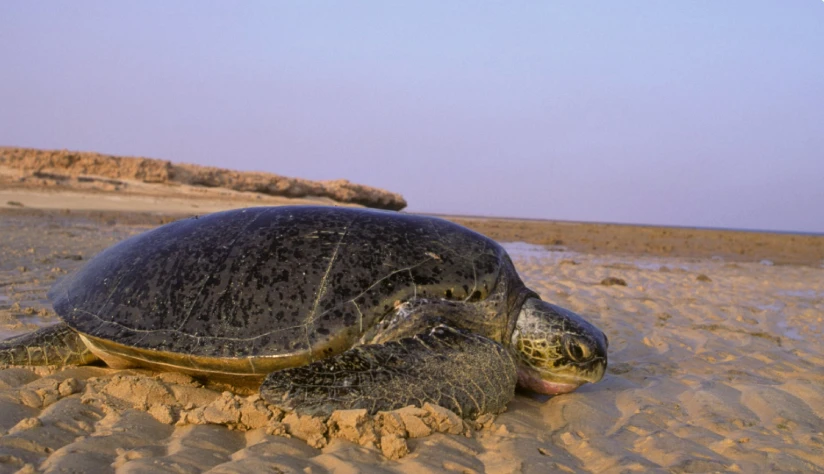
The guide also outlines turtle viewing seasons. Green turtles nest from April to July, with hatchlings emerging between June and September. Hawksbill turtles can be seen from May to July.
Both species are found in Al-Lith, Jazan, Umluj, Yanbu, Al-Wajh, Jeddah and Ras Baridi. Hawksbill turtles also use beaches in the Farasan Islands Reserve.
The guide's launch is part of efforts to expand coastal tourism experiences, improve understanding of the marine environment and develop sustainable tourism products.
It also brings together national organizations working to protect marine ecosystems and develop coastal tourism, highlighting the Red Sea’s biodiversity and appeal for nature-based travel.
According to the National Center for Wildlife, Saudi Arabia’s Red Sea waters are home to 12 species of dolphins and small whales.
Last year, the center documented 1,219 large marine animals along the Kingdom’s coasts: 1,060 in the Red Sea and 159 in the Arabian Gulf.
Bryde’s whales, featured in the guide, are very rare in the Red Sea, according to the center.
During the 2022 Red Sea Decade Expedition, researchers documented five Bryde’s whales, including one about 60 kilometers off Al-Qunfudah. The expedition, led by the center, surveyed Saudi Red Sea waters from the shoreline to their deepest points, traveling from south to north.
Dugongs, which the center classifies as endangered, are not included in the guide. In 2022, the center estimated their Red Sea population at about 2,000.
A 2018 survey identified Jazan, Thuwal, Mastoura, Yanbu, Umluj, Al-Wajh and Sheikh Hamid as important dugong habitats along the Red Sea coast.
The survey found that accidental entanglement in fishing nets posed the greatest threat to dugongs.
The center uses satellite tracking and scientific research to monitor their distribution in Saudi waters and support efforts to halt population decline.