- Vireen has collected 11.5 tonnes of discarded electronics and is targeting 30 tonnes
DHAHRAN: A childhood gaming session led Younis Zaki Shaaban and a group of engineer friends to an idea: make environmental awareness more interactive while turning it into measurable action.
Much like the 1990s animated series “Captain Planet and the Planeteers,” the group joined forces around a common environmental cause, creating Vireen, a youth-led, Alkhobar-based Saudi nonprofit association focused on environmental awareness and training young leaders.
Founded and headquartered in Alkhobar for the past 2.5 years, Vireen has already exceeded its original target of collecting five tons of electronic waste, gathering 11.5 tonnes through volunteers and its team. Shaaban told Arab News that the group has since raised its target to 30 tonnes by the end of this month.
The initiative began at the grassroots level, with families contributing unwanted devices, including Shaaban’s father’s old laptop from 2003.
“Everybody has a junk drawer in their house, full of tangled wires and devices that have not been touched in years,” he said.
“There’s a lot of old laptops, old phones. And so what do you do with it? Previously, I just kept them in the drawer. I had no idea where to send these because we lacked awareness,” he said.
Giving old devices a second life
One option for residents looking to dispose of e-waste is Ertiqa, an association that Vireen has previously partnered with.
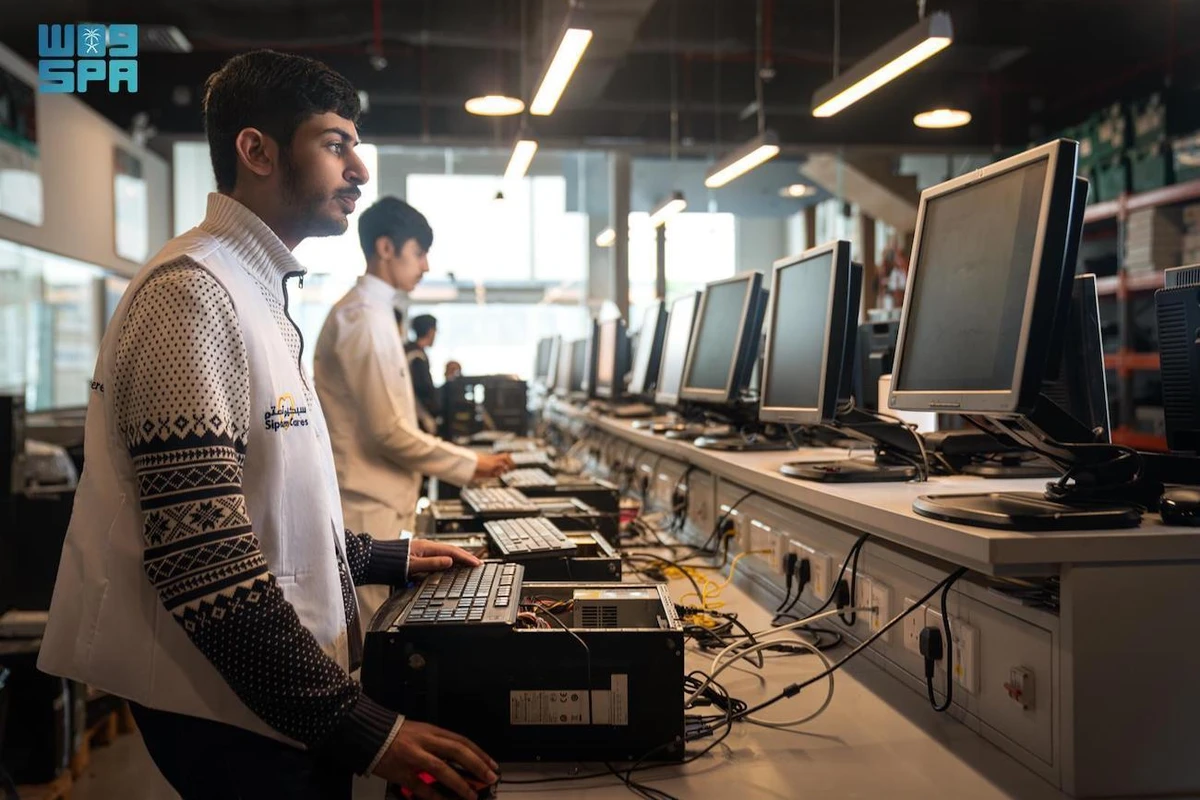
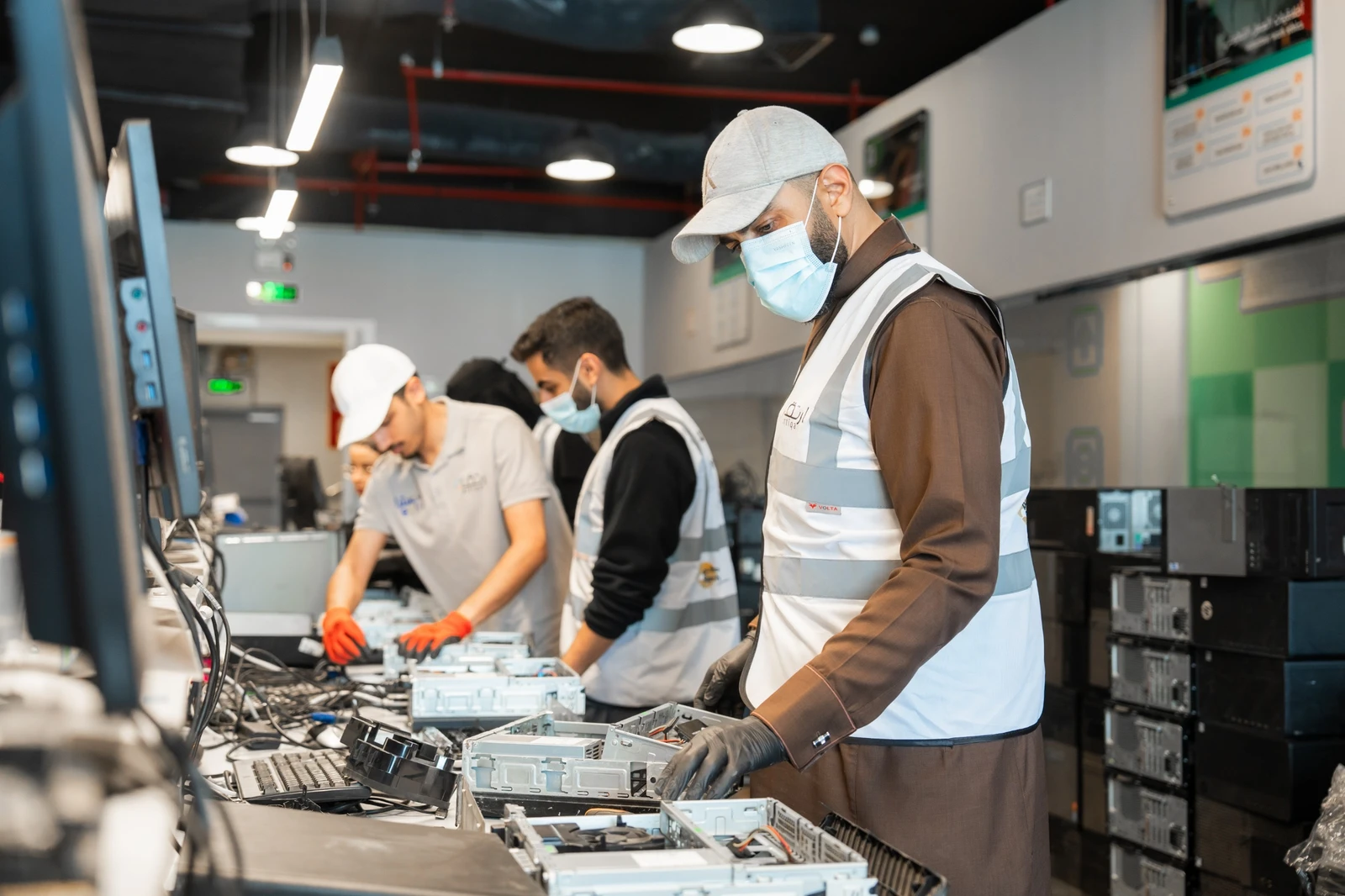
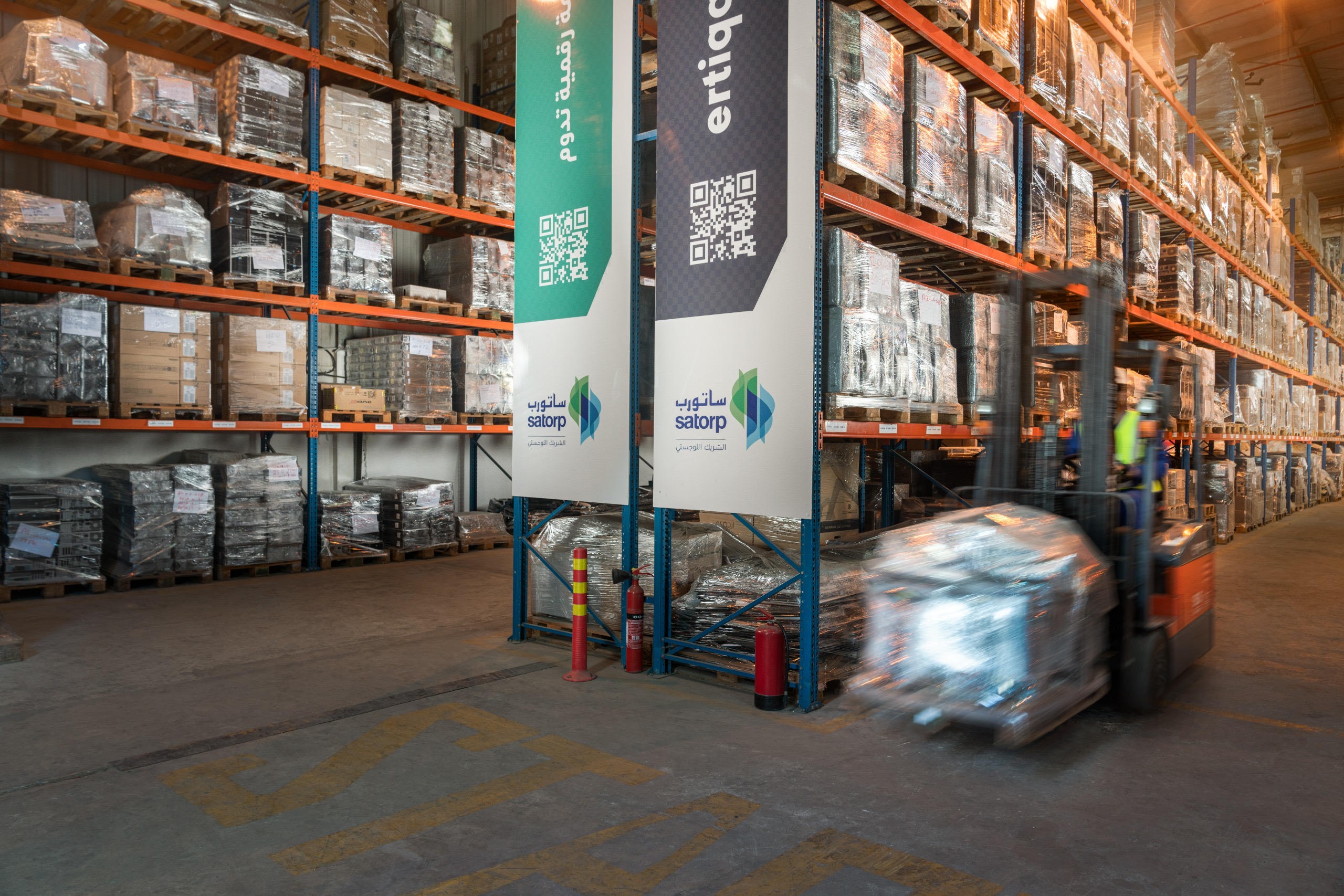
Abeer Abdullah Al-Otaibi, head of marketing communications at Ertiqa Association, recently offered Arab News a tour of its facility, where individuals, government entities and private companies can send unwanted electronics.
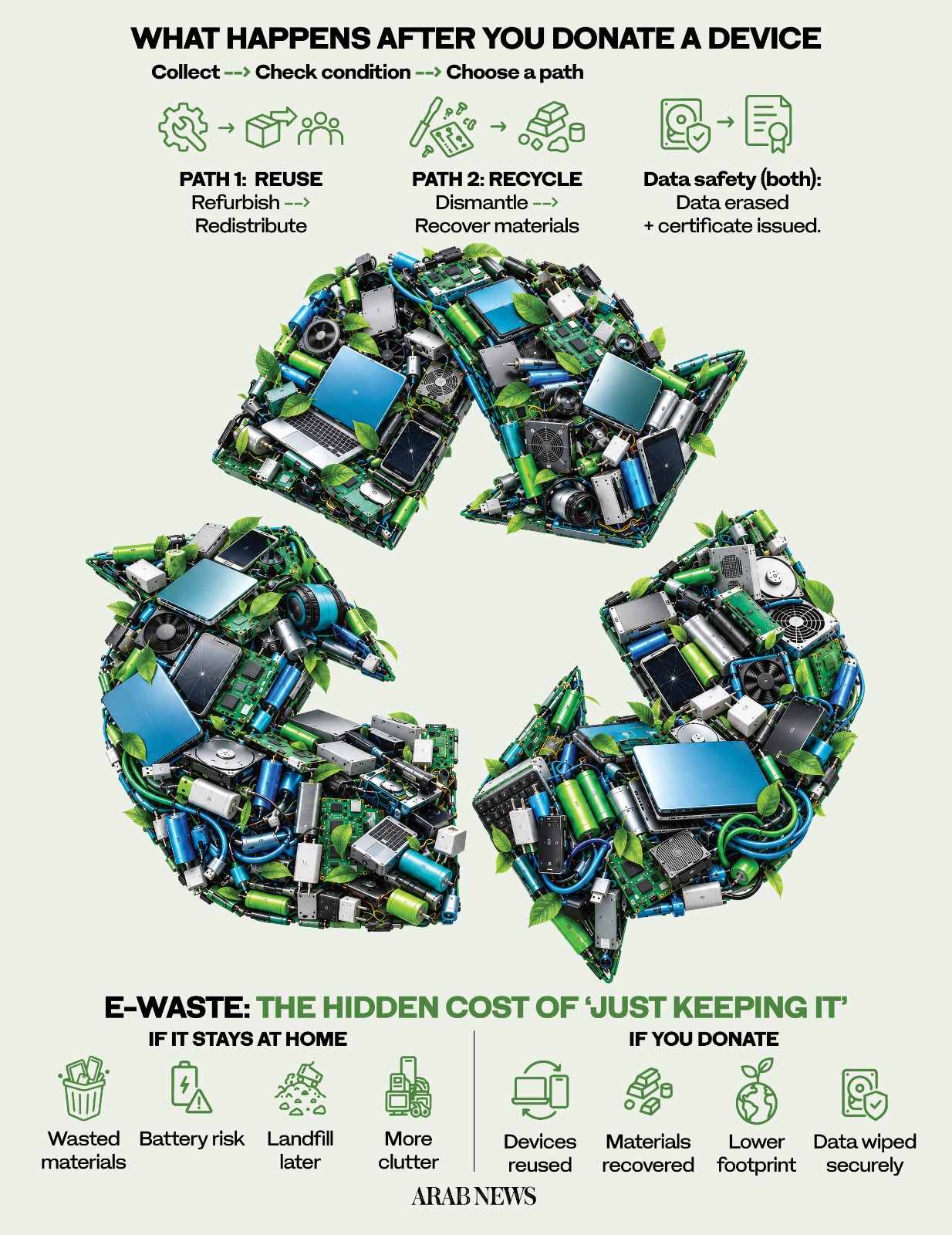
“We handle the entire process, including pickup from the donor’s location, free of charge,” she told Arab News. “We have long-standing partnerships with major entities like Aramco, STC, Zain, and various government bodies, which make up 60 percent of our donations.”
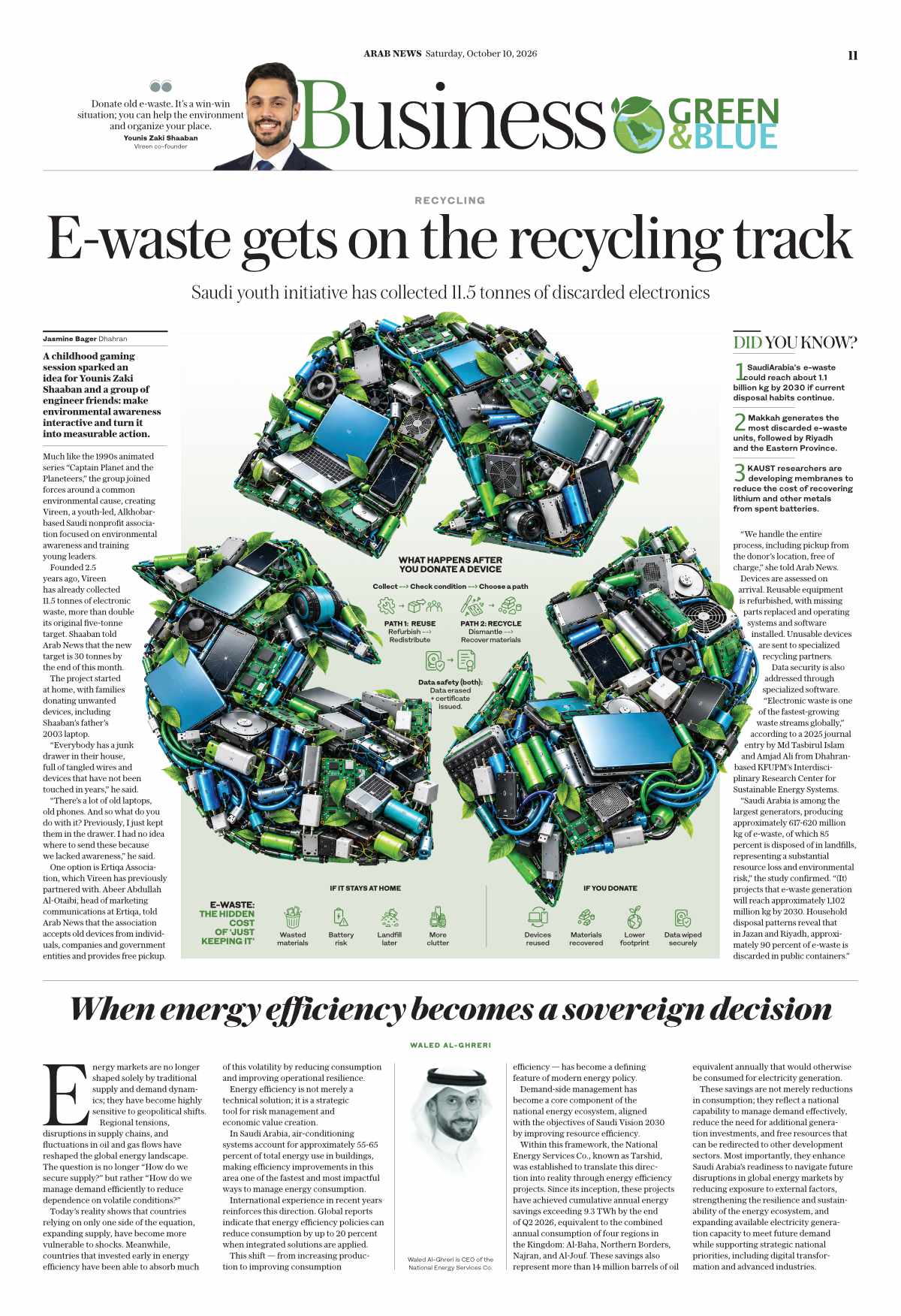
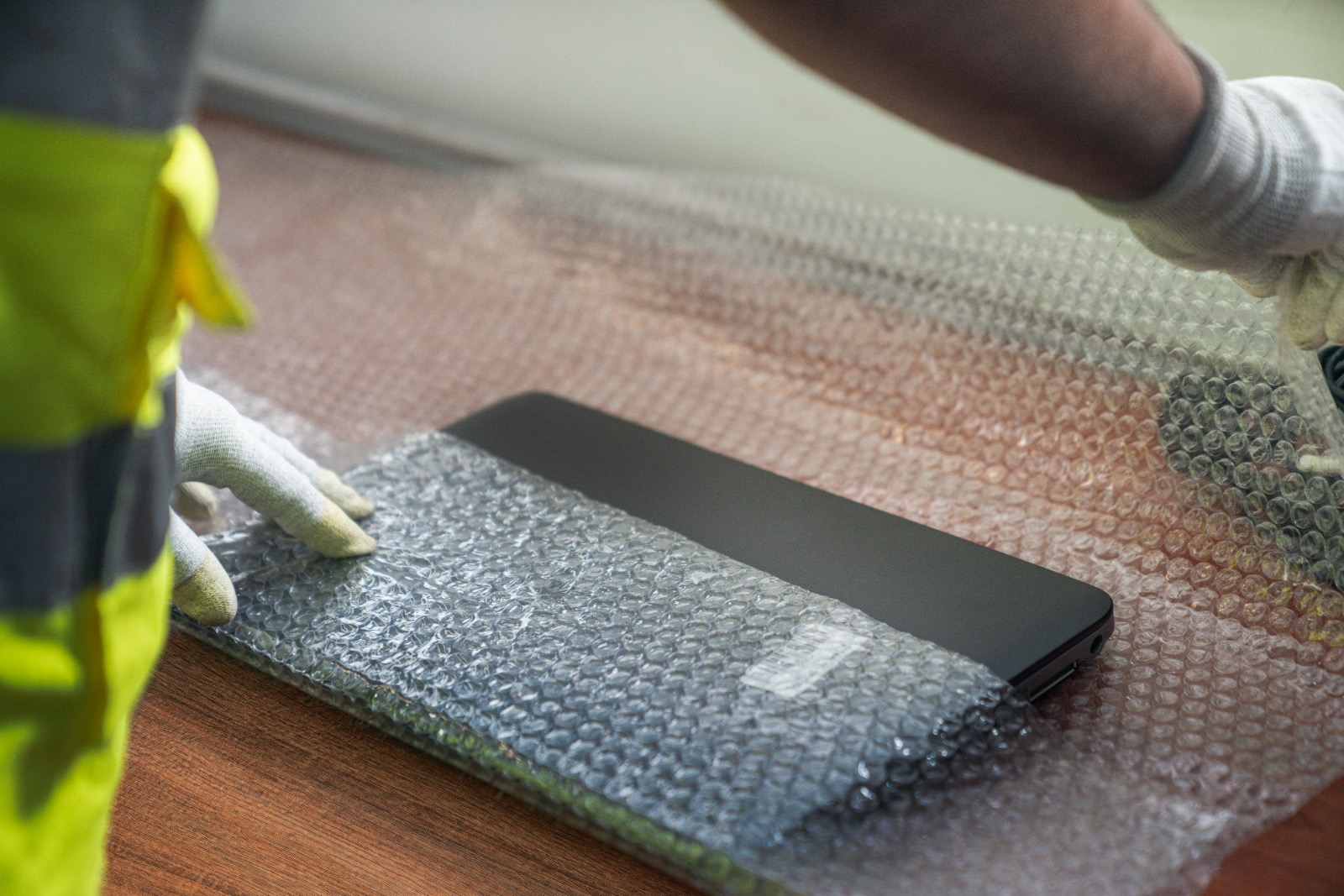
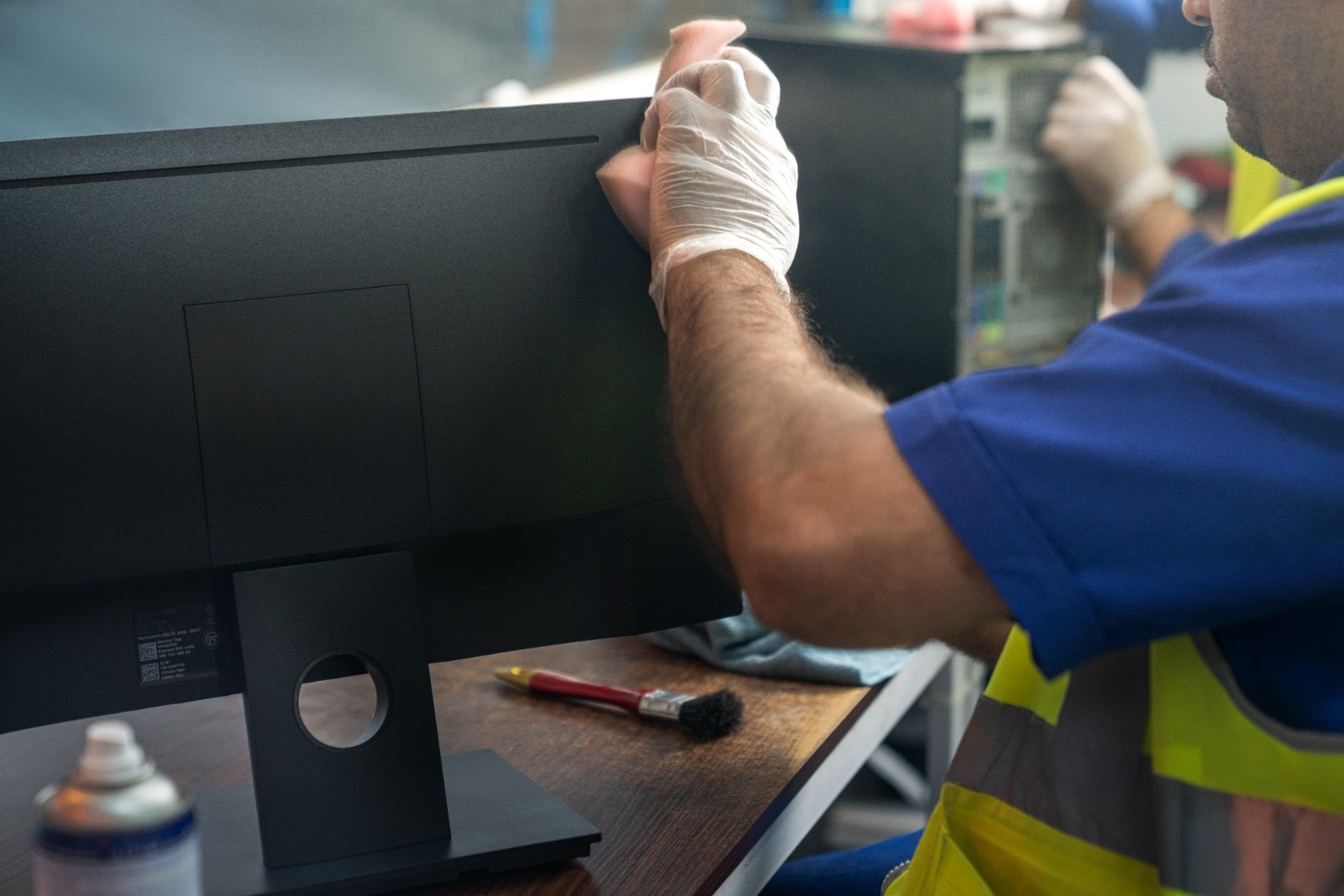
Each device is assessed upon arrival. Reusable equipment goes to the workshop for refurbishment, where missing parts are replaced and necessary operating systems and software are installed.
Devices that cannot be reused are sent for recycling through specialized partners experienced in processing electronics, metals and plastics.
Data security is another concern for people donating old devices.
“People often ask if their personal details are erased because they worry about data security when handing over their devices. Yes! We use specialized software that ensures data is completely wiped and provides a certificate of data destruction,” she promised.
“In over 10 years of operation, we have never experienced a data leak or security issue,” she said.
According to its latest statistics, Ertiqa has refurbished and distributed 166,329 of 317,425 devices, representing SR140 million in saved economic value.
It has also recycled 765,880 devices and accessories, equivalent to 3,451 tons of electronic waste and a reduction of 18,271,325 kg in carbon emissions.
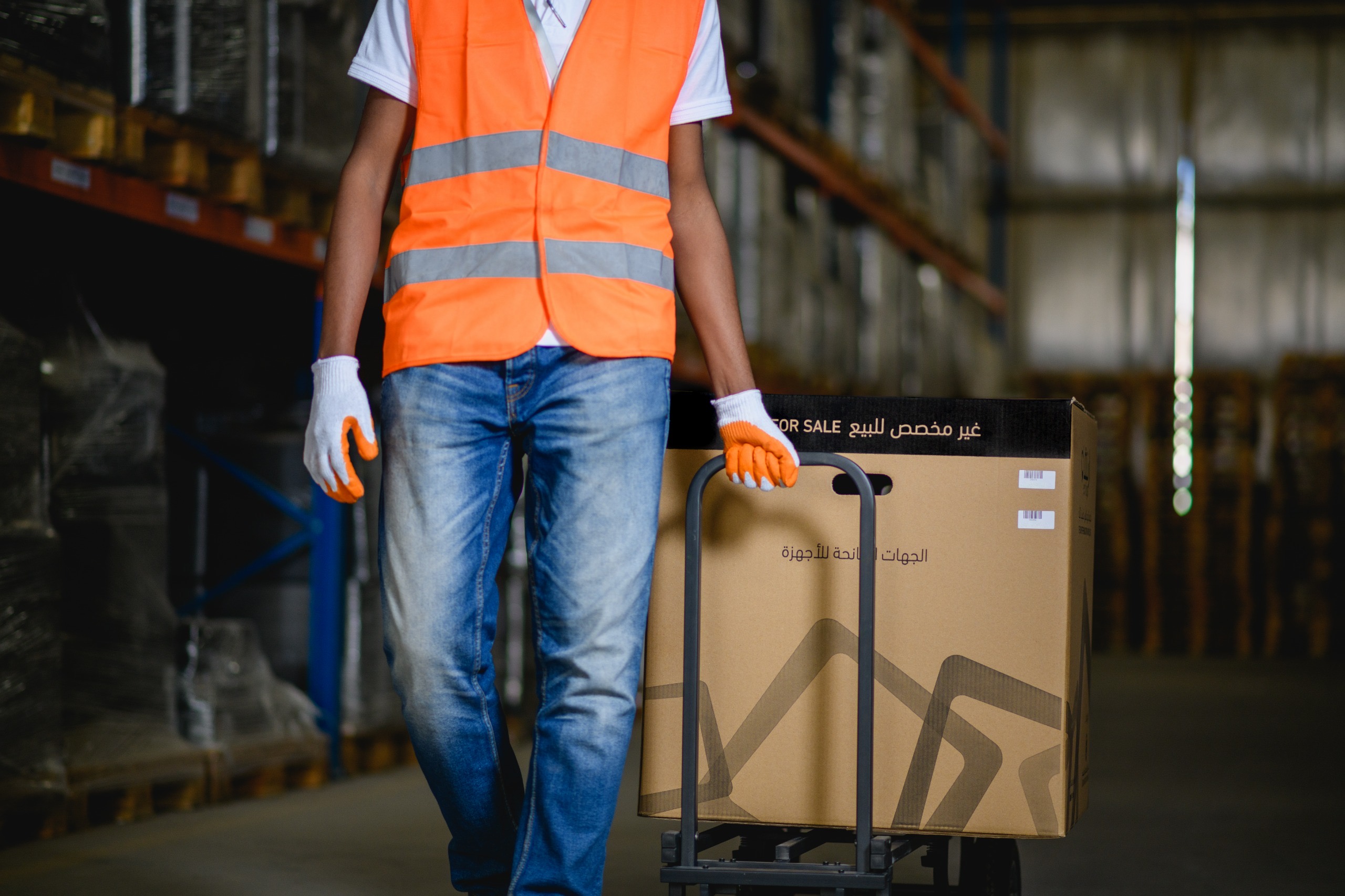
The association distributes approximately “500 devices across various regions of the Kingdom every two weeks,” she said.
Ertiqa recently opened a branch in Riyadh, while its main operations remain in Alkhobar.
A growing waste stream
As consumers continue replacing phones, computers and other electronics with newer models, households are accumulating unwanted devices at an accelerating rate.
“Electronic waste is one of the fastest-growing waste streams globally,” according to a 2025 journal entry by Md Tasbirul Islam and Amjad Ali from Dhahran-based KFUPM’s Interdisciplinary Research Center for Sustainable Energy Systems.
“Saudi Arabia is among the largest generators, producing approximately 617-620 million kg of e-waste, of which 85 percent is disposed of in landfills, representing a substantial resource loss and environmental risk,” the study confirmed. “(It) projects that e-waste generation will reach approximately 1,102 million kg by 2030. Household disposal patterns reveal that in Jazan and Riyadh, approximately 90 percent of e-waste is discarded in public containers.”
Residents across the Kingdom can take unwanted electronics to organizations such as Ertiqa for reuse or recycling, helping keep them out of landfills.
“We actively work to align operations with Vision 2030 goals — sustainability, environmental responsibility, and carbon footprint reduction,” Al-Otaibi said.
“We view this as a ‘digital blessing,’ just as we value the blessing of food, this is also a blessing. Anyone can donate a device — even one that is old or full of tangled wires — and we put it to use,” she continued. “My message to those who might not be aware is this: don't just let old equipment sit unused in a drawer or cabinet; put it to work.”
Making environmental awareness fun
The Eastern Province has also become a base for youth-led approaches to tackling e-waste and environmental awareness.
“It’s very exciting seeing Vireen thrive because we started as just a couple of friends playing around and then we just did it for fun. And then now it’’ becoming a real initiative that helps the community moving forward,” Shaaban added.
“Vireen stands for a combined words of VR and green. Because initially, we just did VR experiences,” he said.
“As a young person, PowerPoint sometimes can be very boring; we need something interactive and immersive,” he said. “We created a VR experience game where we throw trash at the player, he picks up the trash and then we rotate the bins and there's an actual scoreboard. You know, kids, so many kids play, not because of the environment, because it’s a fun game, but the ideas will stick.”
“It will get them to think if a lithium battery is not disposed correctly, what happens? I’ll tell you. It impacts the whole ecosystem, not just the animals — even humans. It creates all sorts of health risks, as well.”
For Shaaban, keeping electronics out of drawers — and potentially landfills — can be a simple starting point.
“Donate old e-waste. It’s a win-win situation; you can help the environment and organize your place,” Shaaban concluded.