Drones strike Syria’s Hama after deadly attacks on Idlib — army and rescuers

Drones strike Syria’s Hama after deadly attacks on Idlib — army and rescuers
The army said several villages in rural Hama had come under attack. (AFP/File)
Short Url
Updated 27 October 2023
Follow

Drones strike Syria’s Hama after deadly attacks on Idlib — army and rescuers

Drones strike Syria’s Hama after deadly attacks on Idlib — army and rescuers
  • The area is the last opposition bastion under control of mainstream Turkiye-backed armed factions and Hayat Tahrir al Sham group

AMMAN: The Syrian army shot down on Thursday eight drones over the Hama and Aleppo countryside in northwestern Syria that had killed three Syrians and injured two others, state media said, only hours after the opposition and rescuers accused the army of its own deadly attacks on rebel-held Idlib city.
The army said several villages in rural Hama had come under attack from drones flying from Idlib city. At least four civilians were killed in Idlib earlier from rockets fired by the Syrian army, rebel sources said.
The Syrian army has blamed rebels, who it says are Islamist jihadists, for attacks on government-held areas in Idlib and Aleppo provinces and denies indiscriminate shelling of civilian areas in areas under rebel control.
In a statement, the army said it conducted with Russian air forces a series of strikes against hideouts, training bases and ammunition depots belonging to Islamist militant Hayat Tahrir al Sham group, killing and injuring scores of their fighters and also some military commanders.
“A large number of terrorists were killed in targeted strikes conducted with Russian forces,” the Syrian ministry of defense said in a statement.
Rescuers and residents say the Syrian government backed by Russian jets have intensified in the last three weeks their bombardment of Syria’s northwest rebel-held enclave.
Opposition officials say both Moscow and Damascus are taking advantage of the world’s preoccupation with the Gaza conflict to escalate pounding of a region where over three million inhabitants refuse to live under the authoritarian rule of Syrian President Bashar al Assad.
The area is the last opposition bastion under control of mainstream Turkiye-backed armed factions and Hayat Tahrir al Sham group.
At least five civilians were killed during a Russian strike on Tuesday that hit a camp for displaced Syrians in rebel-held Saraqeb, residents and rescuers said.
Opposition sources say at least 60 civilians have been killed in the bombing by the Syrian army and its Russian ally of rebel-held villages and towns since the start of the month.
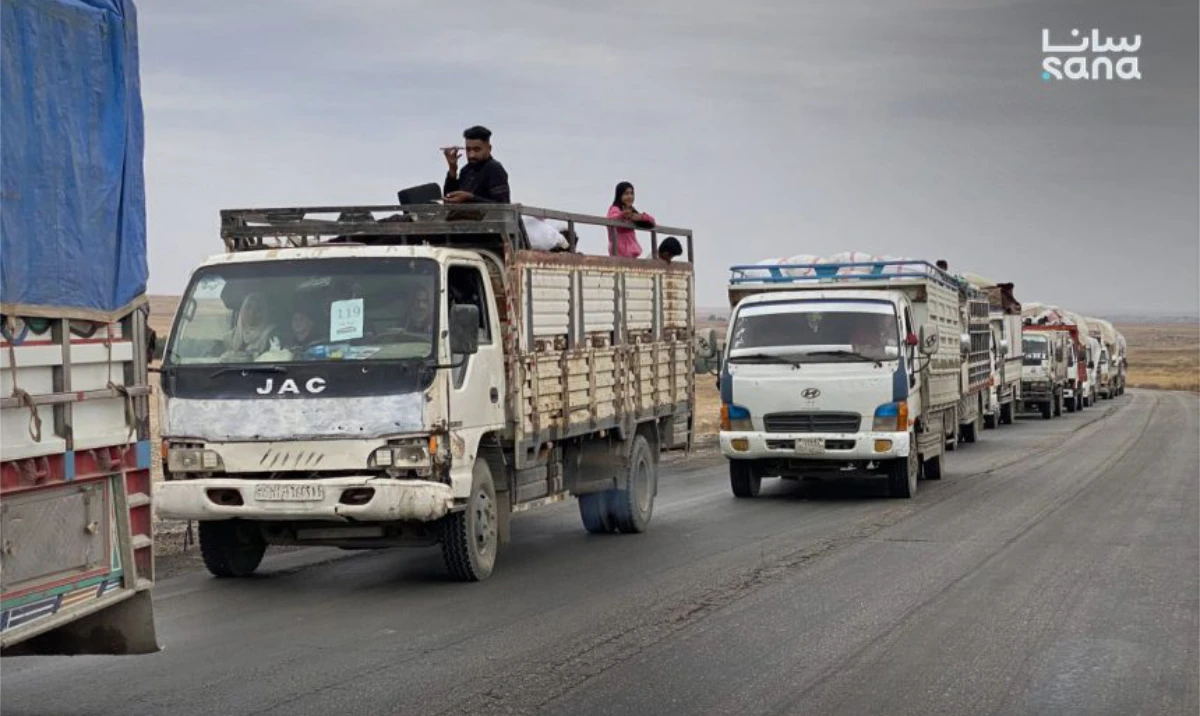
Thousands have fled the bombing campaign to safer areas along the border with Turkiye.
Netanyahu dismisses election calls as thousands protest in Tel Aviv

Netanyahu dismisses election calls as thousands protest in Tel Aviv
Updated 8 sec ago
Follow

Netanyahu dismisses election calls as thousands protest in Tel Aviv

Netanyahu dismisses election calls as thousands protest in Tel Aviv
  • The crowd was much smaller than last years’ mass protests, numbering a few thousand, according to local media

JERUSALEM : Prime Minister Benjamin Netanyahu on Saturday dismissed the idea of holding early elections, while thousands of Israelis gathered in Tel Aviv for an anti-government protest.
Netanyahu has seen his popularity plummet in opinion polls since Hamas’ Oct. 7 attack that sparked the devastating war in Gaza.
Anti-government protests that shook the country for much of 2023 have largely subsided during the war. Still, demonstrators again took to the streets of Tel Aviv Saturday night calling for new elections, which are not scheduled until 2026.
The crowd was much smaller than last years’ mass protests, numbering a few thousand, according to local media.
“I’d like to say to the government that you’ve had your time, you ruined everything that you can ruin. Now is the time for the people to correct all the things, all the bad things that you’ve done,” said one protester, his head wrapped in an Israeli flag.
Netanyahu was asked at a press briefing about calls within his own ruling Likud party to hold early elections right when the Gaza war ends.
“The last thing we need right now are elections and dealing with elections, since it will immediately divide us,” he said. “We need unity right now.”


Mediator says talks on Gaza not ‘progressing as expected’ after momentum in recent weeks

Mediator says talks on Gaza not ‘progressing as expected’ after momentum in recent weeks
Updated 56 min 1 sec ago
Follow

Mediator says talks on Gaza not ‘progressing as expected’ after momentum in recent weeks

Mediator says talks on Gaza not ‘progressing as expected’ after momentum in recent weeks
  • New airstrikes in central Gaza on Saturday killed more than 40 people, including children, and wounded at least 50, according to Associated Press journalists and hospital officials

RAFAH, Gaza Strip: Talks on a potential ceasefire deal in Gaza “have not been progressing as expected” in the past few days after good progress in recent weeks, key mediator Qatar said Saturday, as Israel’s prime minister accused the Hamas militant group of not changing its ”delusional” demands.
Speaking during the Munich Security Conference, Qatar’s prime minister, Sheikh Mohammed bin Abdurrahman Al Thani, noted difficulties in the “humanitarian part” of the negotiations.
Israeli Prime Minister Benjamin Netanyahu, who is under pressure to bring home remaining hostages taken in the Oct. 7 Hamas attack, said he sent a delegation to ceasefire talks in Cairo earlier in the week at US President Joe Biden’s request but doesn’t see the point in sending them again.
Hamas wants a permanent ceasefire in Gaza and the release of Palestinians held by Israel.
Netanyahu also pushed back against international concern about a planned Israeli ground offensive in Rafah, a city on southern Gaza’s border with Egypt. He said “total victory” against Hamas requires the offensive, once people living there evacuate to safe areas. Where they will go in largely devastated Gaza is not clear.
New airstrikes in central Gaza on Saturday killed more than 40 people, including children, and wounded at least 50, according to Associated Press journalists and hospital officials. Israel’s military said it carried out strikes there against Hamas.
Five people were killed in an Israeli airstrike that targeted a house outside Khan Younis in the south, according to health officials, and another five people, including three children, were killed in an airstrike on a building north of Rafah. Dr. Marwan Al-Hams, director of Abu Yousef Al-Najjar Hospital, said other bodies were being pulled from the rubble.
Israel’s air and ground offensive was triggered by the Oct. 7 attack that killed some 1,200 people in Israel and took 250 others hostage.
The Gaza Health Ministry on Saturday raised the overall death toll in Gaza to 28,858, saying the bodies of 83 people killed in Israeli bombardments were brought to hospitals in the past 24 hours. The count does not differentiate between combatants and civilians, but the ministry says two-thirds of those killed are women and children.
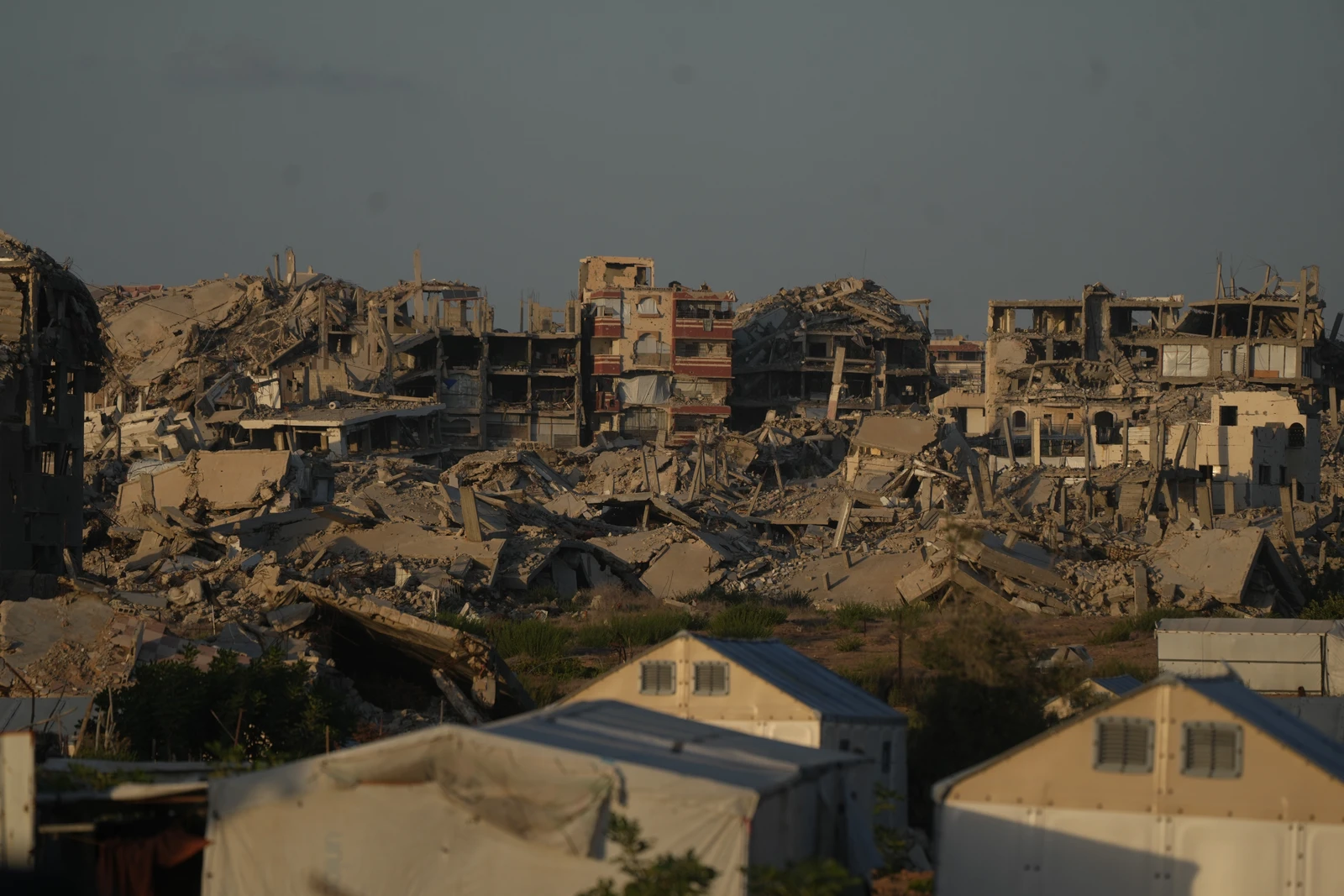
The war also has caused widespread destruction, displaced some 80 percent of Gaza’s population and sparked a humanitarian crisis in the Hamas-run enclave.
EGYPT CONCERNED ABOUT SPILLOVER
More than half of Gaza’s 2.3 million people are packed into Rafah, which Israel portrays as the last significant stronghold of Hamas fighters.
US President Joe Biden has urged Israel not to carry out an operation there without a “credible” plan to protect civilians and to instead focus on a ceasefire. Egypt has said an operation could threaten diplomatic relations.
Israel has said it has no plans to force Palestinians into Egypt. New satellite photos, however, indicate that Egypt is preparing for that scenario. The images show Egypt building a wall and leveling land near its border with Gaza.
Egyptian Foreign Minister Sameh Shoukry, who also spoke at the Munich Security Conference, said “it is not our intention to provide any safe areas or facilities, but … we will provide the support to the innocent civilians, if that was to take place.”
President Abdel Fattah El-Sisi affirmed during a call with France’s leader that Egypt categorical rejected “the displacement of Palestinians to Egypt in any way, shape or form,” according to El-Sisi’s office.
Two senior Egyptian officials said Egypt is building additional defensive lines in an existing buffer zone that extends 5 kilometers (3 miles) from the border. They spoke on condition of anonymity because they were not authorized to discuss details with the media.
The buffer zone, built as part of Egypt’s battle against an Daesh group insurgency, was meant to prevent weapons smuggling to and from Gaza.
ANOTHER CHALLENGE TO AID
Israel has not presented specific evidence for its claim that Hamas is diverting UN aid, and its targeted killings of Gaza police commanders guarding truck convoys have made it “virtually impossible” to distribute the goods safely, a top US envoy said in rare public criticism of Israel.
David Satterfield, the Biden administration’s special Middle East envoy for humanitarian issues, said criminal gangs are increasingly targeting the convoys following the departure of police escorts after Israeli strikes.
“We are working with the Israeli government, the Israeli military in seeing what solutions can be found here because everyone wants to see the assistance continue,” Satterfield told the Carnegie Endowment for International Peace on Friday. A solution “is going to require some form of security escorts to return.”
Satterfield said Israeli officials have not presented “specific evidence of diversion or theft” of UN assistance, but that the militants have their own interests in using “other channels of assistance ... to shape where and to whom assistance goes.”
Israel has alleged repeatedly that Hamas is diverting aid, including fuel, after it enters Gaza, a claim denied by UN aid agencies. Last week, an Israeli airstrike on a car killed three senior police commanders in Rafah. Two officers were killed in another strike.
Satterfield also addressed challenges for the main UN agency aiding Palestinians in Gaza, whose director accused Israel in remarks published Saturday of trying to “destroy” the organization and warned that its operations will halt in April without more support.
ISRAELI TROOPS ENTER A HOSPITAL
In recent weeks, Israel’s military has focused on Khan Younis, Gaza’s second-largest city and a Hamas stronghold.
The army said Saturday that it had arrested 100 suspected Hamas militants at the city’s Nasser Hospital. Israel’s defense minister has said at least 20 of those detained were involved in the Oct. 7 attack.
The Health Ministry said troops turned the hospital into “military barracks” and detained a large number of medical staff. Israel says it does not target patients or doctors, but staff say the facility is struggling under heavy fire.
Nour Abou Jameh was among the thousands sheltering at Nasser Hospital who were forced to leave in the past week. “Shooting and shelling was coming from all directions,” Jameh said. “When we left at night, bodies were in the streets, and even tanks moved on them and crushed them.”


Sudan’s Army claims first major advance

Supporters of the Sudanese popular resistance, which backs  the army, raise their weapons in Gedaref town on Jan. 16. (AFP)
Supporters of the Sudanese popular resistance, which backs the army, raise their weapons in Gedaref town on Jan. 16. (AFP)
Updated 33 min 55 sec ago
Follow

Sudan’s Army claims first major advance

Supporters of the Sudanese popular resistance, which backs  the army, raise their weapons in Gedaref town on Jan. 16. (AFP)
  • The RSF maintains control of areas in the east of Omdurman as well as the wide Ombada district that connects the capital to the western regions, and residents say it has snipers stationed along key routes

DUBAI: The Sudanese Army has claimed its first major advance in 10 months of war, regaining control of part of the city of Omdurman from the Rapid Support Forces.
The army said late on Friday it had succeeded in connecting its two main bases in the city, prompting celebrations among soldiers and local residents.
The Rapid Support Forces denied the army had advanced. “The army has turned to propaganda as it is on the verge of defeat,” the RSF media office said in a statement.
The RSF has been fighting the army for control of Sudan since April in a war that has killed thousands, displaced almost 8 million, and sparked warnings of famine.
Soon after war broke out, the RSF took control of most of the capital Khartoum, its sister cities Bahri and Omdurman, and most of the territory in the western Kordofan and Darfur regions.
The army held on to most of its bases in the capital but had not made major advances until the start of the year, when residents reported it was making greater use of drones.
That appeared to help the army push out of its strongholds around bases in the north and south of the city and create a band of control across the length of the capital.
The RSF maintains control of areas in the east of Omdurman as well as the wide Ombada district that connects the capital to the western regions, and residents say it has snipers stationed along key routes.
Despite a two-week internet blackout, images emerged from the city showing civilians and soldiers celebrating.
Residents of Omdurman, Khartoum and other cities say the RSF has forced them out of their homes, looted belongings, and raped women.
The force is accused of crimes against humanity, war crimes, and ethnic cleansing in West Darfur state by the US
The army, which has carried out a broad campaign of air strikes, is also accused of war crimes. The army and the RSF deny the accusations. The RSF says rogue actors will be brought to justice.
In the Fiteihab district, which has seen food stocks dwindle under the RSF’s siege of the nearby army engineering corps base, one resident said trucks had started entering.
“We are finally starting to regain some hope,” he said.
Sudanese aid worker Shakir Elhassan and his family were among millions forced to flee their homes and former lives after war broke. Some 10 months later, he is one of many voices in the sector warning of a devastating humanitarian crisis that could soon spiral into famine.
“The needs are unprecedented,” the communications manager at Care International said, deploring a lack of global attention. “There is a huge gap in medicines, food,” he said, from the east of the country after what he described as 10 days without internet. Elhassan fled the capital Khartoum in July, joining his wife and three children who had already sought refuge 180 km further south in the town of Wad Madani.


Palestinian state only pathway to Middle East security, stability: Saudi FM

Palestinian state only pathway to Middle East security, stability: Saudi FM
Updated 45 min 8 sec ago
Follow

Palestinian state only pathway to Middle East security, stability: Saudi FM

Palestinian state only pathway to Middle East security, stability: Saudi FM
  • Prince Faisal was speaking at Munich Security Conference
  • Said Kingdom’s focus fully on securing ceasefire in Israel-Hamas war in Gaza

MUNICH: Saudi Foreign Minister Prince Faisal bin Farhan on Saturday said the formation of a Palestinian state was “the only pathway” toward security and stability in the Middle East.

Prince Faisal was speaking at the Munich Security Conference and added that Israel’s security and stability was also dependent on the establishment of a state of Palestine.

He said the Kingdom’s focus was fully on securing a ceasefire in the Israel-Hamas war in Gaza.

“We are focused on a ceasefire and on an Israeli withdrawal from Gaza and we are focused on humanitarian access for the people of Gaza,” Prince Faisal said.

Saudi Arabia has repeatedly stated it would not open diplomatic relations with Israel unless an independent Palestinian state is recognized.

Prince Faisal also said that provocative actions carried out by Israeli forces would inflame feelings in Arab and Islamic nations, especially with the death toll in Gaza approaching 30,000. He added that their actions could serve the ideologies of terrorism and extremism around the world.


Fear pervades West Bank hospital after deadly Israeli raid

Fear pervades West Bank hospital after deadly  Israeli raid
Updated 17 February 2024
Follow

Fear pervades West Bank hospital after deadly Israeli raid

Fear pervades West Bank hospital after deadly  Israeli raid
  • Only on closer inspection were bullet holes visible in the abandoned hospital bed and an adjacent chair where the young men had been shot

JENIN: A climate of fear pervades a hospital in the occupied West Bank city of Jenin, where patients and doctors are reeling from last month’s deadly raid by Israeli agents disguised as medics.
At the rehabilitation ward at Jenin’s Ibn Sina Hospital, two patients recalled hearing the screams of a nurse as Israeli forces reached the third floor.
“I opened the door and saw a man. I didn’t know they were special forces,” said a patient, a grey hoodie pulled up over his head to conceal his face. “The man was choking the nurse with his hand and hit her with the butt of his gun.”

A nurse shows the hole made by a bullet in a mattress at Ibn Sina hospital in Jenin in the occupied West Bank, on February 8, 2024. (AFP)

His account matched that of an elderly patient, who recalled hearing shouting while he stayed put in his room.
Neither knew that through a sky-blue door just meters away, the Israeli unit shot dead three Palestinians, all militants, including a paraplegic patient hospitalized for months. “It’s toughest at night,” said the patient, who had been shouted at by the undercover agents to shut his door during the assault. All but one person in the hospital spoke on condition of anonymity, as they were worried about their safety.

BACKGROUND

The World Health Organization said it was ‘appalled’ over the Israeli undercover operation.

Across the ward, room 376 had been scrubbed clean and lay empty.
Only on closer inspection were bullet holes visible in the abandoned hospital bed and an adjacent chair where the young men had been shot.
One of the staffers showed photos on his phone of a bullet, another of flesh left on the bed in the January 30 raid.
A medic said he was approached by a man dressed as a doctor, who spoke perfect Arabic and showed the ID pinned to his chest before asking him to unlock room 376.
Inside were militants Basel Ghazawi — unable to walk after being shot in October — his brother Muhammad Ghazawi and friend Muhammad Jalamnah.
The Israeli military justified the killing inside a medical facility, which are granted special protection under international law, by saying the trio were “terrorists” who were “hiding” in the hospital.