How war’s hidden weapons endanger culture and communities from Syria to Ukraine

Special How war’s hidden weapons endanger culture and communities from Syria to Ukraine
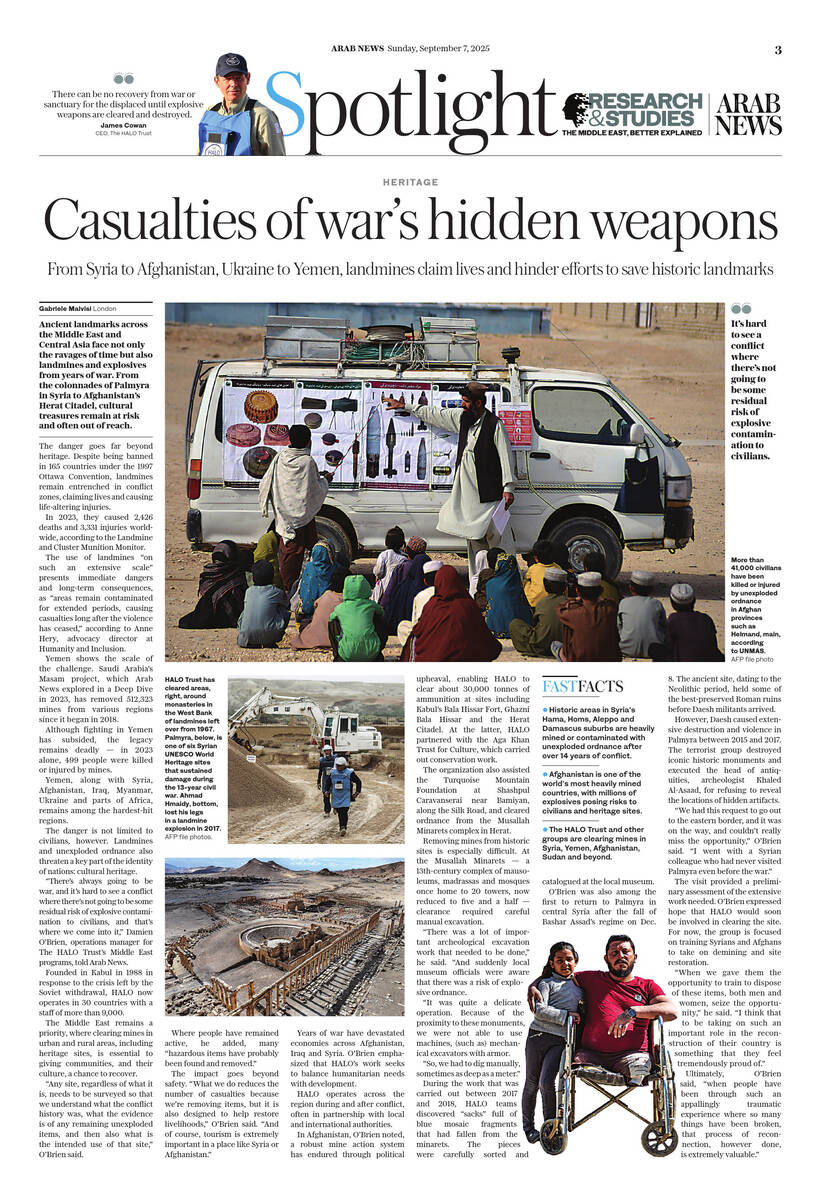
This aerial view shows the 2nd-century Roman amphitheater and the Great Colonnade (Decumanus Maximus) at the ancient ruins of Palmyra in central Syria on February 7, 2025. Palmyra is one of six Syrian sites listed on the UNESCO elite list of world heritage and all of them sustained some level of damage through out the 13-year civil war. (AFP)
Short Url
Updated 07 September 2025
Follow

How war’s hidden weapons endanger culture and communities from Syria to Ukraine

How war’s hidden weapons endanger culture and communities from Syria to Ukraine
  • Survival of ruins of Syria’s Palmyra and Afghanistan’s Herat threatened not only by time but by hidden landmines
  • Clearing explosives from ancient cities is essential if communities are to return and cultural treasures are to be preserved

LONDON: Ancient landmarks across the Middle East and Central Asia face not only the ravages of time but also landmines and explosives from years of war. From the colonnades of Palmyra in Syria to Afghanistan’s Herat Citadel, cultural treasures remain at risk and often out of reach.

The danger goes far beyond heritage. Despite being banned in 165 countries under the 1997 Ottawa Convention, landmines remain entrenched in conflict zones, claiming lives and causing life-altering injuries.

In 2023, they caused 2,426 deaths and 3,331 injuries worldwide, according to the Landmine and Cluster Munition Monitor. Civilians made up 84 percent of the victims, and more than one-third were children.
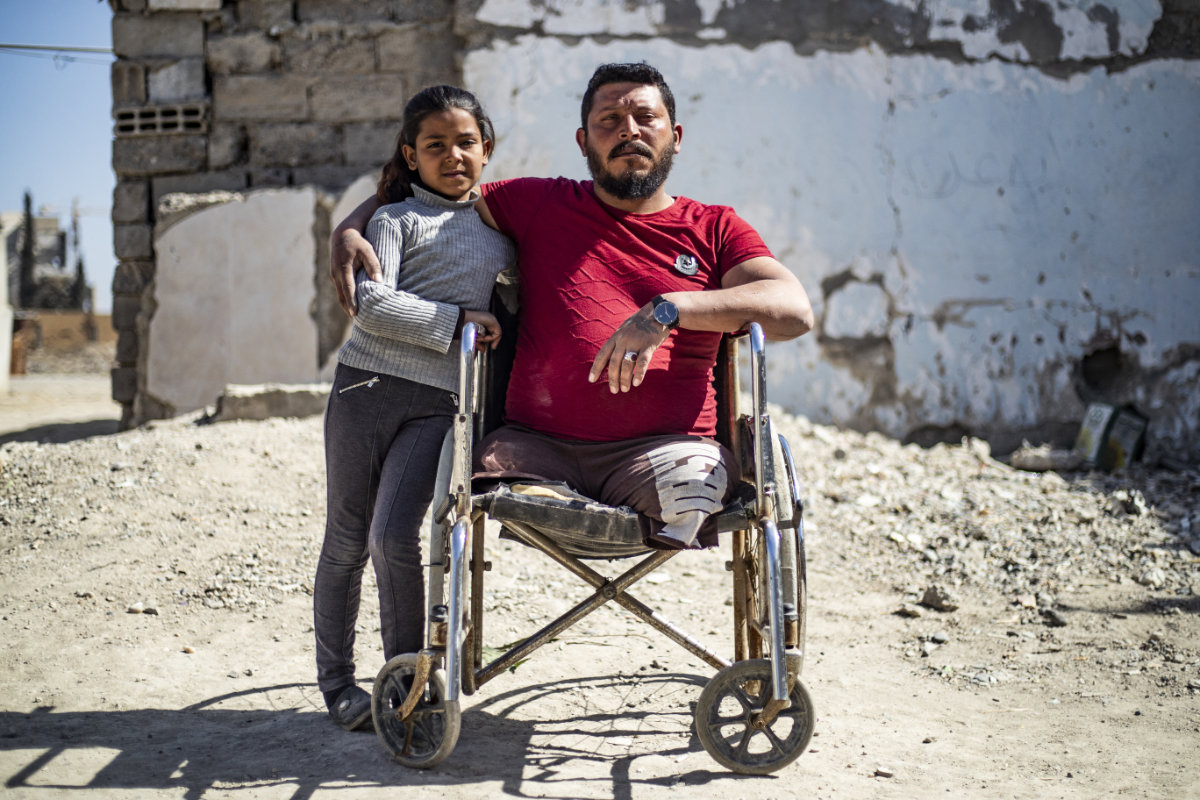


Ahmad Hajj Hmaidy, 36, who lost his legs as a result of a landmine explosion, poses with his only surviving daughter Nada, 9, who also bears shrapnel wounds across her body as a result, outside their destroyed family home in the Syrian city of Raqa on February 26, 2021. (AFP)


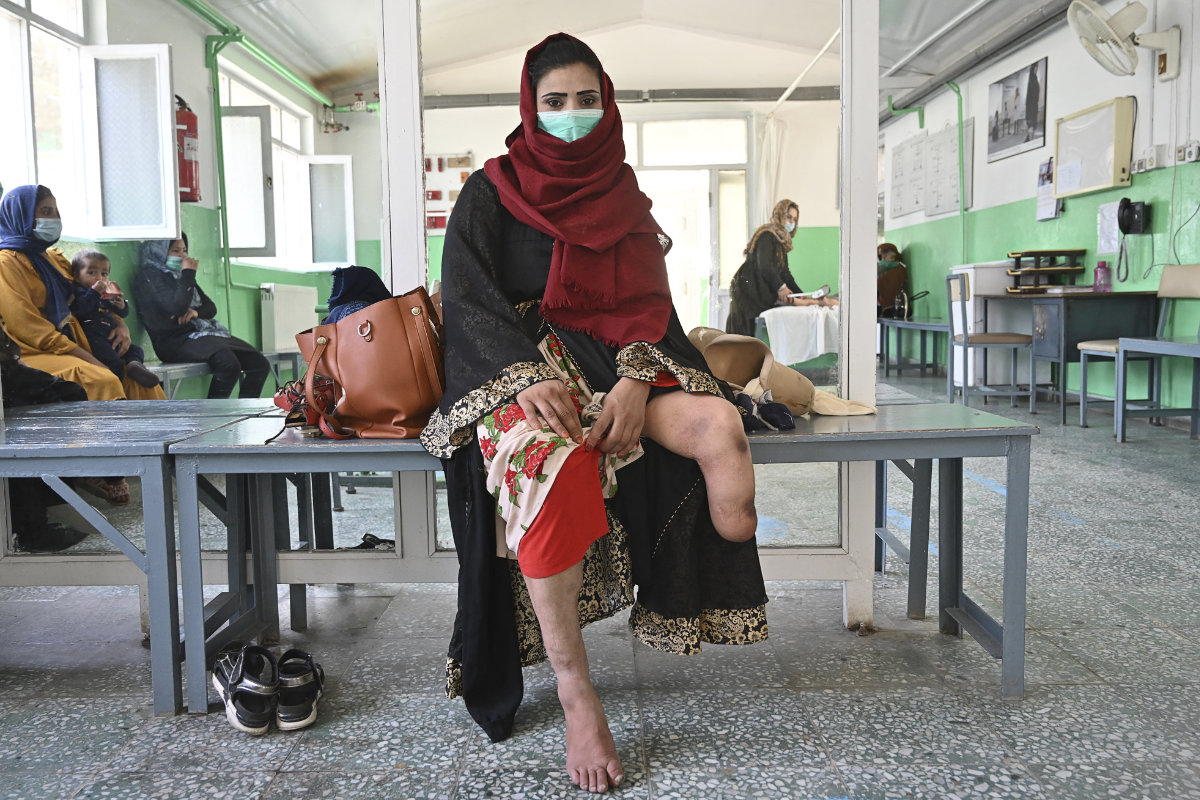
A victim of landmines waits for a treatment at the ICRC physical rehabilitation center in Kabul on June 28, 2021. (AFP file photo)

The toll — the highest for the ninth year in a row — reflects both an increase in armed conflicts and the growing use of improvised mines.

The use of landmines “on such an extensive scale” presents immediate dangers and long-term consequences, as “areas remain contaminated for extended periods, causing casualties long after the violence has ceased,” according to Anne Hery, advocacy director at Humanity and Inclusion.

Yemen shows the scale of the challenge. The Masam project, which Arab News explored in a Deep Dive in 2023, has removed 512,323 mines — including 4,735 explosive devices in August — from various regions since it began in 2018.
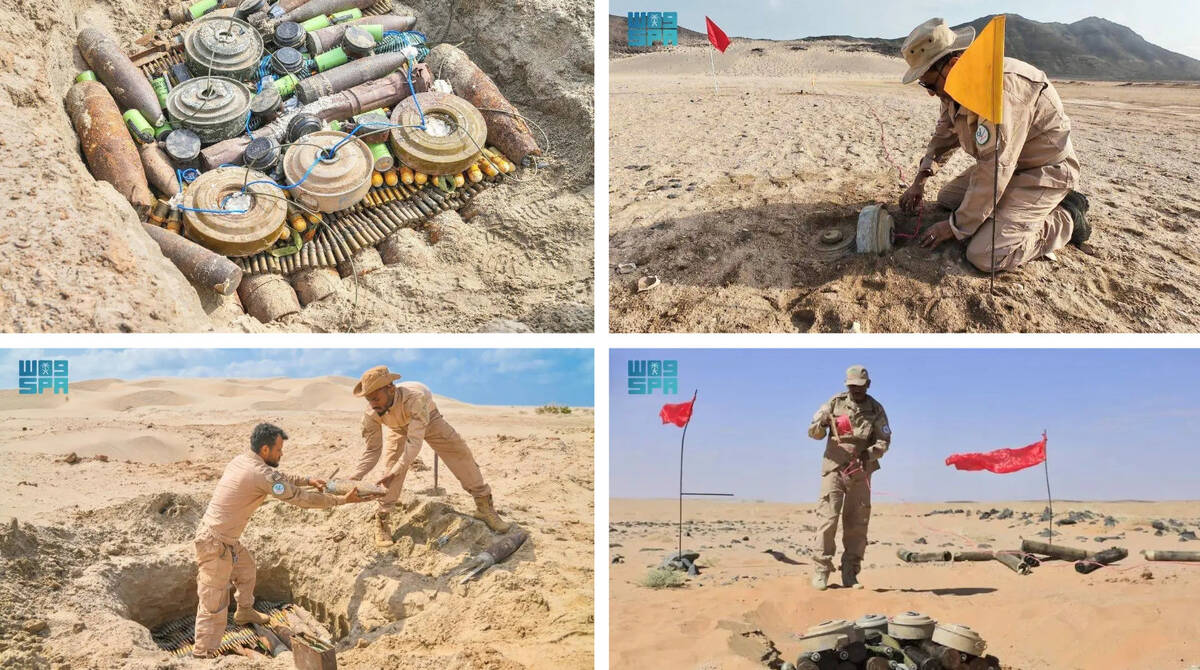


Demining specialists of KSrelief's Masam Project are seen at work in Yemen's minefields in this combination image. (SPA photos)

The demining initiative, run by Saudi Arabia’s King Salman Humanitarian Aid and Relief Center, has helped reduce the threat posed by landmines to civilians, including children, women and the elderly.

Although fighting in Yemen has subsided, the legacy remains deadly — in 2023 alone, 499 people were killed or injured by mines.

Yemen, along with Syria, Afghanistan, Iraq, Myanmar, Ukraine and parts of Africa, remains among the hardest-hit regions.
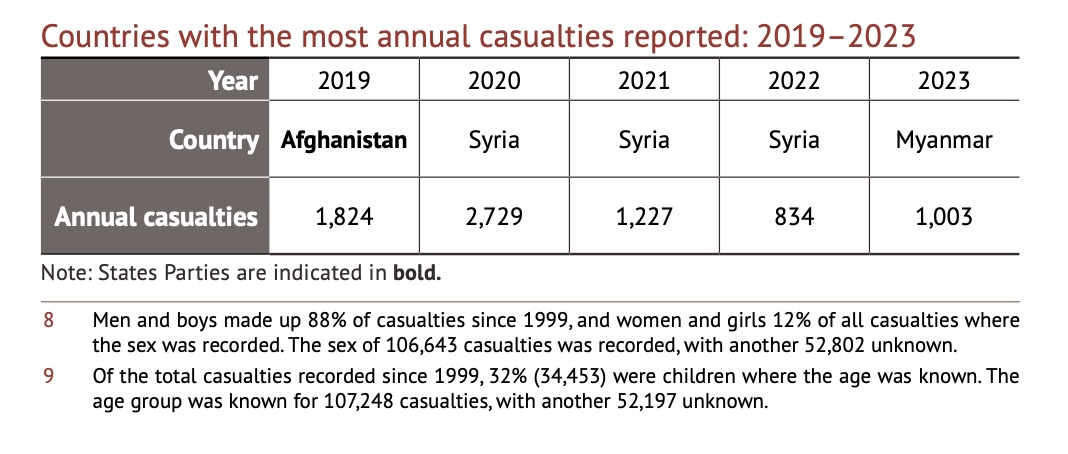


Infographic from the Landmine Monitor 2024 report

The danger is not limited to civilians, however. Landmines and unexploded ordnance also threaten a key part of the identity of nations: cultural heritage.

“There’s always going to be war, and it’s hard to see a conflict where there’s not going to be some residual risk of explosive contamination to civilians, and that’s where we come into it,” Damien O’Brien, operations manager for The HALO Trust’s Middle East programs, told Arab News.
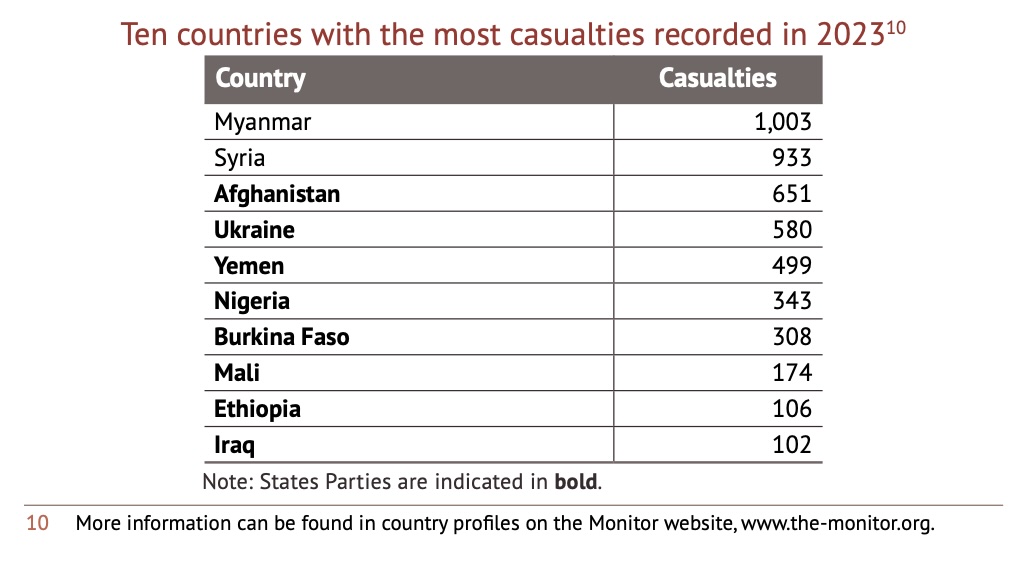


Infographic from the Landmine Monitor 2024 report

Founded in Kabul in 1988 in response to the crisis left by the Soviet withdrawal, HALO now operates in 30 countries with a staff of more than 9,000.

The Middle East remains a priority, where clearing mines in urban and rural areas, including heritage sites, is essential to giving communities, and their culture, a chance to recover.

“Any site, regardless of what it is, needs to be surveyed so that we understand what the conflict history was, what the evidence is of any remaining unexploded items, and then also what is the intended use of that site,” O’Brien said.

FASTFACTS:

• Historic areas in Syria’s Hama, Homs, Aleppo and Damascus suburbs are heavily mined or contaminated with unexploded ordnance after over 14 years of conflict.

• Afghanistan is one of the world’s most heavily mined countries, with millions of explosives posing risks to civilians and heritage sites.

• The HALO Trust and other groups are clearing mines in Syria, Yemen, Afghanistan, Sudan and beyond.

Where people have remained active, he added, many “hazardous items have probably been found and removed.”

The impact goes beyond safety. “What we do reduces the number of casualties because we’re removing items, but it is also designed to help restore livelihoods,” O’Brien said. “And of course, tourism is extremely important in a place like Syria or Afghanistan.”

Years of war have devastated economies across Afghanistan, Iraq and Syria. O’Brien emphasized that HALO’s work seeks to balance humanitarian needs with development.
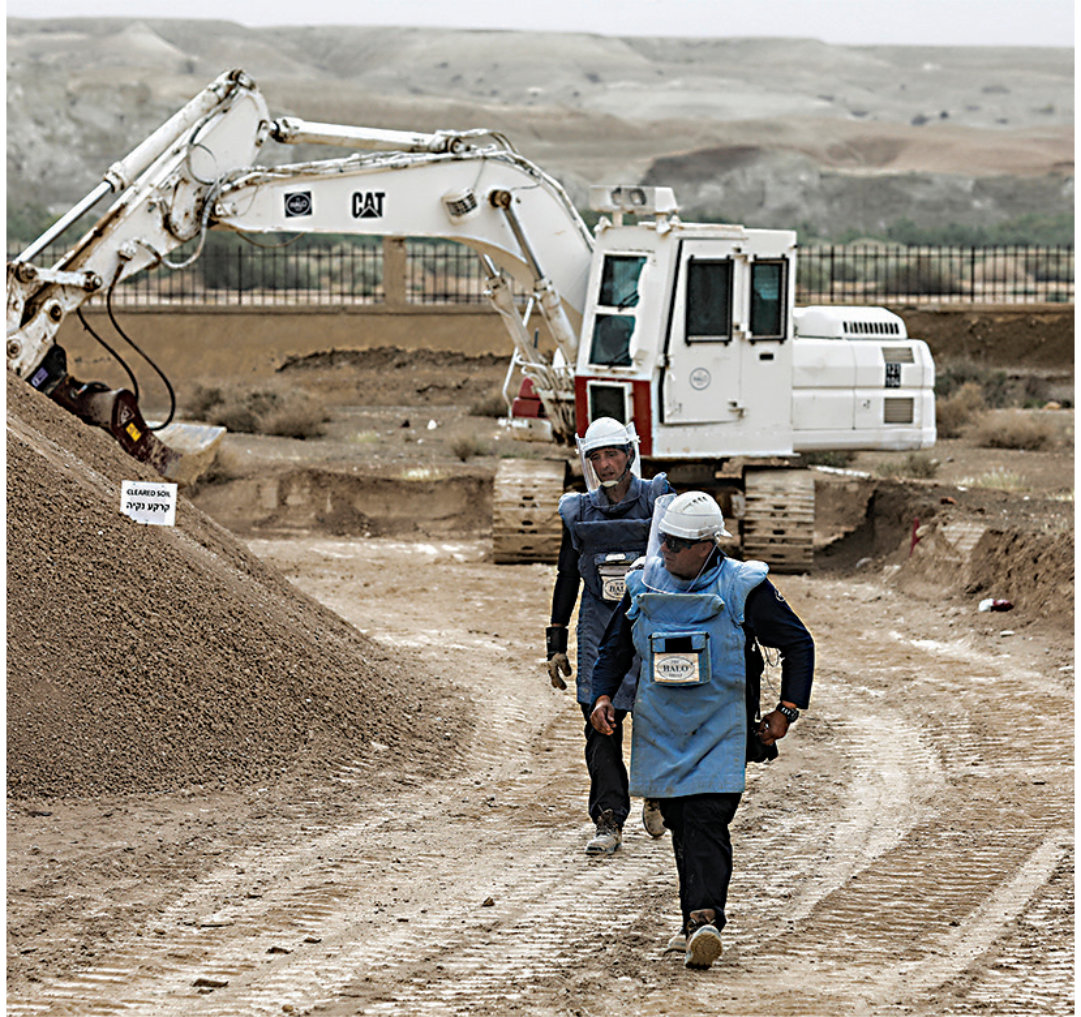
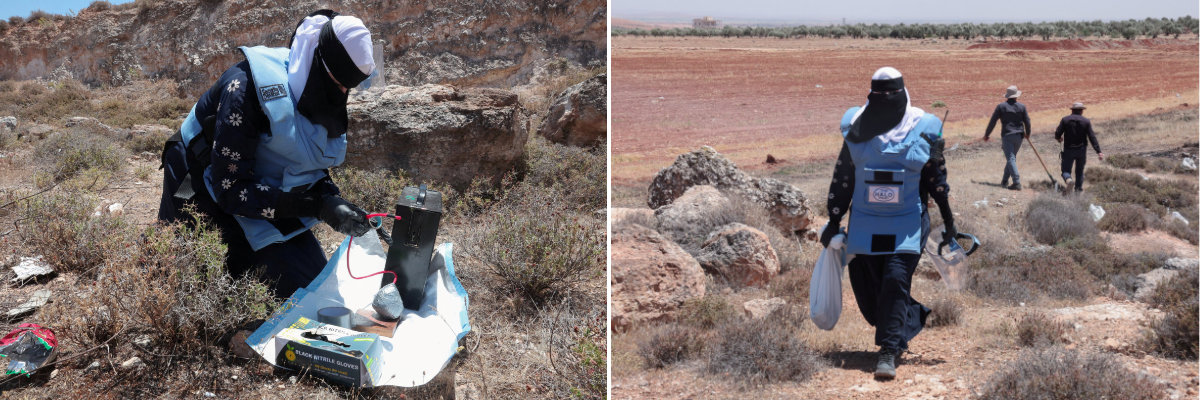


HALO Trust has cleared areas around monasteries in the West Bank of landmines left over from 1967. (AFP file photo)


Heba Gadaa, who works in clearing mines after the civil war, at work in the Aleppo countryside, Syria, on June 1, 2025. (REUTERS)

“You might say that getting people back to their homes and resettled is a more urgent priority in terms of human safety and in terms of the economy than rehabilitating heritage sites,” he said. “That’s a discussion.”

Ultimately, he added, the decision is one for “the local government to make — we would work in line with their reconstruction strategy.”

HALO operates across the region during and after conflict, often in partnership with local and international authorities.

In Afghanistan, O’Brien noted, a robust mine action system has endured through political upheaval, enabling HALO to clear about 30,000 tons of ammunition at sites including Kabul’s Bala Hissar fort, Ghazni Bala Hissar and the Herat Citadel. At the latter, HALO partnered with the Aga Khan Trust for Culture, which carried out conservation work.
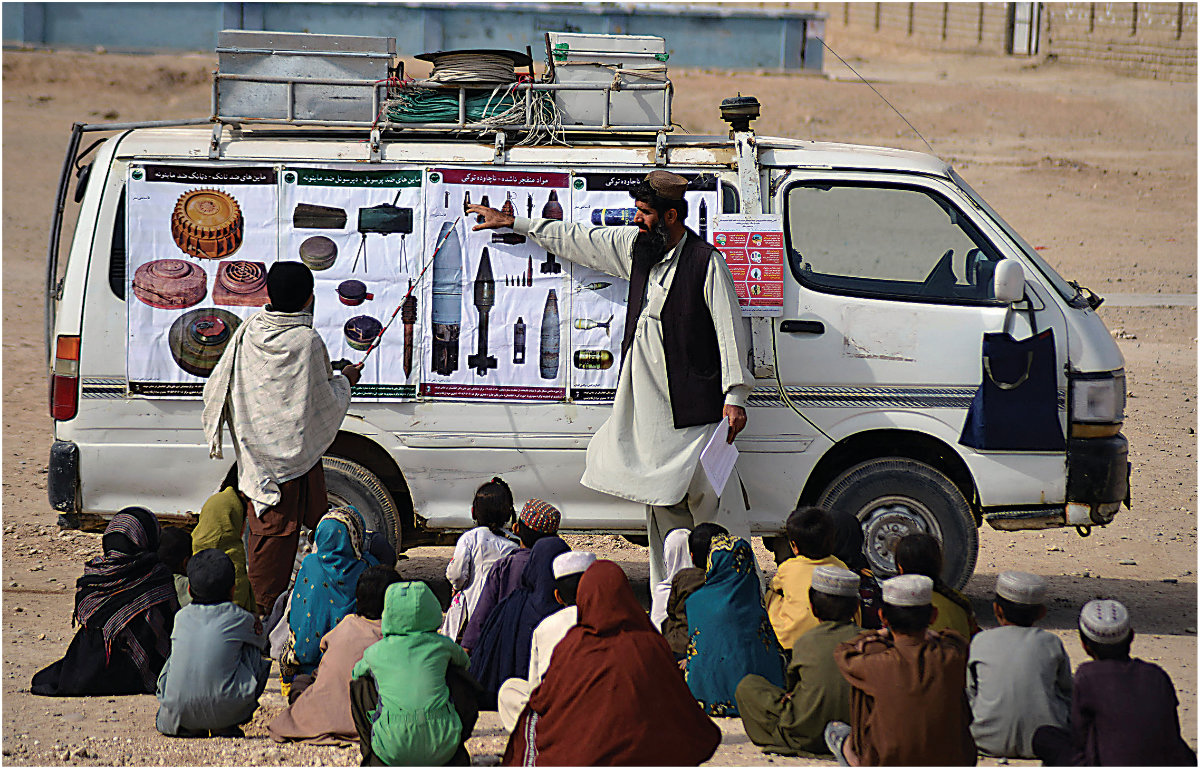


This picture taken on November 9, 2021 shows a teacher from the HALO Trust educating children about mine risks in Nad-e-Ali village in Helmand province. (AFP File)

The organization also assisted the Turquoise Mountain Foundation at Shashpul Caravanserai near Bamiyan, along the Silk Road, and cleared ordnance from the Musallah Minarets complex in Herat.

Removing mines from historic sites is especially difficult. At the Musallah Minarets — a 13th-century complex of mausoleums, madrassas and mosques once home to 20 towers, now reduced to five and a half — clearance required careful manual excavation.

Carried out between 2017 and 2018, O’Brien said the intervention was prompted by a child’s accident with an anti-personnel mine near the site.

“There was a lot of important archeological excavation work that needed to be done,” he said. “And suddenly local museum officials were aware that there was a risk of explosive ordnance.

“It was quite a delicate operation. Because of the proximity to these monuments, we were not able to use machines, (such as) mechanical excavators with armor.

“So, we had to dig manually, sometimes as deep as a meter.”
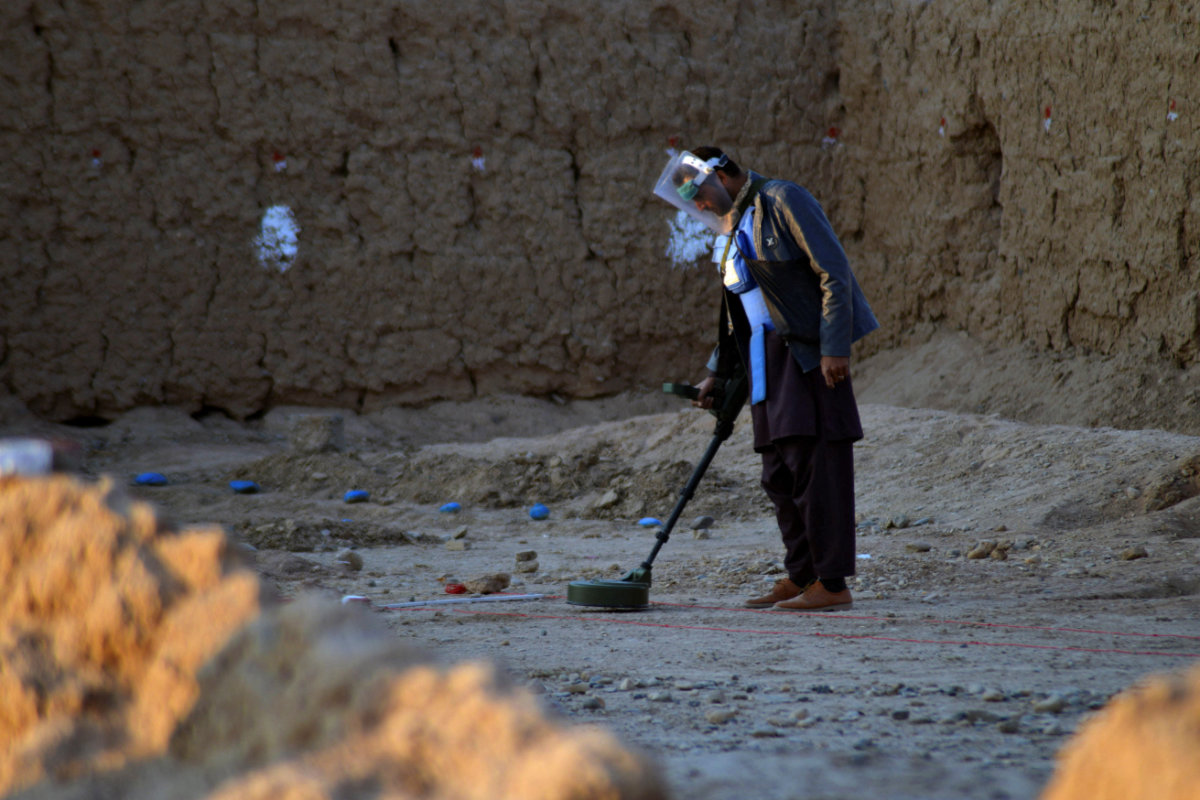


This picture taken on November 10, 2021 shows a deminer from the HALO Trust scanning the ground for mines with a hand-metal detector in Nad-e-Ali village in Helmand province. (AFP)

During the work, complicated by ongoing archaeological digs, HALO teams discovered “sacks” full of blue mosaic fragments that had fallen from the minarets. The pieces were carefully sorted and catalogued at the local museum.

O’Brien was also among the first to return to Palmyra in central Syria after the fall of Bashar Assad’s regime on Dec. 8. The ancient site, dating to the Neolithic period, held some of the best-preserved Roman ruins before Daesh militants arrived.

However, Daesh caused extensive destruction and violence in Palmyra between 2015 and 2017. The terrorist group destroyed iconic historic monuments, including the Temple of Bel, Temple of Baalshamin, the Arch of Triumph, and parts of the Roman theater using explosives and sledgehammers.

In 2015, Daesh executed the 82-year-old head of antiquities, archaeologist Khaled Al-Asaad, publicly beheading him for refusing to reveal the locations of hidden artifacts.

“We had this request to go out to the eastern border, and it was on the way, and couldn’t really miss the opportunity,” O’Brien said. “I went with a Syrian colleague who had never visited Palmyra even before the war.”
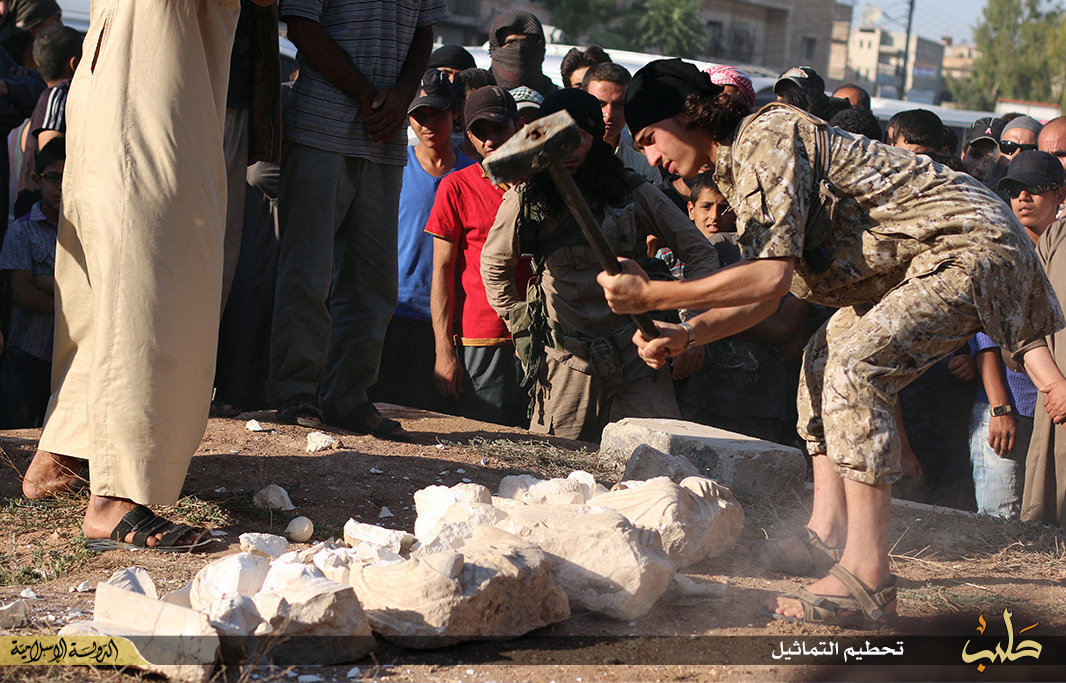


An image made available by propaganda Islamist media outlet Welayat Halab on July 2, 2015 shows a Daesh group fighter destroying ancient artifacts smuggled from the Syrian city of Palmyra as other watch on in the town of Manbij, northeast of Syria's embattled northern town of Aleppo. (AFP/File)

The visit provided a preliminary assessment of the extensive work needed. O’Brien expressed hope that HALO would soon be involved in clearing the site. For now, the group is focused on training Syrians and Afghans, many formerly engaged in risk education, to take on demining and site restoration.

“When we gave them the opportunity to train to dispose of these items, both men and women, seize the opportunity,” he said. “I think that to be taking on such an important role in the reconstruction of their country is something that they feel tremendously proud of.”

Reflecting on the value of restoring heritage, O’Brien said he feels “privileged” to have contributed. 
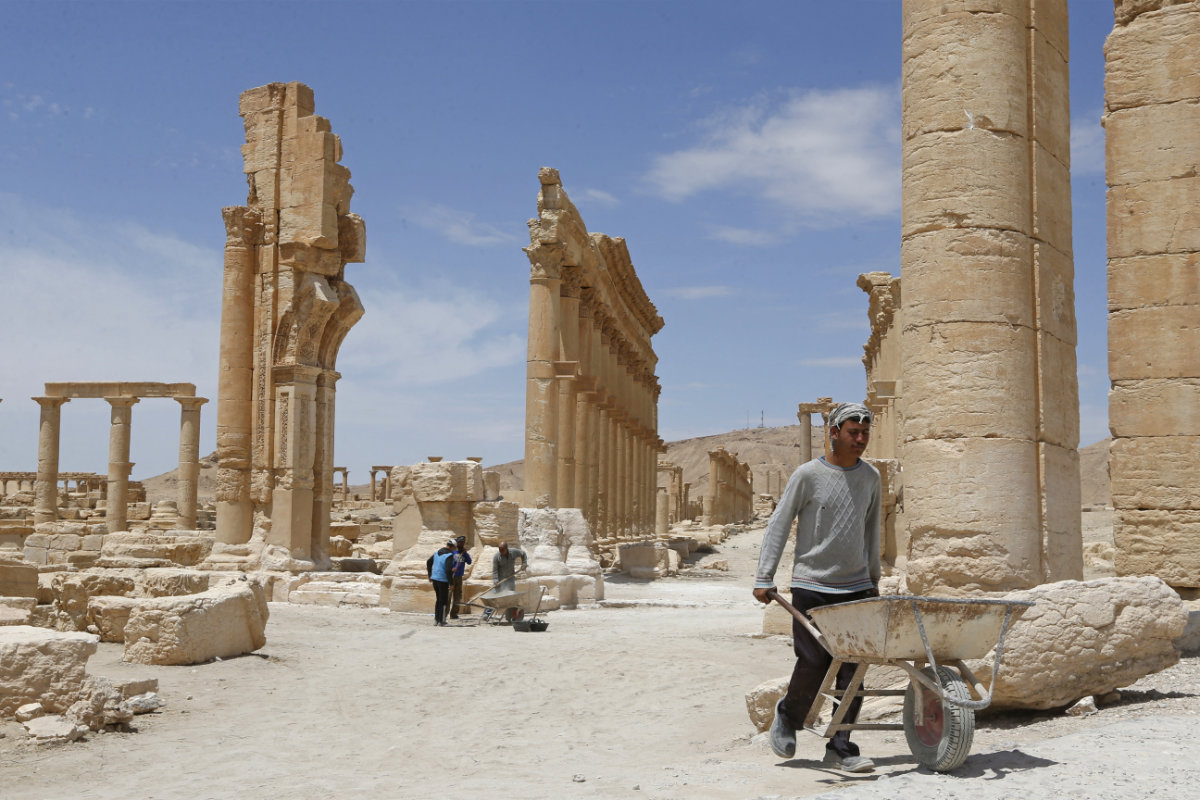


Labourers work at the site of the remains of the Triumphal Arch of Septimius Severus built during the reign of the 3rd-century Roman emperor, and destroyed by Islamic State (IS) group militants in 2015, in the ruins of Syria's Roman-era ancient city of Palmyra on May 9, 2022.

“My academic background is in ancient languages. I studied those because I thought that was the best way for me to try to understand the world (and) to understand where cultures come from,” he said. “Whatever is happening at the moment, or whatever happened in recent history, there was a time before, and there’ll be a time afterward.

“A very unpleasant chapter in Syria’s history has just ended. Anything historical that predates that is a common heritage. It’s something which will bring people together at some point.”

Ultimately, O’Brien said, “when people have been through such an appallingly traumatic experience where so many things have been broken, that process of reconnection, however done, is extremely valuable.”


Why France’s ex-President Sarkozy may be released from prison after just 20 days

Updated 5 sec ago
Follow

Why France’s ex-President Sarkozy may be released from prison after just 20 days

Why France’s ex-President Sarkozy may be released from prison after just 20 days
PARIS: A court in Paris will decide whether to release France’s former President Nicolas Sarkozy from prison on Monday, just 20 days after he was incarcerated.
He was sentenced to five years in prison following his conviction for criminal conspiracy in a scheme to finance his winning 2007 campaign with funds from Libya.
Sarkozy, 70, is the first former president of modern France sentenced to actual time behind bars. He was previously convicted on corruption charges, but was ordered to wear an electric monitor rather than serve a prison sentence.
Sarkozy’s legal team is appealing his conviction and has also filed a request for an early release. An appeal trial is to take place at a later date, possibly in the spring.
On Monday, a court in Paris is to examine his request for release, with a decision expected later that day.
The former president, who served from 2007 to 2012, says he’s innocent and contests both the conviction and the decision to incarcerate him pending appeal.
Why Sarkozy may be released from prison
The Paris court found Sarkozy guilty on Sept. 25 and said the prison sentence was effective immediately. But as soon as he was incarcerated on Oct. 21, his legal team filed a request for an early release.
A court is to make a decision Monday based on article 144 of France’s criminal code, which states that release should be the general rule pending appeal, while detention remains the exception — for example for those considered dangerous or at risk of fleeing to another country, or to protect evidence or prevent pressure on witnesses.
It does not involve the motives for the sentencing.
During Monday’s hearing, Sarkozy is expected to provide guarantees he will comply with justice requirements for conditional release.
If granted, he would be placed under judicial supervision and could be released from La Santé prison in Paris within a few hours.
What Sarkozy has been convicted of
In its Sept. 25 ruling, a Paris court said Sarkozy, as a presidential candidate and interior minister, used his position “to prepare corruption at the highest level” from 2005 to 2007 with the aim of financing his presidential campaign with funds from Libya — then led by longtime ruler Muammar Qaddafi.
The panel of three judges said that Sarkozy’s closest associates, Claude Guéant and Brice Hortefeux, held secret meetings in 2005 with Abdullah Al-Senoussi, Qaddafi’s brother-in-law and intelligence chief, despite the fact that he was “convicted of acts of terrorism committed mostly against French and European citizens.”
Al-Senoussi is considered the mastermind of attacks on a Pan Am jumbo jet over Lockerbie, Scotland, in 1988 and a French airliner over Niger the following year — causing hundreds of deaths. He was convicted in absentia and handed a life sentence by a Paris court in 1999 for the attack on the French UTA Flight 772.
The court said a complex financial scheme was put in place, although it said there’s no evidence the money transferred from Libya to France ended up being used in Sarkozy’s 2007 campaign itself.
Why he says it’s a plot
Sarkozy consistently said he is innocent and the victim of “a plot” staged by some people linked to the Libyan government, including what he described as the “Qaddafi clan.”
He suggested that the allegations of campaign financing were retaliation for his call — as France’s president — for Qaddafi’s removal.
Sarkozy was one of the first Western leaders to push for military intervention in Libya in 2011, when Arab Spring pro-democracy protests swept the Arab world. Qaddafi was toppled and killed in the uprising that same year, ending his four-decade rule of the North African country.
In addition, Sarkozy notes the court cleared him of three other charges — passive corruption, illegal campaign financing and concealing the embezzlement of public funds.
He also points to the court’s failure to establish a direct link between the money from Libya and his campaign financing as further proof of his innocence.
Other legal proceedings looming
Monday’s hearing is not the only legal case pending against Sarkozy.
France’s highest court, the Court of Cassation, is set to issue its ruling on Nov. 26 over a separate conviction for illegal campaign financing of Sarkozy’s unsuccessful 2012 reelection bid.
An appeals court in Paris last year sentenced Sarkozy to a year in prison, of which six months were suspended. He is accused of having spent almost twice the maximum legal amount of 22.5 million euros on the reelection bid that he lost to Socialist Francois Hollande.
Sarkozy denied the allegations.
The former president also is at the center of another judicial investigation related to the Libya financing case.
French judges filed preliminary charges in 2023 against him for his alleged role in an apparent attempt to pressure a witness in order to clear him. Sarkozy’s wife, supermodel-turned singer Carla Bruni-Sarkozy, was also given preliminary charges last year for alleged involvement.
The witness, Ziad Takieddine, was central in accusations Sarkozy received illegal payments from the Libyan government. He later retracted his statement.
Sarkozy was found guilty of corruption and influence peddling by both a Paris court in 2021 and an appeals court in 2023 for trying to bribe a magistrate in exchange for information about a legal case in which he was implicated. The Court of Cassation later upheld the verdict.
Sarkozy was sentenced to wear an electronic monitoring bracelet for one year. He was granted a conditional release in May due to his age, which allowed him to remove the electronic tag after just over three months.