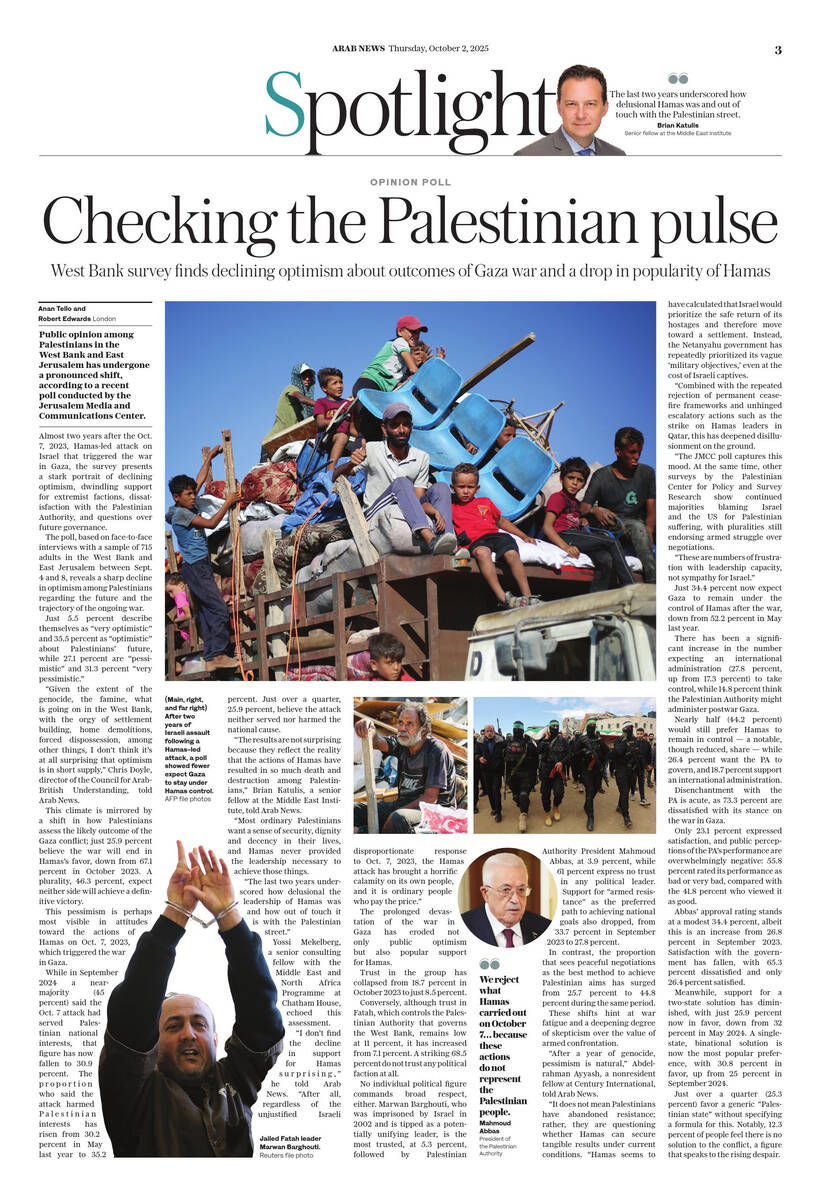
- A new poll shows optimism collapsing among Palestinians, with majorities voicing deep pessimism about the future and Gaza conflict
- Support for Hamas has fallen sharply since Oct. 7, 2023, while most Palestinians express mistrust in all political factions and leaders
LONDON: Public opinion among Palestinians in the West Bank and East Jerusalem has undergone a pronounced shift, according to a recent poll conducted by the Jerusalem Media and Communications Center.
Almost two years after the Oct. 7, 2023, Hamas-led attack on Israel that triggered the war in Gaza, the survey presents a stark portrait of declining optimism, dwindling support for extremist factions, deep dissatisfaction with the Palestinian Authority, and growing questions over the future governance and the social fabric of the occupied Palestinian territories.
The poll, based on face-to-face interviews with a random sample of 715 adults in the West Bank and East Jerusalem between Sept. 4 and 8, reveals a sharp decline in optimism among Palestinians regarding both the future of their society and the trajectory of the ongoing war.
Just 5.5 percent of respondents describe themselves as “very optimistic” and 35.5 percent as “optimistic” about Palestinians’ future, while 27.1 percent are “pessimistic” and 31.3 percent “very pessimistic.”
“Given the extent of the genocide, the famine, what is going on in the West Bank, with the orgy of settlement building, home demolitions, forced dispossession, among other things, I don’t think it’s at all surprising that optimism is in short supply,” Chris Doyle, director of the London-based Council for Arab-British Understanding, told Arab News.
This climate of uncertainty is mirrored by a shift in how Palestinians assess the likely outcome of the ongoing conflict; just 25.9 percent believe the war will end in Hamas’s favor, down from a resounding 67.1 percent in October 2023. A plurality, 46.3 percent, expect neither side will achieve a definitive victory.
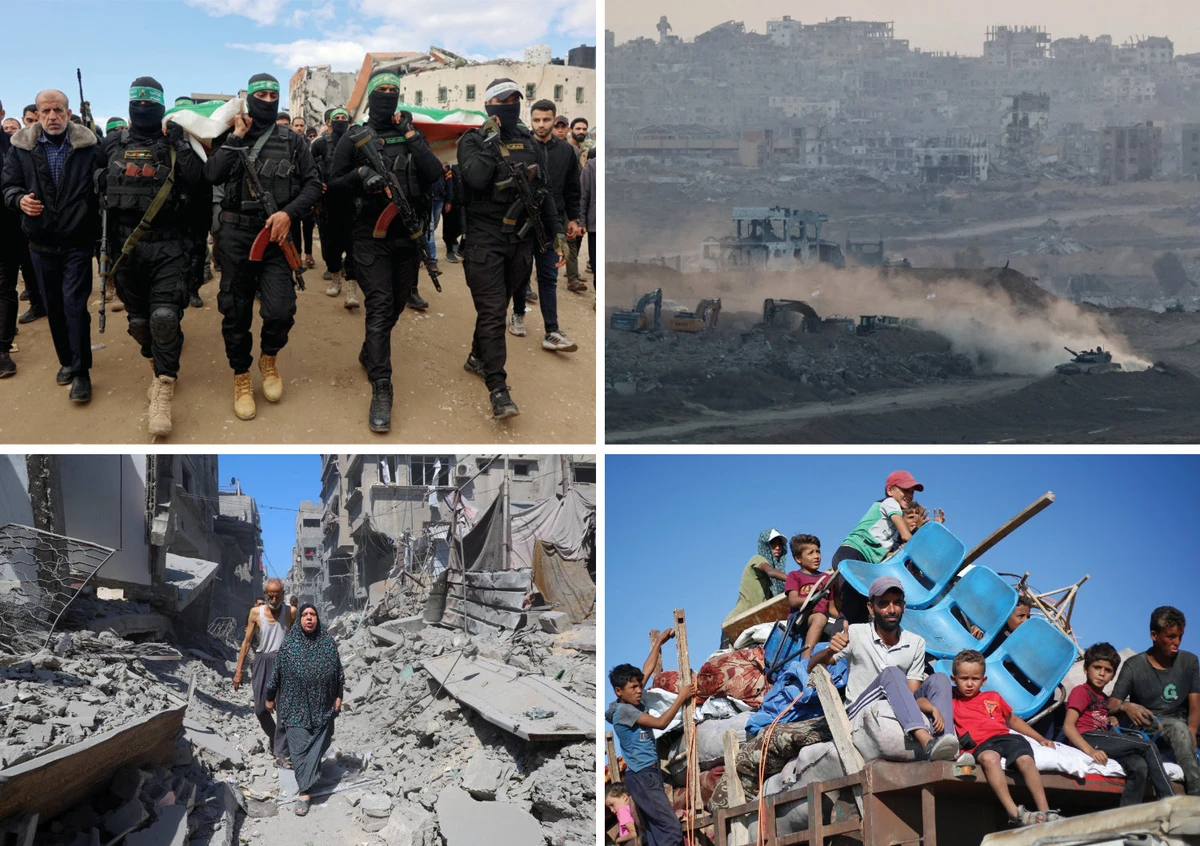
This pessimism is perhaps most visible in attitudes toward the actions of Hamas on Oct. 7, 2023, when its militants breached the southern Israeli border in several places and went on to kill 1,200 people and take 250 hostage.
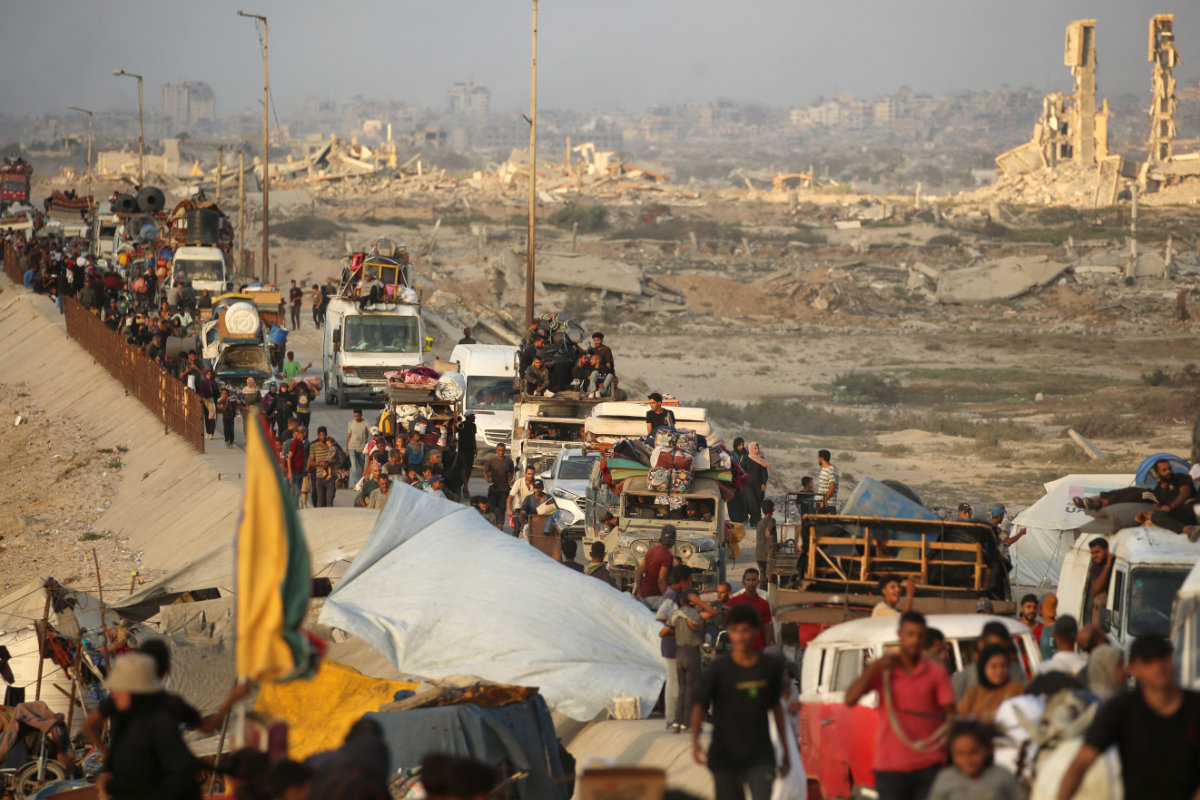
The attack triggered a massive Israeli retaliation in Gaza that has devastated the territory’s infrastructure, displaced 1.9 million people, killed at least 66,000 according to Palestinian health officials, and resulted in what a growing chorus of international observers are calling a genocide.
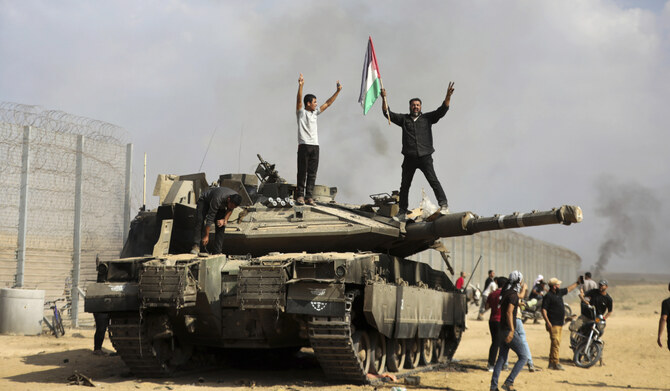
While in September 2024 a near-majority (45 percent) said the Oct. 7 attack had served Palestinian national interests, that figure has now fallen to 30.9 percent. The proportion who said the attack harmed Palestinian interests has risen from 30.2 percent in May last year to 35.2 percent. Just over a quarter, 25.9 percent, believe the attack neither served nor harmed the national cause.
“The results are not surprising because they reflect the reality that the actions of Hamas have resulted in so much death and destruction among Palestinians,” Brian Katulis, a senior fellow at the non-partisan Middle East Institute, told Arab News.
“Most ordinary Palestinians want a sense of security, dignity and decency in their lives, and Hamas never provided the leadership necessary to achieve those things.
“The last two years underscored how delusional the leadership of Hamas was and how out of touch it is with the Palestinian street.”
Yossi Mekelberg, a senior consulting fellow with the Middle East and North Africa Programme at think tank Chatham House in London, echoed this assessment.
“I don’t find the decline in support for Hamas surprising,” he told Arab News. “After all, regardless of the unjustified Israeli disproportionate response to Oct. 7, 2023, the Hamas attack has brought a horrific calamity on its own people, and it is ordinary people who pay the price.”
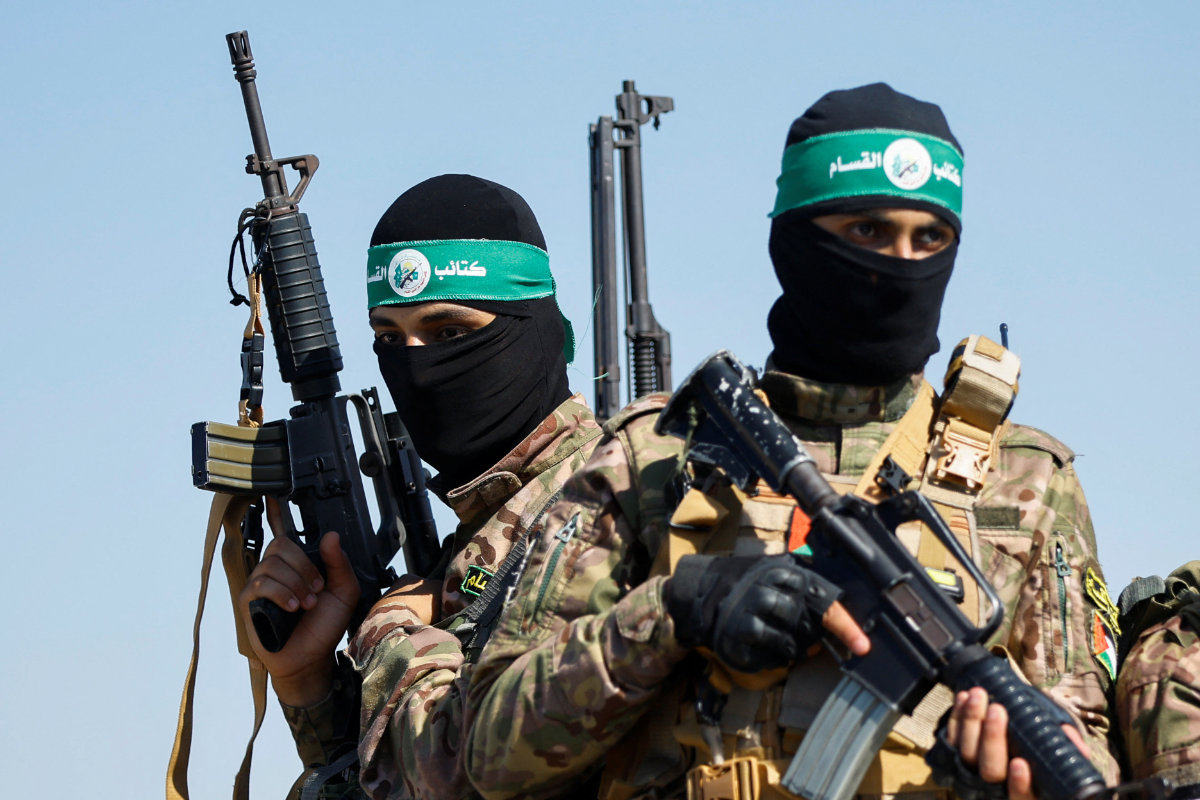
The prolonged devastation of the war in Gaza has eroded not only public optimism but also popular support for Hamas. Trust in the group, which has governed Gaza since 2007, has collapsed from 18.7 percent in October 2023 to just 8.5 percent.
Conversely, although trust in Fatah, which controls the Palestinian Authority that governs the West Bank, remains low at 11 percent, it has increased from 7.1 percent. A striking 68.5 percent do not trust any political faction at all.
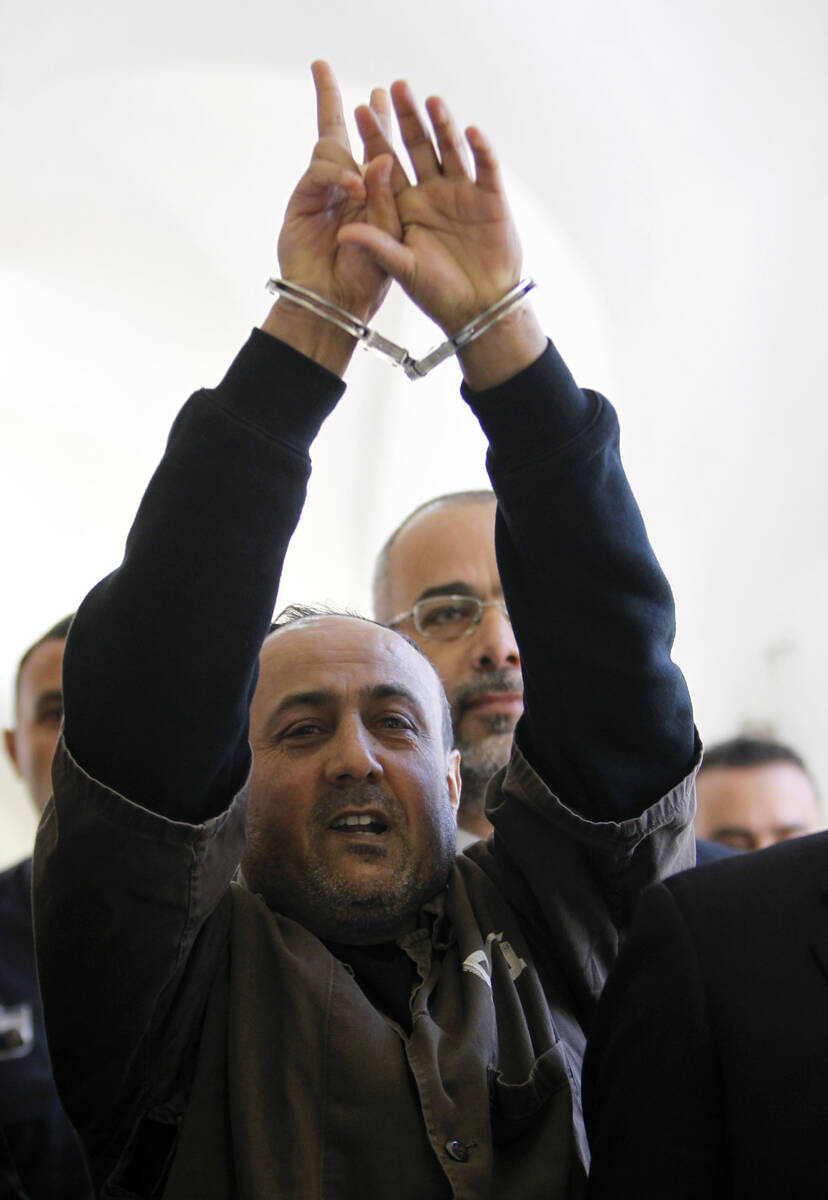
No individual political figure commands broad respect, either. Marwan Barghouti, who was imprisoned by Israel in 2002 and is tipped as a potentially unifying leader, is the most trusted, at 5.3 percent, followed by Palestinian Authority President Mahmoud Abbas, at 3.9 percent, while 61 percent express no trust in any political leader.
Support for “armed resistance” as the preferred path to achieving national goals also dropped, from 33.7 percent in September 2023 to 27.8 percent. In contrast, the proportion that sees peaceful negotiations as the best method to achieve Palestinian aims has surged from 25.7 percent to 44.8 percent during the same period.
Similarly, support for ongoing military operations against Israeli targets fell to 32 percent from 41.5 percent. Meanwhile, opposition to such operations increased from 43.2 percent to 56.9 percent.
These shifts hint at war fatigue and a deepening degree of skepticism over the value of armed confrontation.
Abdelrahman Ayyash, a nonresident fellow at policy research think tank Century International, said the decline in support for Hamas does not necessarily equate to rising support for Israel or the US; instead, it reflects a pervasive sense of pessimism about the future and the Palestinian leadership.
“After a year of genocide, pessimism is natural,” Ayyash told Arab News. “It does not mean Palestinians have abandoned resistance; rather, they are questioning whether Hamas can secure tangible results under current conditions.
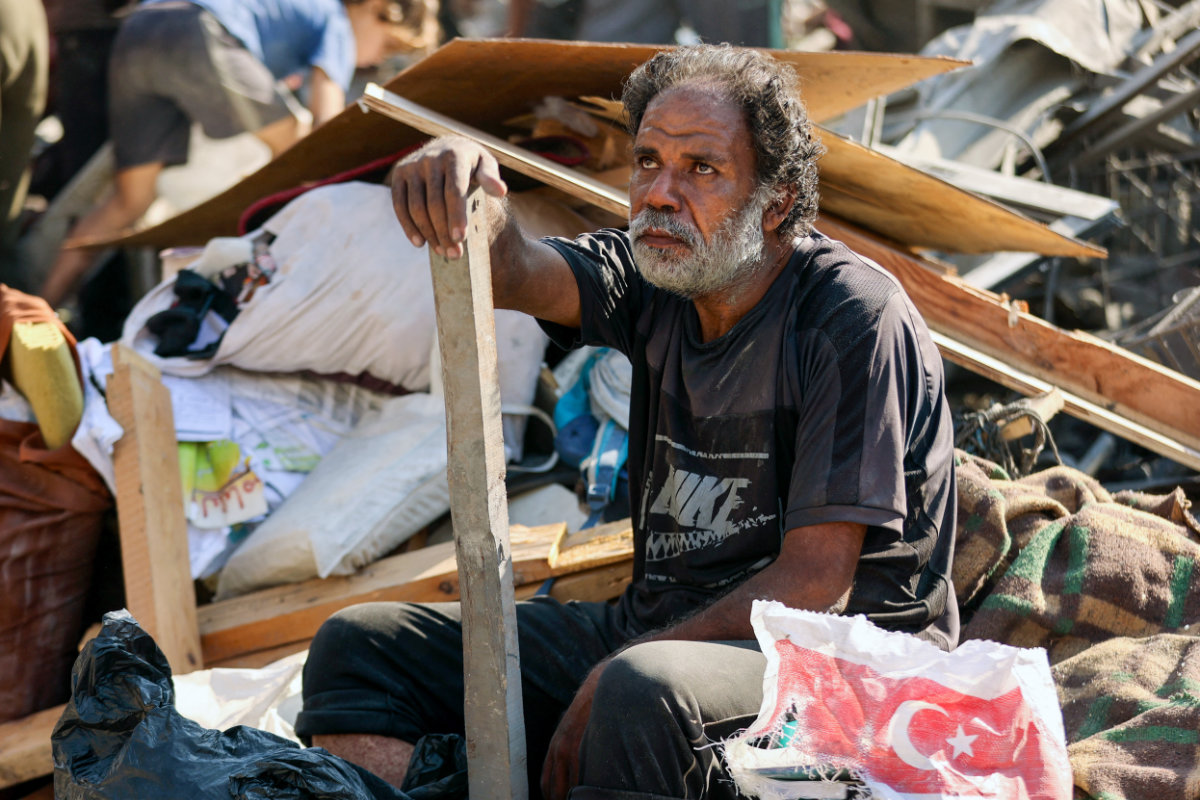
“Hamas seems to have calculated that Israel would prioritize the safe return of its hostages and therefore move toward a settlement. Instead, the Netanyahu government has repeatedly prioritized its vague ‘military objectives,’ even at the cost of Israeli captives.
“Combined with the repeated rejection of permanent ceasefire frameworks and unhinged escalatory actions such as the strike on Hamas leaders in Qatar, this has deepened disillusionment on the ground,” Ayyash continued.
“The JMCC poll captures this mood. At the same time, other surveys by the Palestinian Center for Policy and Survey Research show continued majorities blaming Israel and the US for Palestinian suffering, with pluralities still endorsing armed struggle over negotiations.
“These are numbers of frustration with leadership capacity, not sympathy for Israel.”
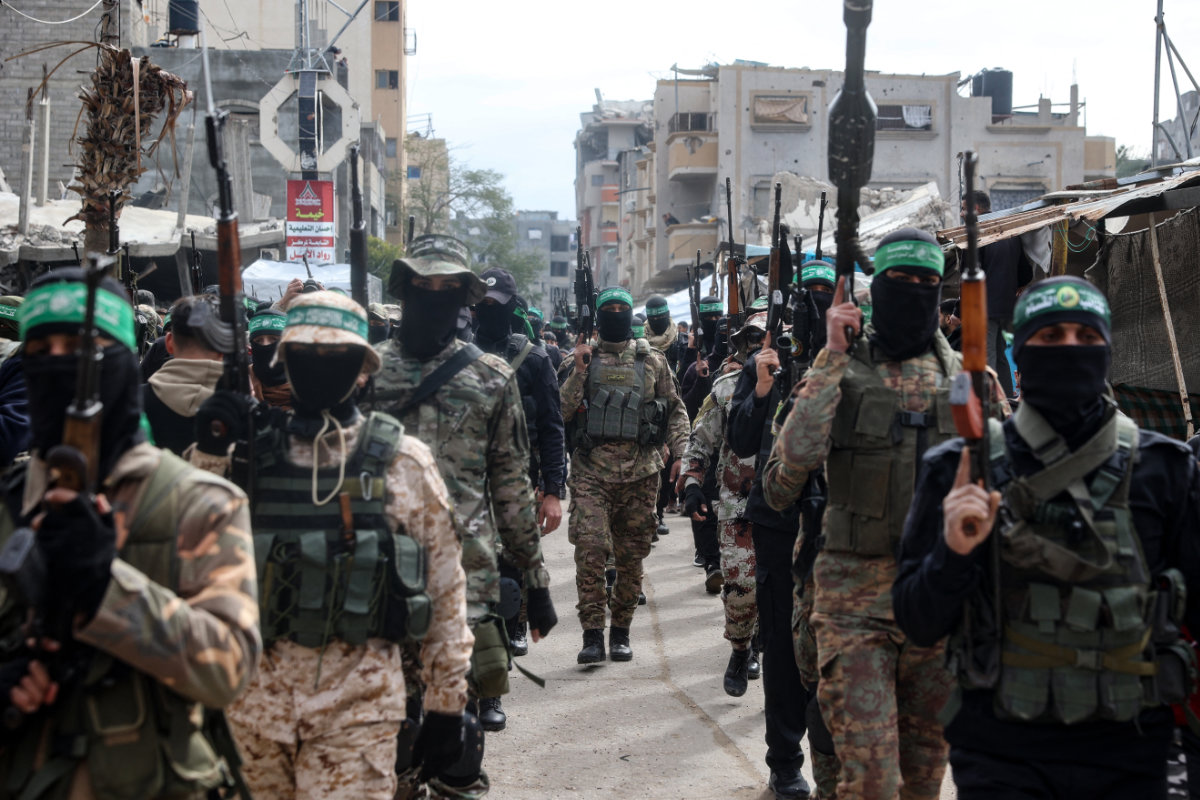
Opinions among the West Bank public on the outlook for Gaza’s postwar political status are divided and evolving. Just 34.4 percent now expect Gaza to remain under the control of Hamas after the war, down from 52.2 percent in May last year.
There has been a significant increase in the number expecting an international administration (27.8 percent, up from 17.3 percent) to take control, while 14.8 percent think the Palestinian Authority might administer postwar Gaza.
In terms of preferences, nearly half (44.2 percent) would still prefer Hamas to remain in control — a notable, though reduced, share — while 26.4 percent want the PA to govern, and 18.7 percent support an international administration.
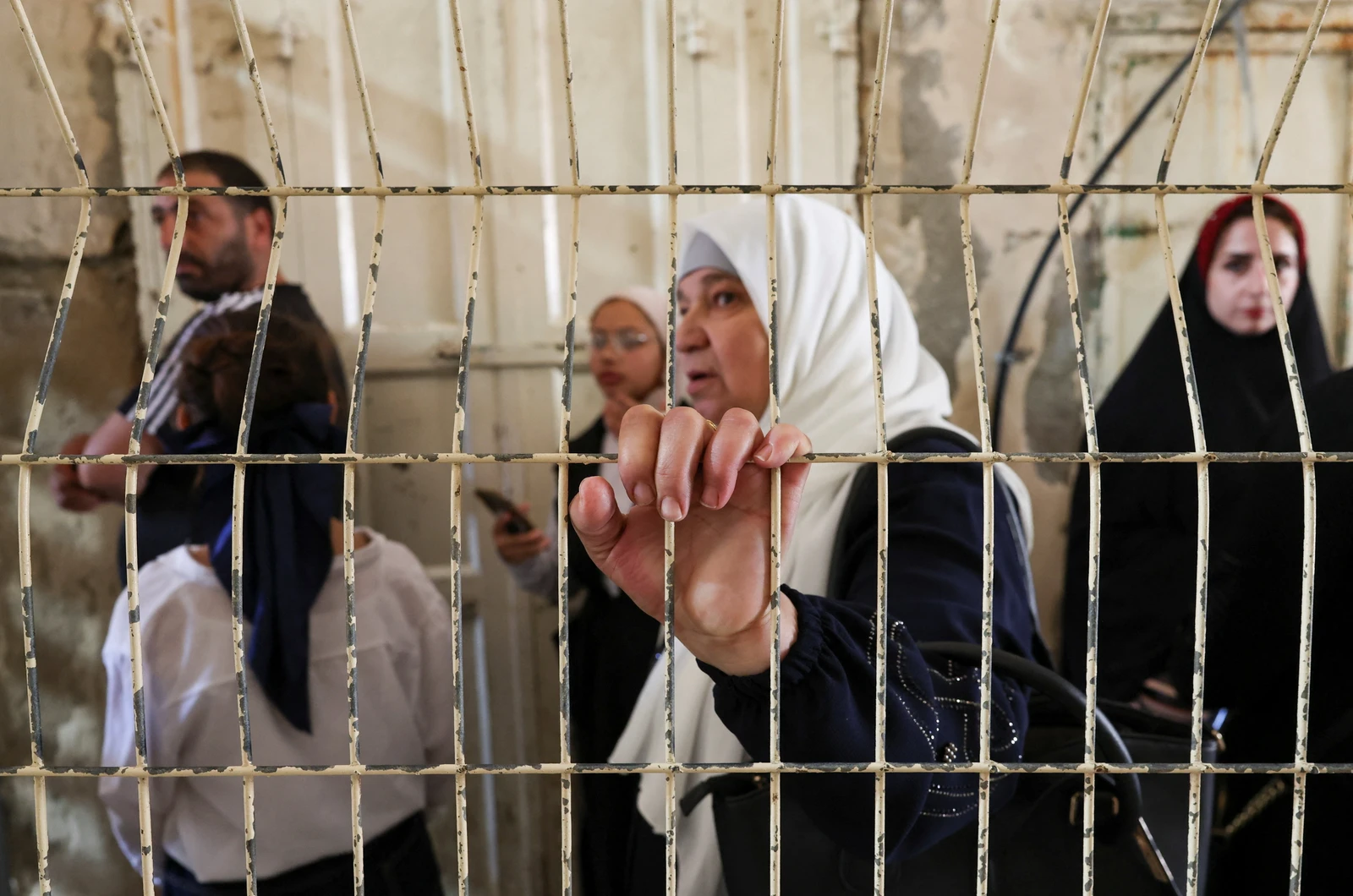
This tension between current expectation and political preference reflects both a sense of resignation in the face of prevailing dynamics, and long-standing distrust of the PA. Disenchantment with the PA is acute, as 73.3 percent are dissatisfied with its stance on the war in Gaza. Only 23.1 percent expressed satisfaction, and public perceptions of the PA’s performance are overwhelmingly negative: 55.8 percent rated its performance as bad or very bad, compared with the 41.8 percent who viewed it as good.
Abbas’s approval rating stands at a modest 34.4 percent, albeit this is an increase from 26.8 percent in September 2023. Satisfaction with the government has fallen, with 65.3 percent dissatisfied and only 26.4 percent satisfied.
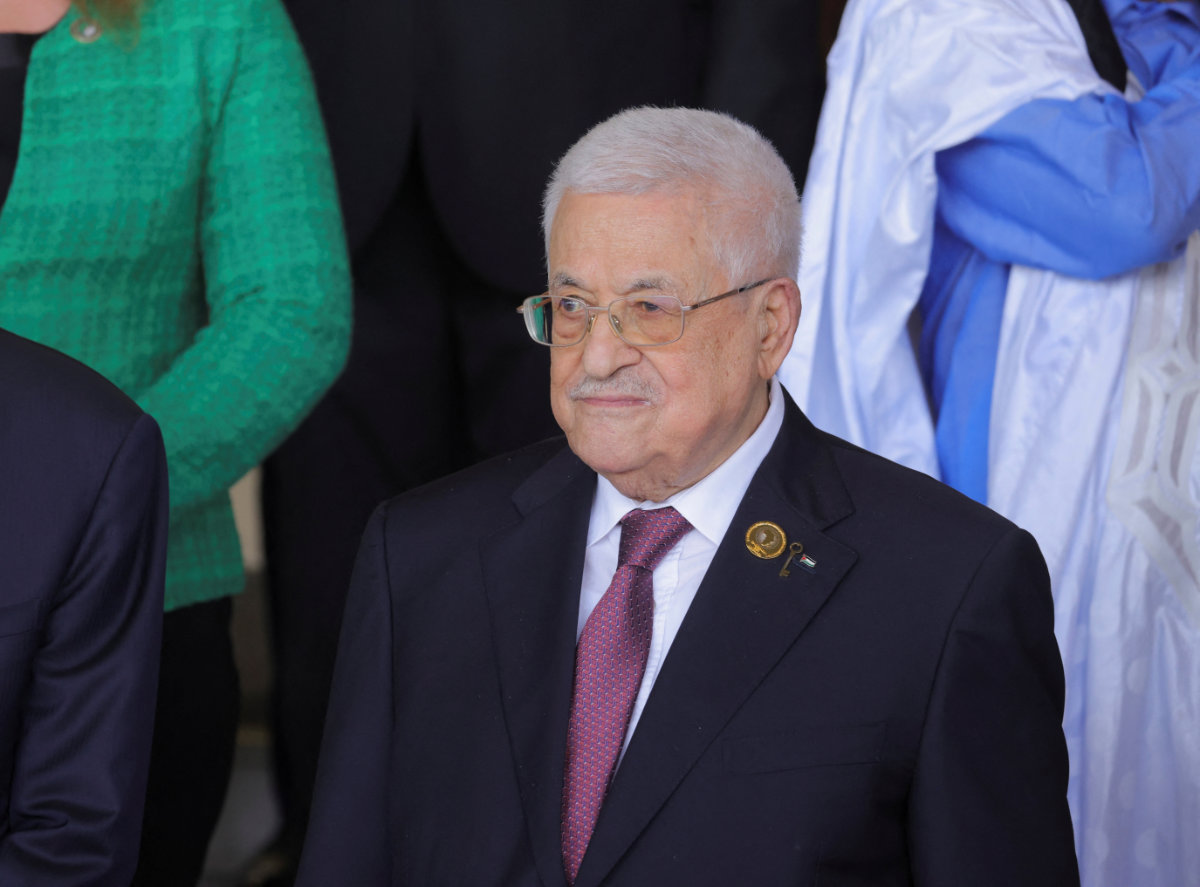
Prime Minister Mohammed Mustafa’s personal approval rating is also split, with 44.1 percent regarding his performance as bad.
The financial crisis affecting the PA is a major source of public anxiety. Nearly half (45.7 percent) of those polled believe the crisis could lead to the collapse of the authority, while 48.8 percent said they do not expect it to collapse.
In the event of collapse, 41.1 percent predict Israel would divide the West Bank into cantons, or separate administrative areas, 29.4 percent foresee chaos and insecurity, and 23.8 percent anticipate a return to direct Israeli administration.
Asked about responsibility for the crisis, Palestinians primarily blame Israel (48.7 percent), followed by the PA itself (36.6 percent), and donor countries (11.6 percent).
This distribution of blame underscores the perception of dominant Israeli control over Palestinian economic life, but also reveals how little faith there is in the competence or integrity of the PA’s own leadership.
Meanwhile, support for a two-state solution has diminished, with just 25.9 percent now in favor, down from 32 percent in May 2024. A single-state, binational solution is now the most popular preference, with 30.8 percent in favor, up from 25 percent in September 2024.
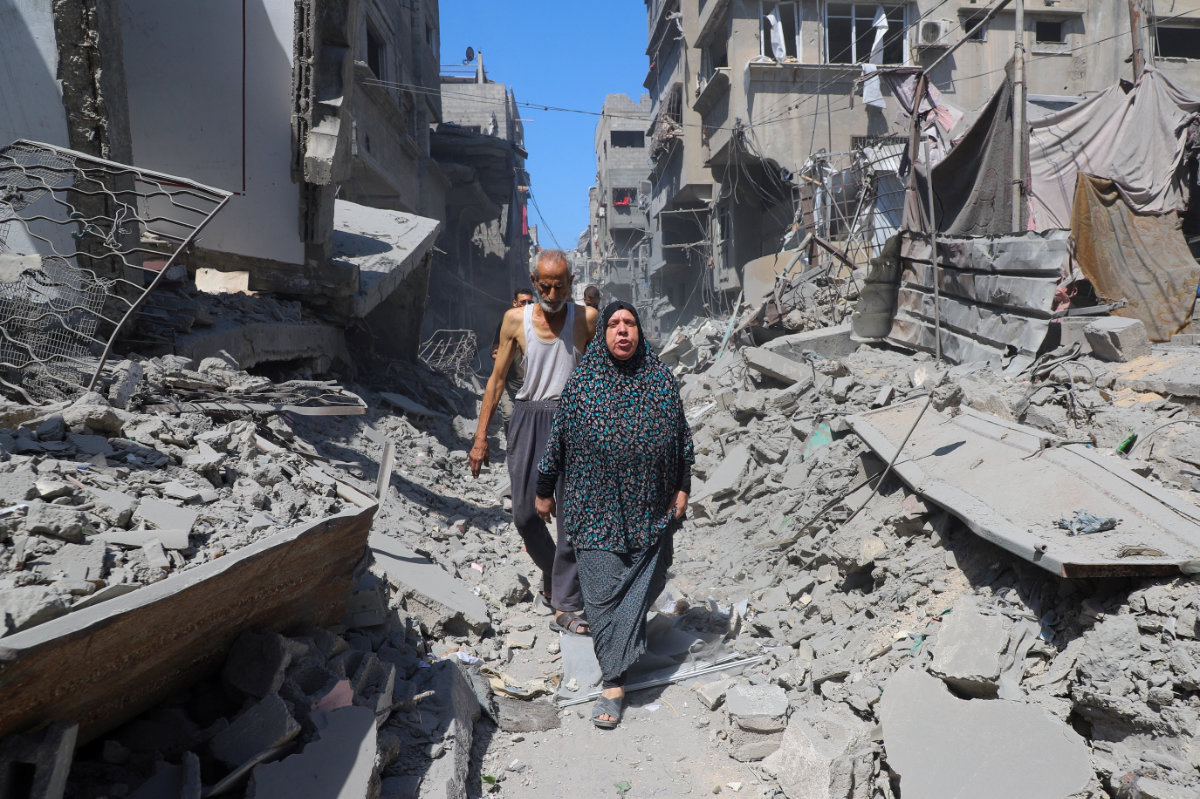
Just over a quarter (25.3 percent) favor a generic “Palestinian state” without specifying a formula for this. Notably, 12.3 percent of people feel there is no solution to the conflict, a figure that speaks to the rising despair.
On the delicate topic of Palestinian unity, 59.6 percent doubt that reconciliation between Fatah and Hamas will occur in the next year. Blame for the ongoing division is widely spread: 14.4 percent hold Fatah accountable, only 3.5 percent blame Hamas, 25.9 percent fault both, 31 percent see the hand of Israel as decisive, and 10.2 percent blame the US.
One of the most consequential issues in regional geopolitics is the normalization of relations between Arabs and Israelis. The impact of the war has tilted expectations: 47.8 percent now believe the conflict will advance normalization projects, compared with just 38.5 percent in May 2024. Only 17.6 percent expect a setback to normalization efforts, down from 26 percent in May.
More than half of respondents (52.2 percent) believe that recent recognition of Palestinian statehood by European nations, including France and the UK, will have a positive impact, though 45.5 percent do not expect such recognition to change the situation materially.
In sum, the poll exposes a Palestinian public in the West Bank and East Jerusalem that is deeply divided and adrift between failed leadership, an unending state of conflict, and mounting economic pressures.
The data suggests a sense of war-weariness, a search for alternative strategies, and an overwhelming crisis of confidence in both political and institutional actors. However, Ayyash pointed out that public attitudes are liable to change.
“It’s important to note that wartime polling is fragile; mass killings, displacement, famine, ongoing trauma and fear make opinion fluid,” he said.
“Pessimism today could shift again depending on battlefield or diplomatic developments, including any credible ceasefire, a change in Israel’s position, or even a renewed regional escalation.
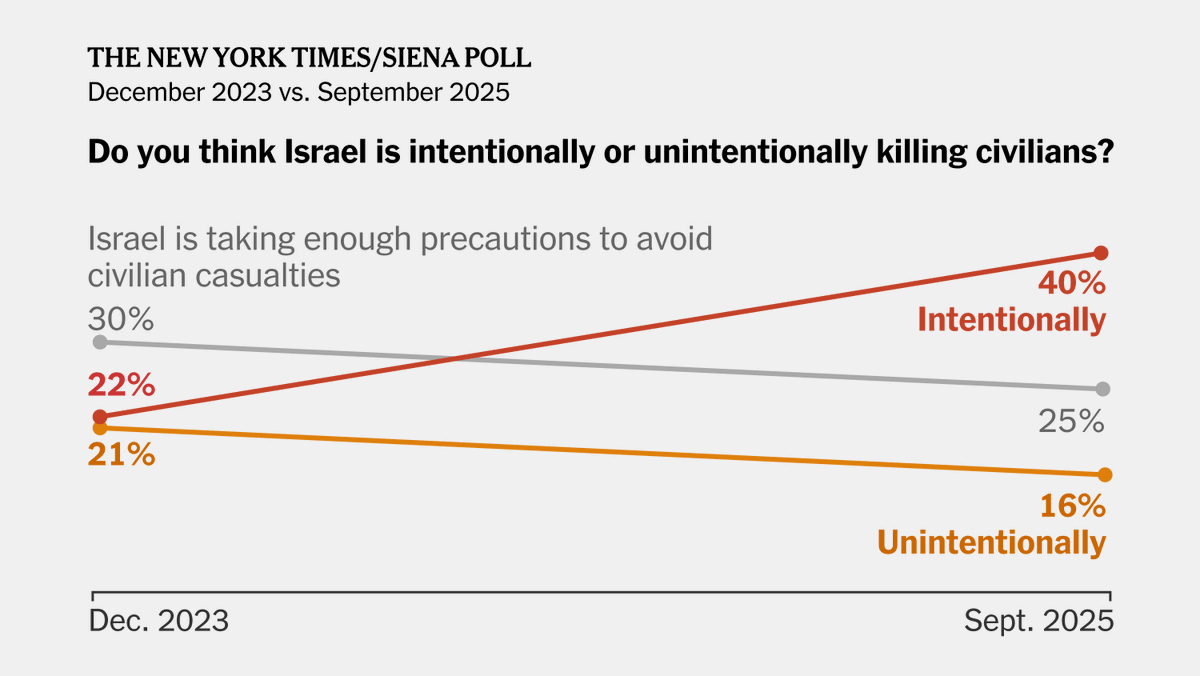
“Internationally, however, Palestinian narratives have gained traction: A recent NYT-Siena poll found, for the first time, more Americans sympathizing with Palestinians than with Israelis.
“So even as Hamas faces declining support in Gaza, the broader narrative of Palestinian armed resistance is resonating globally in unprecedented ways.”