Suspect in the fatal stabbing of a Kenya presidential guard will be assessed

Suspect in the fatal stabbing of a Kenya presidential guard will be assessed
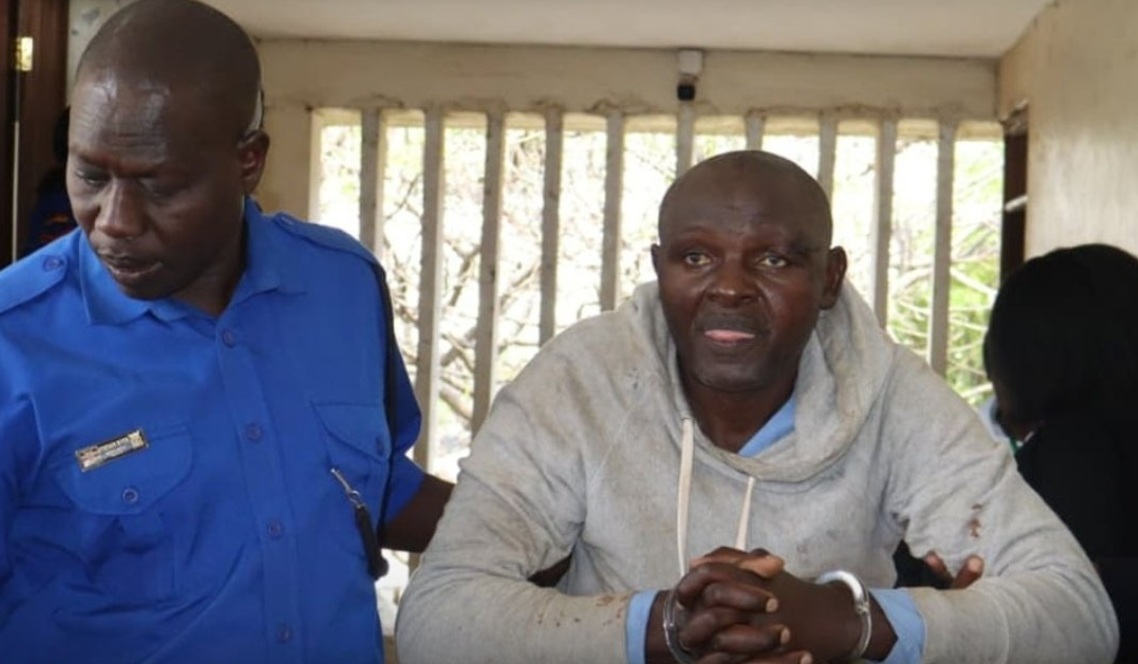
Police in Kenya have been granted 14 days to hold a man accused of stabbing a guard to death on Monday outside the country’s presidential office, an attack widely seen as a major security lapse. (X/@Thetimeskenya)
Short Url
Updated 14 October 2025
Follow

Suspect in the fatal stabbing of a Kenya presidential guard will be assessed

Suspect in the fatal stabbing of a Kenya presidential guard will be assessed
  • Police say the man walked to the State House main gate disguised as a homeless person and stabbed a security officer
  • It was unclear if the suspect, Kithuka Kimunyi, knew the officer

NAIROBI: Police in Kenya have been granted 14 days to hold a man accused of stabbing a guard to death on Monday outside the country’s presidential office, an attack widely seen as a major security lapse.
The investigating officer on Tuesday asked a court for more time as the suspect, who claimed to have been sent by the devil, is due to undergo a mental health assessment.
Police say the man walked to the State House main gate disguised as a homeless person and stabbed a security officer in the chest using a bow and arrow. The officer was pronounced dead at a hospital. The man was arrested at the scene.
It was unclear if the suspect, Kithuka Kimunyi, knew the officer, identified as Ramadhan Hamisi Matanka.
Judge Christine Njagi said Kimunyi should first be taken to a hospital for treatment after he claimed to have sustained a leg fracture during the attack. The man appeared in court on Tuesday, limping.
President William Ruto was in his office when the attack happened. The president’s office and homes are guarded by an elite police squad.
Italy probes if ‘war tourists’ paid to shoot civilians in Sarajevo siege

Italy probes if ‘war tourists’ paid to shoot civilians in Sarajevo siege
Updated 5 sec ago
Follow

Italy probes if ‘war tourists’ paid to shoot civilians in Sarajevo siege

Italy probes if ‘war tourists’ paid to shoot civilians in Sarajevo siege
  • The newspaper said the unidentified suspects it dubbed “war tourists” were mostly wealthy and gun-loving right-wing sympathizers
  • The investigation follows a complaint filed by Italian journalist and writer Ezio Gavanezzi

ROME: Prosecutors in Italy are investigating possible Italian snipers who may have paid the Bosnian Serb army during the 1990s siege of Sarajevo to be allowed to shoot civilians for sport, local media reported.
According to La Repubblica daily, the investigation opened by Milan prosecutor Alessandro Gobbis for voluntary manslaughter seeks to identify Italians who between 1993 and 1995 may have “paid to play war and kill defenseless civilians ‘for fun.’“
The newspaper said the unidentified suspects it dubbed “war tourists” were mostly wealthy and gun-loving right-wing sympathizers, who departed from Trieste, in northern Italy, before being taken to the hills surrounding Sarajevo.
There, the would-be snipers paid up to the equivalent of 100,000 euros per day to the Bosnian Serb forces to shoot at civilians below them, according to the daily Il Giornale, the first newspaper to report, in July, that an investigation in Italy had been opened.
The investigation follows a complaint filed by Italian journalist and writer Ezio Gavanezzi, who was contacted in August 2025 by the former mayor of Sarajevo, Benjamina Karic.
She had filed her own complaint in Bosnia in 2022 after the broadcast of the documentary “Sarajevo Safari” by Slovenian director Miran Zupanic, which revealed the crimes.
In an interview with La Repubblica, Gavanezzi estimated there were at least 100 Italians who participated, with Il Giornale citing at least double that — on top of foreigners from other countries.
On social media Tuesday, Karic said she welcomed the Italian investigation.
In her 2022 complaint, a copy of which she posted on social media, Karic said the documentary, along with witness statements, point to “reasonable suspicion” that members of the Bosnian Serb army “organized ‘excursions’ for wealthy foreigners.”
They “had the opportunity to fire precision rifles from (army) positions above the city of Sarajevo, killing and wounding innocent civilians in the besieged city, including children,” according to her complaint.
During the nearly four-year siege of Sarajevo that began in April 1992 — the longest in the history of modern warfare — some 11,541 men, women, and children were killed and more than 50,000 people wounded by Bosnian Serb forces, according to official figures.