

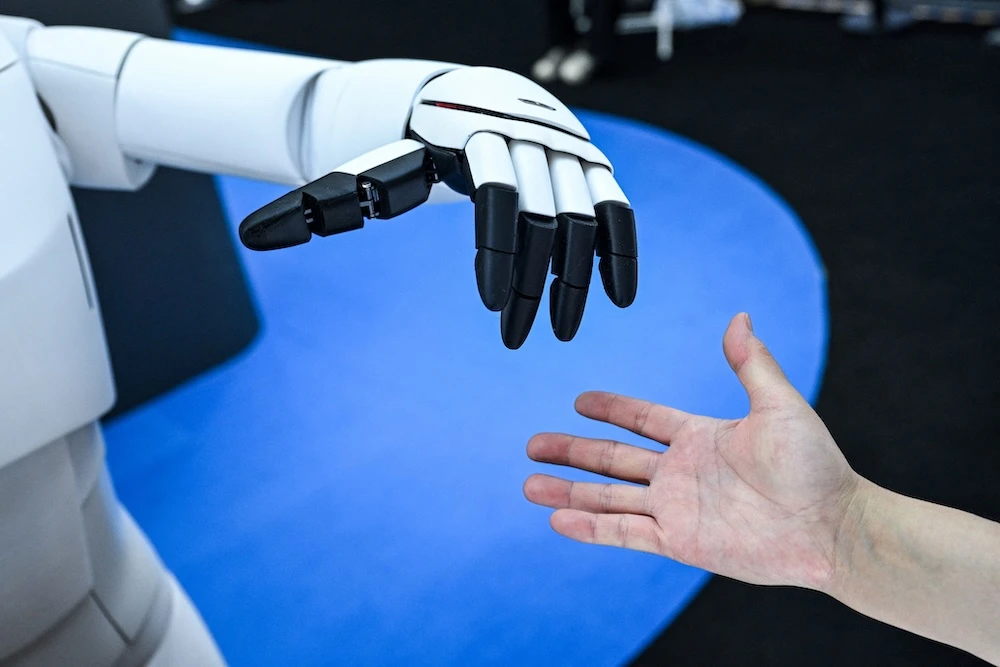

As artificial intelligence reshapes our lives, one truth stands out: the leaders who thrive will be those who never abandon the one advantage machines can never replicate — being human.
An October Reuters Institute-Oxford University study reveals a striking paradox: while 61 percent of people have used generative AI tools, only 6 percent trust them for news and just 12 percent are comfortable with fully AI-generated stories. Most audiences cannot even tell when AI is used in their news feeds. The gap between AI adoption and AI trust is a warning signal for leaders and communicators everywhere.
Nowadays, AI is embedded in the cultural and creative industries, boardrooms, newsrooms, hospitals, schools and crisis command centers, among others — making integrity, authenticity and accountability essential. The challenge is not just using AI effectively but using it responsibly and ethically to uphold truth rather than obscure it and to protect values rather than distort them.
We are entering an era of AI-generated speeches, AI-moderated meetings and even digital “twins” representing leaders virtually. Used wisely, AI can help leaders and communicators understand sentiment in real time, personalize communication and anticipate crises. But when AI drives the narrative, risks multiply: synthetic trust, deepfakes, misinformation, disinformation and emotionally empty messages threaten credibility.
The line between the authentic and the artificial grows thinner by the day. Yet, authenticity can coexist with AI if intent leads technology, not the other way round.
Authenticity is not measured in efficiency, speed or flawless phrasing but in intent, consistency and courage — qualities that cannot be automated. In life and business, this makes authenticity more than a virtue. It is a leadership edge, a strategic asset and a source of credibility.
The leaders who thrive in the age of AI will be those who never abandon the one advantage machines can never replicate — being human
Mazen Hayek
Trust does not emerge from algorithms. It emerges from visionary humans taking responsibility, solving problems — in a timely and efficient manner — and making decisions with integrity, empathy and consistency, especially in times of crisis, when the stakes are high. In such times, stakeholders want sincerity, action, responsibility and accountability, not AI-polished statements.
Data can tell you what to say; authenticity tells you how to mean it and couple it with real-time, measurable action. The best leaders will use AI to guide decisions but never to replace their judgment or their voice.
AI transforms crisis management from reactionary to anticipatory, but only authenticity and action can restore trust. When everything can be artificially generated, the genuine becomes a leader’s greatest asset — a source of credibility no algorithm can replicate.
The opportunities are real: empathy at scale, data-informed transparency, consistent messaging and scenario forecasting. But so are the risks: synthetic trust, loss of human voice, ethical gray zones, speed over substance and erosion of judgment.
Technology should not overpower human judgment; humans must remain at the epicenter of tech advancement and AI.
A new social contract for communication is needed, one built on transparency, integrity, empathy, responsibility, accountability and a commitment to the betterment of life. Leaders and communicators must clearly disclose when AI is used, preserve the human voice and prioritize truth over optics. This contract is not a luxury. It is a necessity.
In the end, the future of leadership is not “man (or woman) versus machine.” It is leaders remaining unmistakably human while using machines wisely. Because when everything can be artificially generated, the most valuable currency in leadership — in communication, in public trust — is truth and truth-seeking.
• Mazen Hayek is a media consultant. X: @HayekMG


