



ISLAMABAD: Pakistan on Wednesday urged Arab and Muslim countries to take united action to protect Jerusalem’s holy sites, reject Israeli settlement expansion and support implementation of the Gaza peace plan, as tensions mount over the future of the Al-Aqsa Mosque compound and the ongoing war in the Palestinian territories.
Deputy Prime Minister and Foreign Minister Ishaq Dar made the remarks at a ministerial meeting on Jerusalem in Jordan’s capital, Amman, convened by the Jordanian government amid growing concern over Israeli actions at the Al-Aqsa Mosque compound, one of Islam’s holiest sites. Jordan has warned that attempts to alter the long-standing arrangements governing the site could inflame tensions across the region.
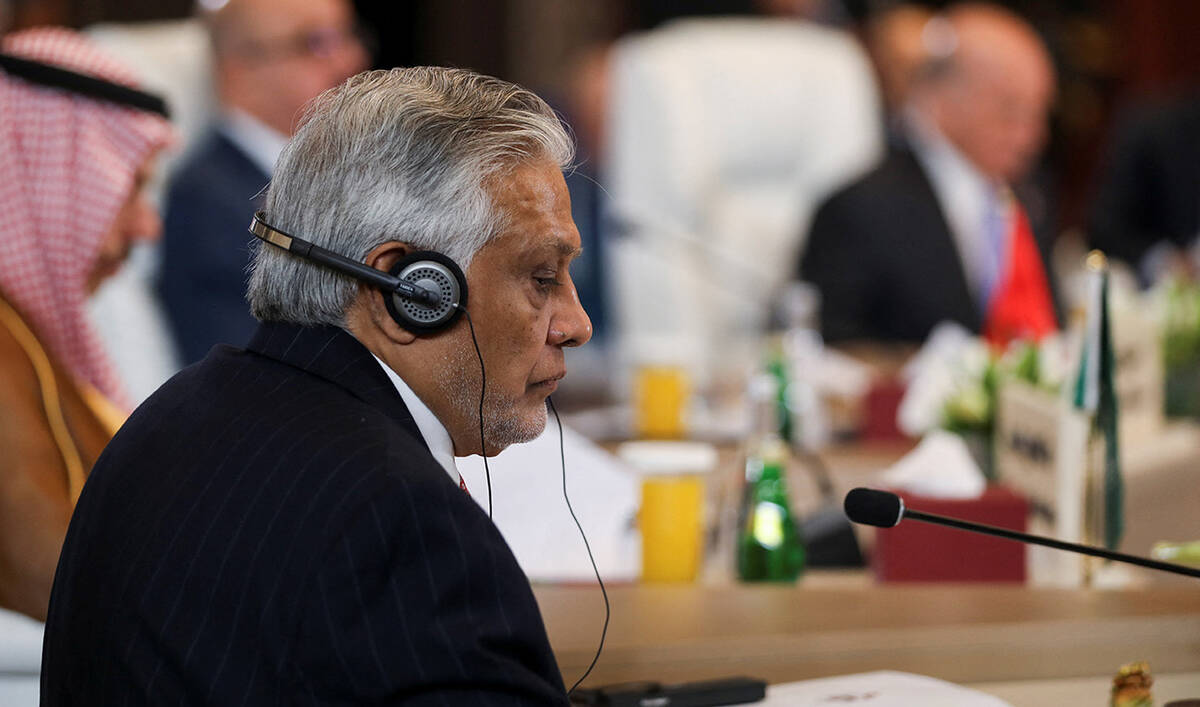
Pakistan's Minister for Foreign Affairs, Mohammad Ishaq Dar attends the Arab Ministerial Committee meeting to discuss the situation in Jerusalem, in Amman, Jordan, August 5, 2026. (Reuters)
Jerusalem has become an increasingly sensitive flashpoint during the nearly three-year Gaza war, which has devastated the Palestinian enclave and fueled wider regional tensions. Violence has also intensified in the Israeli-occupied West Bank, where Israel has expanded military operations and settlement activity. Jordan, the custodian of Jerusalem’s Islamic and Christian holy sites, says repeated visits by Israeli ministers and settlers to the Al-Aqsa compound threaten the historical and legal status quo under which the site is administered by the Jerusalem Islamic Waqf while Israel maintains overall security control.
“Let there be no ambiguity. Israel has no sovereignty over occupied East Jerusalem or its Islamic and Christian holy sites. All measures seeking to alter their character or status are null and void and without any legal effect,” Dar said in televised remarks at the meeting.
Pakistan, which does not recognize Israel, has consistently supported the establishment of an independent Palestinian state based on the pre-1967 borders with East Jerusalem as its capital and has repeatedly condemned Israeli military operations in Gaza and actions it says undermine the historical and legal status of Jerusalem’s holy sites.
Reaffirming Pakistan’s support for Jordan’s custodianship of the site, Dar said Islamabad recognized the Jerusalem Endowment and Al-Aqsa Mosque Affairs Department under Jordan’s Ministry of Awqaf as “the legal authority with exclusive jurisdiction over the administration of the blessed Al-Aqsa Mosque Al-Haram Al-Sharif.”
He added that the entire 144-dunam (35-acre) Al-Aqsa Mosque compound is an exclusive Muslim place of worship and said any attempt to alter its character or status “must be rejected unequivocally.”
Dar also condemned Israeli settlement expansion and violence in the occupied Palestinian territories.
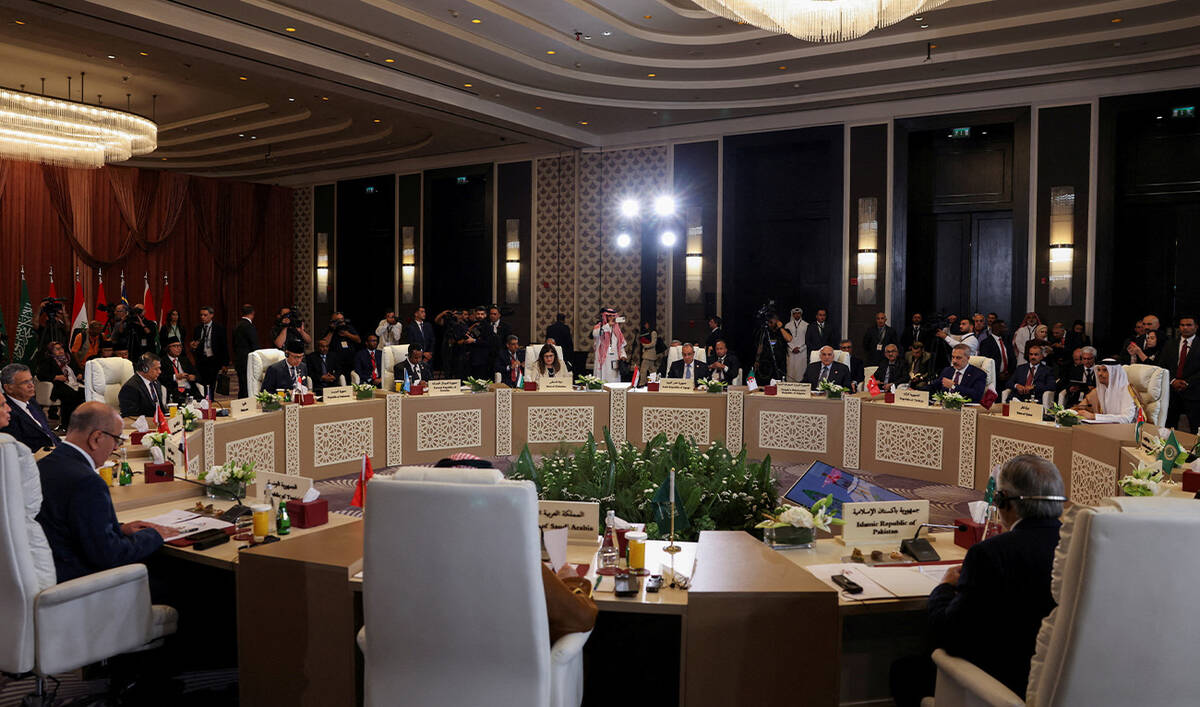
Foreign ministers and senior officials pose for a family photo during a meeting of the Arab Ministerial Committee to discuss the situation in Jerusalem in Amman, Jordan, on August 5, 2026. (Reuters)
“We also remain deeply concerned by the continued expansion of illegal settlements, the establishment of new settlement outposts, escalating settler violence and continued oppression of the Palestinian people throughout the occupied Palestinian territory, particularly in the West Bank,” he said.
“These policies violate international humanitarian law, defy the advisory opinion of the International Court of Justice, and further entrench an unlawful occupation.”
Turning to Gaza, Dar said the humanitarian situation remained dire despite progress under the ceasefire and broader peace initiative.
“The ceasefire and the implementation of elements of the peace plan have yielded some improvements. However, 59 percent of the population still faces crisis-level food insecurity,” he said.
“Notably, since the ceasefire, over 1,100 Palestinians have been killed. That calls into question the full and faithful implementation of the plan. Nearly 2 million people remain confined to just 30 percent of Gaza territory, enduring miserable living conditions.”
Dar urged Arab and Muslim countries to preserve what he described as an opportunity for peace by acting collectively.
He called on participants to demand “an immediate cessation of all violations against Al-Aqsa Mosque, Al-Haram Al-Sharif,” reject Israeli settlement activity, annexation attempts and forced displacement, and support implementation of the Gaza peace plan and UN Security Council Resolution 2803.
Pakistan also welcomed what Dar described as progress under the peace plan, including developments toward disarmament in Gaza, and praised mediation efforts by the United States, Egypt, Qatar and Türkiye.
“Pakistan’s support for the Palestinian people remains steadfast and unwavering,” Dar said.
“We reaffirm their inalienable right to self-determination and their right to establish an independent, sovereign, viable, and contiguous state of Palestine based on the pre-June 1967 borders with Al-Quds Al-Sharif as its capital.”





