- Since January, a US fuel embargo has worsened prolonged power and water cuts
- Facing the sea, Havana’s famous Malecon seawall has ceased to be a promenade for tourists or lovers
HAVANA: Every night, when summer heat and blackouts make sleep impossible at home, Cubans head for rooftops, porches and public spaces where they can catch a breeze.
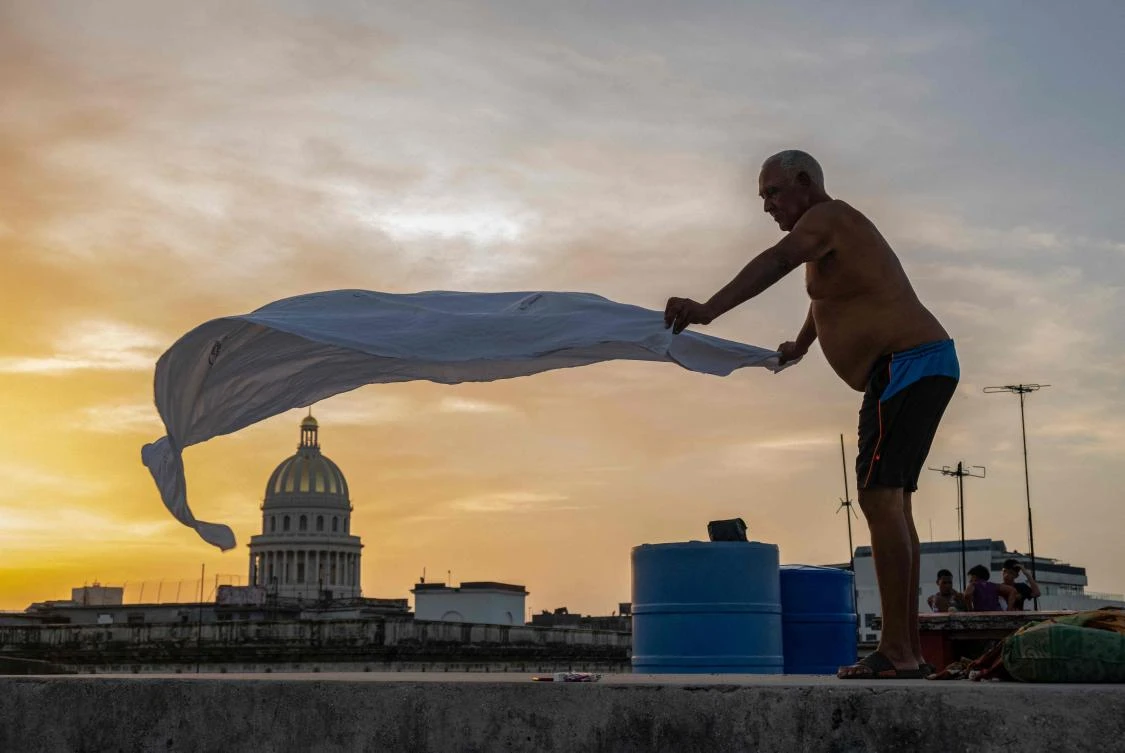
Alexis Milan waits with his blind 17-year-old son for the sun to disappear behind the horizon of Central Havana, so they can head to the roof.
Over the months, the rooftop of his three-story building has become a communal bedroom.
“We started getting a lot of people coming with us, and now almost the entire building has come up here,” the 59-year-old tells AFP.
Among the tanks, pipes, and clotheslines, each family has carved out its own space.
His patch is on top of an empty water tank, where he spreads out a sheet and arranges two pillows.
He does not have a mattress, but up here at least some air is moving.
His apartment is baking and it is “impossible to live with all the mosquitoes.”
Looking across the city, only a few patches of light survive, scattered in the gloom.
There is the intermittent purr of generators, dogs barking, and, from time to time, the dry clack of domino tiles echoing in the street.
Since January, a US fuel embargo has worsened prolonged power and water cuts.
Now every night, the roofs, parks, and porches of Havana fill with people lying on cardboard, mattresses, or directly on the ground.
Facing the sea, Havana’s famous Malecon seawall has ceased to be a promenade for tourists or lovers.
Now dozens of people settle onto the still-warm concrete after sunset.
While some gaze into the darkness of the Florida Strait, others try to sleep, making the most of the breeze coming in from the sea.
Sheets, backpacks, and outstretched bodies transform the emblematic seafront promenade into an open-air dormitory for a few hours.
At dawn on the rooftop, alarms of the few cell phones that still have battery wake the neighbors one by one.
“I don’t see an end to this,” says Milan as he folds up the sheet and the pillows before heading to his job at a warehouse.