

One would have thought Israel’s Oct. 27 Knesset election would force a coming to terms with the endless wars and perpetual crises that have exhausted the public and tarnished the country’s image since Oct. 7, 2023. Instead, the campaign rhetoric and actions on the ground have become a competition among contenders hoping voters will reward whoever presents the most extreme, radical platform. Nearly three years after Oct. 7, the question is not how to end what has become a multifront war — it is who can promise to keep fighting it and appease the radicals.
It does not appear Israelis are heading toward a historic correction of Netanyahu-era policy. Voters are being bombarded with slogans and policy platforms, particularly about Gaza, the West Bank and the future of ties with the Palestinians, that threaten to drive Israel and the region deeper into conflict.
Gaza is under daily attack, with no end in sight. West Bank settlement expansion and annexation have moved from the ideological fringe into the electoral mainstream, with candidates dodging the question of what future, if any, Palestinians are meant to have under occupation. In Lebanon, Israel continues a defiant policy of airstrikes and village demolitions — effectively implementing the Gaza playbook — with candidates maintaining positions beyond what the US-brokered ceasefire framework envisioned.
Looking at the positions of the three leading candidates, it is difficult to ascertain how they differ when it comes to issues relating to settlements, Gaza and the future of the Palestinians. Benjamin Netanyahu, Gadi Eisenkot and Yair Lapid are presented as offering different paths and even visions. In reality, they are not.
Zionist apologists will offer a familiar defense: that this is simply an election year, when candidates raise the rhetorical bar to appeal to a traumatized base, and the next government will prove more open to compromise once the votes are counted. This claim does not survive an inspection of the record. Settlement expansion has been Israel’s state policy under various governments, regardless of ideology and party platforms. Since the Oslo Accords were signed in 1993, it grew under Yitzhak Rabin and Shimon Peres even as they negotiated Palestinian autonomy, continued under Ehud Barak and has never paused since.
But what has changed since 2009, when Netanyahu returned to power, is the speed of settlement building and the clarity of the final objective. The most controversial issue for the Israeli public, regarding occupation, is Palestinian statehood. Netanyahu has said that as long as he remains prime minister, there will be no Palestinian state, calling such an entity a launching pad for attacks on Israel.
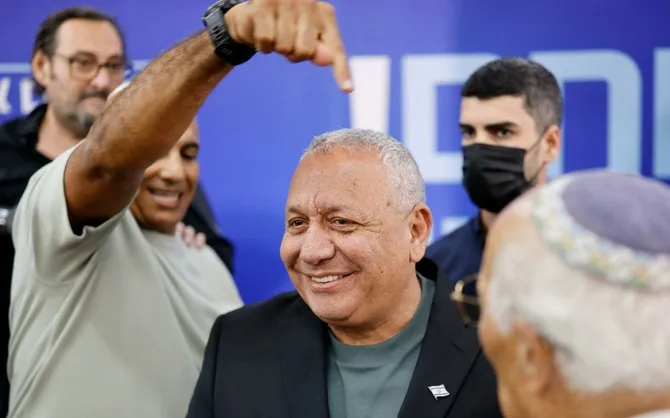
Eisenkot, the retired general who appears to be ahead in the polls, is being framed as the responsible alternative. But on Palestinian statehood he is fundamentally in agreement with the Likud and the far right, declaring that he has never supported a two-state solution and that anyone who advocates one does not understand the conflict.
Lapid is the only one with any history of endorsing statehood. Still, he now leads a party built around Naftali Bennett, who has vowed never to hand over a single centimeter of occupied territory, and Lapid’s own commitment is engulfed in caveats that ensure that any future Palestinian entity would have neither sovereignty nor territorial contiguity.
The Gaza debacle underscores the convergence of positions among the three main candidates. Netanyahu has rejected Trump’s peace plan, after initially endorsing it, and is now insisting that Israel will not withdraw until Hamas is fully disarmed. It is almost certain that he will continue to come up with new conditions to keep Israel’s occupation of the enclave indefinite. Eisenkot’s 2024 break from the wartime government was seen as tactical, not strategic, and he has since called the plan to depopulate Gaza a “blessing for Israel.”
Lapid has been a consistent backer of the Gaza war, occasionally objecting to its execution but not the endgame. None of the three is running on ending the war on terms that give Gazans a political future and dignity, while paving the way for eventual reconstruction.
The most controversial issue for the Israeli public, regarding occupation, is Palestinian statehood.
Osama Al-Sharif
The future of the West Bank is where all candidates share common ground. Netanyahu’s far-right government has already turned years of creeping annexation into formal policy, affirming Israel’s intent to hold security control over the entire territory west of the Jordan River. Eisenkot has said he believes in continued settlement and has visited contested settler outposts. But his objection to formal annexation has to do with demographic calculations — namely, preserving Israel’s Jewish majority and avoiding the single-state option. Lapid, alongside Bennett, is a long-standing backer of the settlement enterprise in both the West Bank and East Jerusalem. The three candidates agree on the same goal: expansion, annexation and a veto on Palestinian statehood.
It is incredible that not one weighty candidate is brave enough to offer the Palestinians anything at this juncture. For the Israeli public, any such gesture would be a political taboo. Israel’s peace camp is nowhere to be found. The main parties pretend to run on rival platforms but they converge on the same principal project: territorial expansion and regional hegemony.
Opposition politicians attack Netanyahu’s failures, especially his refusal to allow an independent investigation into Oct. 7, without offering an alternative security paradigm that would bring Israel’s wars to an end. An election that does away with Netanyahu, now a strong possibility, would bring a change in leadership but not in policy. Neither Eisenkot nor Lapid has committed to reversing settlement policy, relinquishing East Jerusalem or recognizing Palestinian self-determination.
If Israeli voters will not move Israeli policy, the question is whether outside pressure can — and the evidence is disappointing. Only sustained pressure from Washington, as rare as that is, has ever forced an Israeli government to alter course and President Donald Trump has shown little appetite for applying it.
Trump absorbed Netanyahu’s recent rebuff on Gaza without forcing the issue, then dispatched his son-in-law Jared Kushner to Israel in an attempt to keep the plan alive. Trump knows that openly criticizing Israel remains a political liability for a sitting president and his party. It is not a new pattern for Netanyahu to challenge the US incumbent. He defied Barack Obama over settlements and the Iran deal and outmaneuvered Joe Biden on Gaza, absorbing friction without changing course. Whether the outcome of the US midterm elections in November can alter the paradigm remains an open question.
The consequences of the Israeli elections extend well beyond a country whose politics has been rapidly shifting to the right and far right. The war in Gaza, the de facto annexation in the West Bank and open-ended security zones in Lebanon and Syria risk becoming permanent fixtures of Israel’s security structure, regardless of international condemnation and deepening isolation.
It is incredible that not one weighty candidate is brave enough to offer the Palestinians anything at this juncture.
Osama Al-Sharif
This is undercutting Washington’s push to expand the Abraham Accords. Normalization is hard to sustain when Israel is foreclosing any Palestinian political horizon and talking publicly about a “Greater Israel.” The accords were sold as a path to regional coexistence. Under the trajectory shared by Netanyahu, Eisenkot and Lapid alike, they risk becoming something else — a framework for permanently sidelining the conflict at its core and projecting Israel as a regional hegemon.
The question that follows is not really which of these three men wins in October. It is what kind of Israel emerges from an election in which every candidate is committed to the same policy about the Palestinians. Time after time, it has been proven that Israel’s endless wars, land grabs and now genocide, settler terror and displacement have failed to bury the Palestinian cause. Instead, they have triggered further and more complicated conflicts. Today, the entire region is on the verge of a catastrophic debacle and the election race in Israel is paving the way for its advent.
- Osama Al-Sharif is a journalist and a political commentator based in Amman. X: @plato010


