
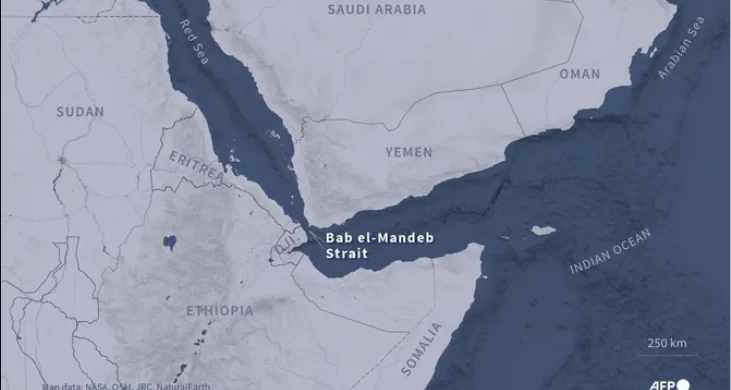

In early October, Abiy Ahmed began a new five-year term as Ethiopia’s prime minister by returning to a demand that his landlocked country must secure access to the Red Sea. He framed the objective as a matter of national security and promised to pursue it through give-and-take. The demand came shortly after the Egypt-sponsored El-Alamein Joint Declaration that seeks to leave Red Sea governance exclusively to its littoral states. It complicates Abiy’s strategy and ambitions because Addis Ababa is making its claim at a time when neighboring capitals are organizing to narrow the room for it.
After renewed fighting erupted in late September, federal forces and the Tigray Peace Force, a pro-government Tigrayan armed group, retook Mekelle from the Tigray People’s Liberation Front in early October. The capture was a major reversal in the internal contest over Tigray following the 2020-22 war which devastated the region and helped poison relations among former wartime allies.
However, a victory in Mekelle provides no recognized title to Eritrean territory, no negotiated transit rights, and no secure supply chain to the coast. At present, the Ethiopian National Defense Force can alter control of towns; converting that advantage into a sovereign port would require defeating Eritrea, holding territory across a hostile border, and absorbing the diplomatic and economic consequences of an interstate war.
Ethiopia’s commercial grievance, however, is measurable. In the 2025-26 fiscal year, Djibouti handled nearly 97 percent of the country’s seaborne import and export cargo, roughly 17.5 million metric tons in total. Road transport carried 80 percent of that freight, with the Ethio-Djibouti Railway moving about 19 percent. Such concentration exposes Ethiopian traders to corridor disruption, tariff changes, congestion, and political friction. It gives Addis Ababa a legitimate reason to diversify routes and negotiate stronger guarantees. A national flag over a port would carry its own costs — defense, infrastructure, insurance, and years of political risk — while commercial access depends on functioning roads and railways, efficient customs, predictable tariffs, and reliable agreements.
Unfortunately, the regional alignment taking shape around Ethiopia’s ambitions compound the seemingly insurmountable military hurdle of taking on Eritrea in an all-out war.
On Oct. 4, Egyptian President Abdel Fattah El-Sisi hosted Eritrean President Isaias Afwerki, Somali President Hassan Sheikh Mohamud, and Sudan’s Gen. Abdel Fattah Al-Burhan in New El-Alamein, Egypt. Their joint declaration affirmed that Red Sea governance belongs exclusively to littoral states, rejected recognition of Somaliland, and called for cooperation over the Nile based on prior notification, consultation, and consensus.
Ethiopia was not explicitly named, and the declaration contained no mutual-defense clause. Nevertheless, its provisions established a common diplomatic position on three issues central to Addis Ababa’s regional ambitions: maritime access, Somalia’s territorial integrity, and control of transboundary waters.
The Red Sea will remain essential to Ethiopia’s future. Whether access becomes a foundation for prosperity or a pretext for war depends on the choices made in Addis Ababa now.
Hafed Al-Ghwell
Moreover, the convergence of these interests gives Ethiopia fewer opportunities to isolate opponents individually. Egypt has spent years opposing unilateral Ethiopian measures involving the Nile and the Grand Ethiopian Renaissance Dam, inaugurated in September 2025. Eritrea faces the prospect of losing control over its coastline if Ethiopia pursues the strategic port of Assab militarily. Somalia views Ethiopian access arrangements with Somaliland as a threat to its territorial integrity. Sudan, meanwhile, has its own reasons for resisting unilateral changes to Nile arrangements while its devastating internal war continues. Their interests differ, but diplomatic coordination allows each government to raise the costs of Ethiopian escalation simultaneously in several theaters.
Ethiopia’s alternative route through Somaliland, on the other hand, demonstrates how a commercial problem became a diplomatic liability.
The January 2024 memorandum of understanding between Addis Ababa and Somaliland envisaged Ethiopian access to a coastal strip near Berbera, with a reported 50-year lease. Somaliland, which has operated with de facto autonomy since 1991 but remains internationally recognized as part of Somalia, offered Ethiopia a potential maritime foothold. Mogadishu rejected the agreement as an infringement on its sovereignty.
In turn, the December 2024 Ankara Declaration, facilitated by Turkish President Recep Tayyip Erdogan, reaffirmed Ethiopian and Somali commitments to sovereignty and territorial integrity while providing for negotiations on mutually beneficial commercial access under Somalia’s sovereign authority. The underlying dispute remained unresolved. Berbera, therefore, offers a possible negotiating route, although its use depends on arrangements acceptable to both Ethiopia and Somalia.
Nonetheless, the domestic front makes the prospect of a sustained campaign even more hazardous. Between January 2025 and Oct. 9, 2026, over 4,700 violent incidents were recorded in Ethiopia, with nearly 12,000 associated fatalities. Non-state armed actors accounted for 58 percent of incidents and close to two-thirds of fatalities. The Amhara-based Fano militias and the Oromo Liberation Army, active in Oromia since 2018, continue to challenge federal authority.
In September 2026, seven opposition armed groups, including the Tigray People’s Liberation Front, Fano representatives, and the Oromo Liberation Army, announced the Ethiopian Peoples’ Forces Alliance for Survival, aiming to remove Abiy’s government. Their cooperation remains vulnerable to internal rivalries, yet simultaneous insurgencies impose genuine costs on federal deployments and supply lines. Every brigade committed to a campaign against Eritrea would be unavailable for operations elsewhere. Abiy’s government would consequently risk opening a regional war while struggling to consolidate control at home.
As such, Ethiopia’s only real strategic route to a presence on the Red Sea lies in diplomacy, commercial diversification, and enforceable transit guarantees. Such agreements, regardless of their form or writ, would require political patience, transparency, and reciprocal concessions. Their returns, fortunately, would arrive without the human and fiscal costs of territorial conquest.
Abiy’s more worrying gamble concerns domestic legitimacy. A promise to restore maritime sovereignty offers a compelling national story at a time when insurgencies, displacement, and distrust are eroding the federal state’s authority. Yet grand historical ambitions often become traps when national pride is contingent on outcomes beyond a leader’s control.
The Red Sea will remain essential to Ethiopia’s future. Whether access becomes a foundation for prosperity or a pretext for war depends on the choices made in Addis Ababa now. A country of more than 130 million people can negotiate its way toward the sea — or spend a generation bleeding for a shoreline it cannot safely hold.
Hafed Al-Ghwell is senior fellow and program director at the Stimson Center in Washington and senior fellow at the Center for Conflict and Humanitarian Studies.
X: @HafedAlGhwell


