
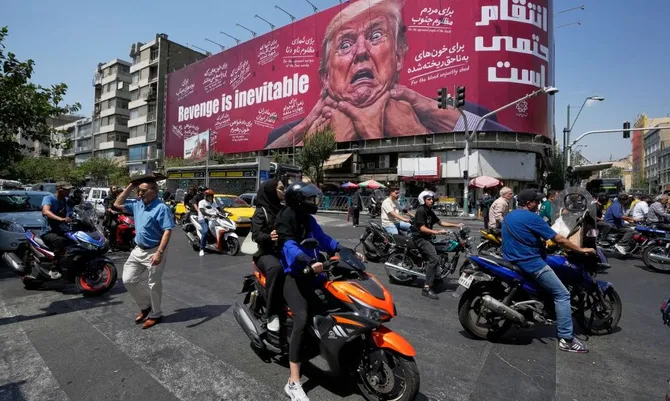

Iran’s insistence on prolonging the current crisis raises a question that Tehran can no longer avoid: What does the Iranian regime believe it can achieve through continued confrontation that it cannot achieve more effectively through negotiations? There is a fundamental difference between legitimate national defense and deliberately perpetuating a confrontation the consequences of which increasingly fall on the Iranian people and destabilize the entire region.
For years, the Iranian regime has presented confrontation as proof of strength and compromise as weakness. “Resistance” has become more than a foreign policy doctrine; it has become a political narrative on which much of the regime’s legitimacy rests. The external enemy is repeatedly invoked to justify confrontation, mobilize public support, and deflect attention from domestic failures. But this strategy has reached a point where the regime must confront an uncomfortable reality: The longer the crisis continues, the more the Iranian people pay for decisions over which they have little control.
Iranians did not impose international sanctions. They did not decide whether negotiations should succeed or fail. They did not determine whether the Strait of Hormuz should become a strategic bargaining instrument, nor did they choose the escalation that has placed their country under renewed economic and military pressure. Yet they are the ones who face higher prices, economic uncertainty, reduced investment, unemployment, and declining opportunities. A government that claims to defend its people cannot indefinitely ask them to endure worsening conditions simply to preserve an ideological commitment to confrontation.
This is where the Iranian regime’s definition of “resistance” deserves serious scrutiny. Resistance is meaningful when it serves a clear political objective. It becomes self-defeating when confrontation becomes an objective in itself. The purpose of military power should be to strengthen a country’s negotiating position, not to make negotiation impossible. Deterrence is designed to prevent war, not to create a permanent state of crisis.
Iran has considerable leverage. It has military capabilities, strategic geography, energy resources, and enormous regional importance. But leverage has value only when it is converted into political gains. If Tehran possesses leverage but refuses to use it to reach a sustainable settlement, it risks turning strategic strength into strategic exhaustion.
The Strait of Hormuz is a clear example. Iran’s geographical position gives it enormous influence over one of the world’s most important maritime routes. But using that influence indefinitely as a tool of coercion carries serious risks. Prolonged disruption threatens global energy markets and neighboring economies, while encouraging other countries to seek alternative routes, supplies, and security arrangements. What begins as leverage can eventually become a reason for others to reduce their dependence on Iran.
The same logic applies to Iran’s relations with its neighbors. Tehran cannot demand respect for its sovereignty while expecting neighboring countries to subordinate their own security interests to Iranian strategic calculations. Gulf states have legitimate concerns about their territory, infrastructure, maritime routes, and economic security. If Iran wants a stable region, it must stop treating every regional defense arrangement as an anti-Iranian conspiracy.
Indeed, Iran should ask a more uncomfortable question: Why do so many of its neighbors feel the need to strengthen their defenses?
A powerful country does not need to make its neighbors afraid of it to demonstrate its strength. Genuine regional influence is built through economic relationships, diplomacy, trade, and confidence. Iran does not need permanent instability to prove its importance.
The regime’s continued reliance on confrontation is particularly difficult to justify when diplomatic alternatives remain available. Iran has channels through Oman, Pakistan, Turkiye, Egypt and other countries that could facilitate dialogue with Washington and other regional actors. Tehran can negotiate sanctions relief, nuclear arrangements, security guarantees, maritime security, and economic normalization without surrendering its sovereignty. It can negotiate from a position of strength while protecting its legitimate national interests.
Negotiation is not surrender. In fact, refusing to negotiate when diplomacy could produce tangible benefits for the Iranian people may be a greater strategic failure than accepting difficult compromises. International agreements are rarely perfect. They are built on reciprocal concessions because no serious settlement can be achieved if either side insists on receiving everything while giving nothing.
The Iranian regime also needs to distinguish between Iran’s national interest and the regime’s political interest. They are not necessarily the same. Iran is a country and civilization far older than the current regime. Its people should not be expected to sacrifice their economic future indefinitely to preserve the ideological posture of a ruling establishment.
Tehran needs to stop asking how much more pressure Iran can withstand and start asking what political settlement can end that pressure.
Hani Hazaimeh
This distinction is essential because the regime has repeatedly equated criticism of its policies with hostility toward Iran itself. That is misleading. Criticizing the government’s strategic choices is not an attack on the Iranian people. On the contrary, it is precisely because the Iranian people deserve security, prosperity, and dignity that the regime’s policies should be subjected to scrutiny.
The greatest evidence of strategic failure would be for Iran to emerge from years of confrontation with a weaker economy, more isolated neighbors, deeper mistrust, and no sustainable political settlement. That would not constitute resistance; it would be the institutionalization of national exhaustion.
Iran also needs to recognize that its regional policies have consequences beyond its own borders. Threats to maritime routes, support for armed groups, and the repeated use of escalation as a foreign policy instrument have contributed to the security dilemma that now drives other regional states to strengthen their own defenses. Tehran cannot complain about regional militarization while ignoring the policies that have contributed to it.
The Iranian regime has spent decades telling its people that resistance will eventually deliver victory. But victory should not be measured by how many years a country can remain under pressure. It should be measured by whether its citizens are safer, more prosperous, and more secure.
Tehran, therefore, needs to stop asking how much more pressure Iran can withstand and start asking what political settlement can end that pressure. There is no shame in negotiating. There is no weakness in seeking peace. And there is no surrender in choosing diplomacy after demonstrating the ability to defend oneself.
Iran does not need another demonstration of its ability to endure suffering. Its people need a demonstration that their government has the wisdom to end it.
- Hani Hazaimeh is a senior editor based in Amman. X: @hanihazaimeh


