

European politics this week moved one step forward, but also potentially two steps back. While there is now greater clarity on German politics in the post-Merkel era, Tuesday brought a new phase of political instability in Italy.
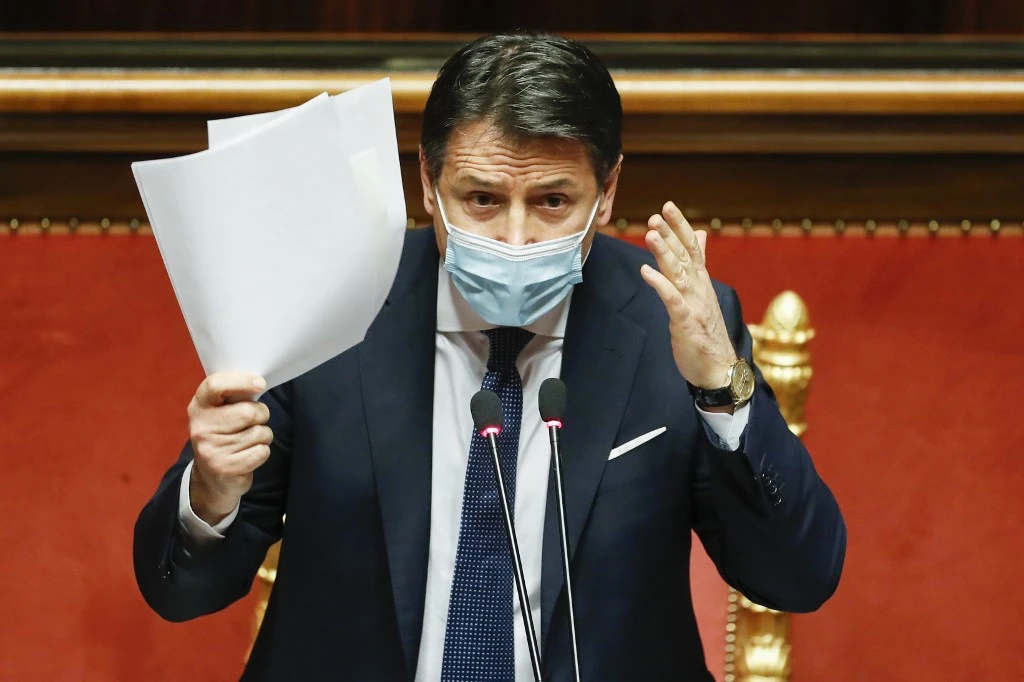
In a key Italian Senate vote, Prime Minister Giuseppe Conte lost his majority in the chamber following the withdrawal of the Italia Viva party led by former premier Matteo Renzi from the governing coalition. Conte, who has governed the euro zone’s third-largest economy since 2018, now faces an uncertain future at a time of continued coronavirus disease (COVID-19) emergency, which could, in short order, see him needing to form a new administration or the nation facing fresh elections in the midst of the pandemic.
Renzi objects to the specifics of Conte’s plan for spending €209 billion ($253 billion) of EU recovery funds — the largest part of a bloc-wide €750 billion pandemic rescue effort. The former prime minister wants more investment in the digital economy and in green energy, while rejecting Conte’s plan to let technocrats, rather than elected politicians, decide spending priorities.
Even before this week’s vote, Italy was facing its biggest set of challenges since the Second World War. It has been ravaged by the health emergency of the last year, which has seen more than 83,000 pandemic-related deaths in the country. The economic damage is particularly crippling, with Italy in its fourth recession in about a decade. Only this week, the government forecast that its debt would soar to a postwar record high of 158.5 percent of gross domestic product this year.
The period since the COVID-19 crisis began last March, which Conte has called the country’s “darkest hour,” is not just unsettling for Italians. There is also mounting international concern, given that the country poses perhaps the biggest threat to the euro zone. These worries extend to Germany, the EU’s dominant state, where the centrist premier of North Rhine-Westphalia state Armin Laschet was at the weekend elected leader of the Christian Democratic Union (CDU), the party of Chancellor Angela Merkel. Laschet’s victory removed some of the uncertainty from the post-Merkel political landscape and he is now in a relatively strong position to succeed her this autumn.
However, amid a changed political landscape due to the pandemic, the new CDU leader is not guaranteed to become the party’s candidate for chancellor in September’s general election. Health Minister Jens Spahn or Bavarian premier Markus Soeder, who is also leader of the CDU’s sister Christian Social Union party, could also step into the ring. Part of the reason why Laschet is not certain to win is his controversial spring 2020 decision to call for the early relaxation of COVID-19 restrictions. With Germany now in an intensified lockdown, he has since retreated from that position but still has work to do to repair the damage done to his political credibility.
International concerns about the new political uncertainty in Rome stems from its status as a key G7 nation
Andrew Hammond
While Italy is less systemically important to the euro zone than Germany, international concerns about the new political uncertainty in Rome stems from its status as a key G7 nation and perhaps the current weakest link in the single market area. The nation has the second-biggest debt load in the euro zone and its banking sector is under significant stress due to massively underperforming loans.
And this spike in economic angst comes before Italy’s chronic political instability is fully factored in. The nation has had 66 postwar governments and the future of the current centrist coalition is now in grave doubt amid the continuing popularity of anti-establishment politics in the country.
Fears are growing not just about the administration’s instability, but also that, even if it remains in office, it is now less capable of securing the longer-term structural reforms that the country badly needs. This point was made by Renzi on Wednesday, when he opined over the missed opportunity of Conte not being able to make bolder post-pandemic changes. He said: “Italy is wasting its biggest opportunity since the Marshall Plan,” in reference to the post-Second World War US aid for a shattered Europe.
Even fresh elections might not end the political paralysis, given the unlikelihood of a strong majority government emerging. In part, this is because of the introduction of a relatively new voting system that is two-thirds proportional representation and one-third first-past-the-post, which makes it hard for any single party to win an outright majority. The threshold for a working majority is now about 40 percent of the vote, which no party has come close to securing in recent years.
Taken overall, the latest bout of Italian instability has offset the greater political clarity from Germany about the nation’s post-Merkel future. The new unease in the euro zone and beyond is that Rome will now only be able to muddle through its biggest crisis since the Second World War, precluding it from conducting the reforms the country badly needs.
• Andrew Hammond is an Associate at LSE IDEAS at the London School of Economics.


