

Much attention in recent years has focused on Japan’s changing security and defense posture. However, what is often less recognized is the ramped-up economic role it is playing, especially championing the bilateral trade liberalization agenda during Donald Trump’s US presidencies.
Of course, Japan’s remarkable rise to economic pre-eminence was a defining feature of the post-Second World War era. Yet, in the last decade, it has doubled down on a commitment to a rules-based global order, seeking to use its economic power as the world’s third-largest economy to promote trade liberalization and help drive a new wave of sustainable growth across the world.
This includes the GCC, with negotiations underway for a bilateral trade agreement. Japan hopes to be the second G7 nation, following the UK earlier this year, to strike a deal with the key Middle East emerging market bloc.
Japan’s trade ambitions are genuinely global. In recent weeks, Tokyo kick-started the negotiation process for a trade agreement with Mercosur — the approximately 280 million population bloc with a collective gross domestic product of about $3 trillion that comprises not only Brazil, but also Argentina, Uruguay, Bolivia, and Paraguay. Ties between the two powers have grown significantly and Brazil, Tokyo’s largest economic partner in South America, also boasts the largest Japanese community outside Japan.
Already, Japan imports significant amounts of goods from Mercosur, such as agricultural produce, plus energy, metal, and mineral resources, and sees significant forward potential in areas such as rare earths, lithium, and clean energy. Japan’s export profile to the region is defined in such areas as electronic and chemical products, machinery, and electronics which Tokyo hopes to boost, including automobiles and auto parts, via a reduction in tariffs and levies.
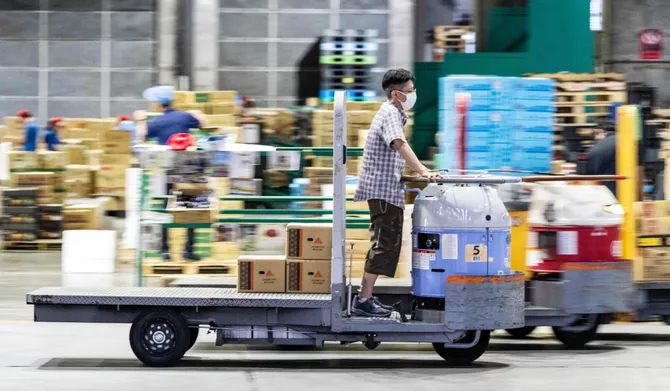
In the last decade, Tokyo has doubled down on a commitment to a rules-based global order.
Andrew Hammond
Where possible, Japan is dovetailing its economic diplomacy with its military partnerships. A good example is India, with which it is a member of the Quadrennial Security Dialogue with the US and Australia, with Prime Minister Sanae Takaichi seeing New Delhi as an “indispensable partner” in her vision for a “free and open” Asia-Pacific.
Already, bilateral trade is growing significantly between India and Japan, reaching about $23 billion in 2024-25. One striking feature of this relationship is the growth of Japan’s foreign direct investment in India, which cumulatively has moved beyond $43 billion since the turn of the millennium.
As with Mercosur, India is widely perceived in Japan as presenting a key opportunity to diversify production and expand manufacturing capacity. At July’s Japan-India summit in New Delhi, the two powers signed a joint declaration on economic security cooperation and AI cooperation, and also inked accords in sectors including critical minerals transport, oil and gas, plus pharmaceuticals.
Tokyo is also aware how much New Delhi has become an advocate for trade liberalization, too, especially during the second Trump presidency. In 2025 and 2026, India has agreed such deals with powers including New Zealand, Oman, the EU, and UK. This has coincided with the Trump team’s tariffs on New Delhi, which took a turn for the worst last August when Washington doubled levies to 50 percent on Indian goods, the highest among any Asian economy, because of American concern about the large amount of Russian energy that New Delhi has purchased amid the Ukraine war.
Despite this chill, India and the US are in the midst of negotiations for their own potential trade deal in a context where economic ties have generally become closer in recent years. A standout example here is the Quad security format.
This security initiative has expanded over time to include economic dialogues. These include boosting coordination on critical minerals, tech protocols and standards, and infrastructure development.
These examples show how much, since at least 2016, the year Trump was first elected to the White House, successive Japanese prime ministers have sought to advocate for a liberalized trading system. The political surprise from the West for Japan in 2016 went even beyond the win of Trump with his protectionist America First platform. It also saw the UK vote to leave the EU in the Brexit referendum. These events shocked Tokyo as both Washington and London had traditionally been perceived as promoting stability without such significant change.
Ironically, while the Trump tariff agenda has been a major headwind on Japan’s global trade agenda, it has also fueled the determination of Tokyo to push it forward with like-minded powers, including in Europe. One of the biggest trade initiatives that Tokyo has undertaken is with the EU, with a wide range of key agreements signed between the two powers, including the Economic Partnership Agreement in 2019 to enhance trade, investment, and economic cooperation.
Taken together, Japan’s trade liberalization agenda is moving forward globally, from the GCC to Mercosur and Europe. Despite the many challenges, the opportunities are seen to outweigh the risks in a fast-changing geopolitical context.
• Andrew Hammond is an associate at LSE IDEAS at the London School of Economics.


