
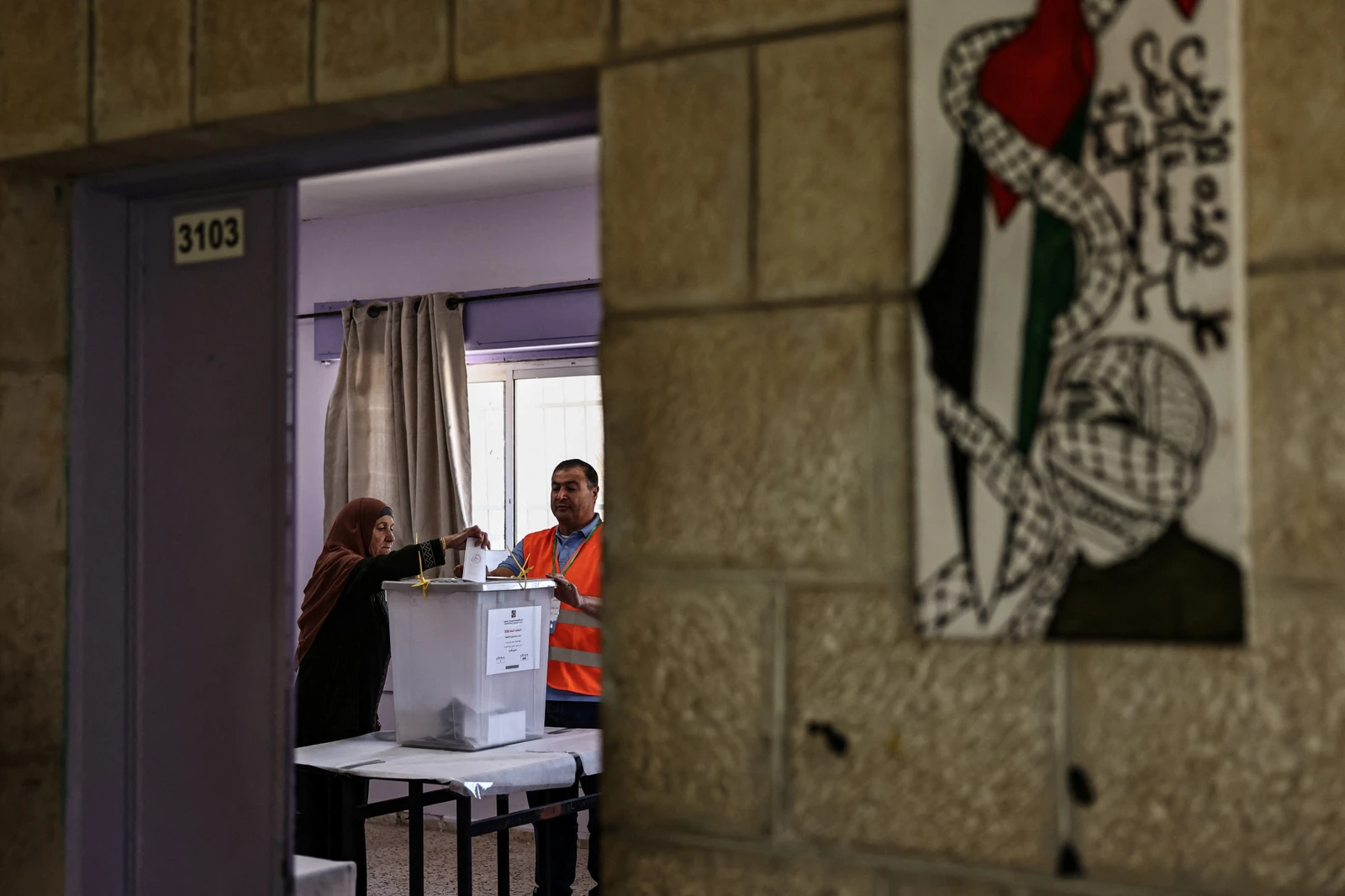

For Palestinians, the legislative elections scheduled for Nov. 28 are about far more than choosing members of the Palestinian Legislative Council. They are about restoring political legitimacy, rebuilding institutions and, perhaps most importantly, beginning to fill the dangerous institutional and political vacuum that has deepened over years of division, paralysis and conflict.
For that reason, the elections should not be treated as another routine political exercise. They should be supported by the international community as an essential component of rebuilding a functioning Palestinian political system and preparing the foundations of a future Palestinian state.
The significance of the coming vote becomes clearer when one considers how long Palestinians have been deprived of a functioning national electoral process. The last legislative elections were held in 2006, meaning that an entire generation of Palestinians has grown up without participating in a national parliamentary election.
The Palestinian Central Elections Commission says that about 2.97 million Palestinians in the West Bank, including East Jerusalem, and Gaza are eligible to vote on Nov. 28, with more than half of the electorate under the age of 38. This is an indication of how profoundly the Palestinian political system has been disconnected from the people it is supposed to represent.
The elections therefore offer an opportunity to begin closing that gap. A legislature chosen through a credible, transparent and inclusive vote can provide a renewed popular mandate to Palestinian institutions at a moment when institutional authority is desperately needed. It can provide Palestinians with a legitimate political channel through which competing views, interests and aspirations can be expressed without being left to the logic of confrontation or political fragmentation. It can also establish a stronger constitutional and political foundation for the Palestinian Authority and other national institutions as they seek to assume greater responsibility for public administration, reconstruction and governance.
Gaza’s reconstruction cannot succeed without a credible political and administrative framework capable of managing it
Hani Hazaimeh
This is particularly important in Gaza. Years of war and destruction have left behind not only an enormous humanitarian challenge but also a profound governance problem. Rebuilding homes, schools, hospitals and infrastructure is indispensable, but physical reconstruction cannot succeed without a credible political and administrative framework capable of managing it.
Gaza cannot remain suspended indefinitely between humanitarian administration, competing political authorities and an uncertain security environment. The Palestinian people need institutions that can provide services, administer public life, maintain accountability and eventually exercise legitimate authority. This is where elections can help fill the void.
An elected legislature cannot solve every Palestinian problem, nor can an election end the political division between Gaza and the West Bank by itself. But it can create something that has been missing for far too long: a renewed source of democratic legitimacy. That legitimacy matters because institutions cannot effectively assume responsibility for a society when their political mandate is questioned or when they remain disconnected from the electorate. The restoration of an elected legislative body can therefore become part of a broader process through which state institutions gradually reclaim their central role in Palestinian public life.
The Central Elections Commission has already made clear that preparations are advancing according to the established timetable. Nomination of electoral lists began on Sept. 26 and is taking place in both the West Bank and Gaza, with polling scheduled for Nov. 28. France has publicly welcomed the election timetable and said it is prepared, together with its partners, to provide support for the organization of the vote. The UN has likewise described inclusive elections throughout the Occupied Territories, including Gaza and East Jerusalem, as essential to renewing Palestinian institutions.
That support must now become practical and political.
The international community should help finance the electoral process, provide technical assistance, deploy credible international observers and support the Central Elections Commission in maintaining professional standards. But international responsibility cannot stop there. Governments with influence over the parties and the authorities controlling movement and access must ensure that candidates, election officials, observers and voters can participate without intimidation or obstruction.
Candidates, election officials, observers and voters must be able to participate without intimidation or obstruction
Hani Hazaimeh
This is particularly important because an election that excludes substantial parts of the Palestinian population would risk reproducing rather than resolving the political crisis. Gaza cannot be treated as an afterthought. East Jerusalem cannot simply disappear from the electoral map. The Palestinian political system will gain credibility only if Palestinians are able to see themselves as participants in one national political process.
The international community should also resist the temptation to view Palestinian elections exclusively through the narrow prism of immediate political outcomes. The purpose of democratic institutions is not to produce a result that happens to be convenient for outside powers. It is to give Palestinians the ability to choose their representatives and establish accountable institutions of their own. International support should therefore be directed toward the integrity of the process rather than any particular party, faction or candidate.
A Palestinian state cannot be built solely through diplomatic declarations or international conferences. It requires functioning institutions, accountable leadership, a legitimate legislature, effective public administration, judicial authority and the ability to provide services to its population. It requires political legitimacy rooted in the consent of the governed.
The November election cannot create all of that overnight. But it can help create the political foundation upon which it can be built.
The Palestinian people have waited long enough for the opportunity to renew their political institutions. The international community should not merely applaud the Nov. 28 elections from a distance. It should help ensure that they take place, that Palestinians in Gaza, the West Bank and East Jerusalem can participate, and that the results are respected.
If the objective is a viable Palestinian state living alongside Israel in peace and security, then building credible Palestinian institutions is not a secondary issue. It is one of the foundations of that objective.
That is why the vote must take place. And that is why the world should help make it possible.
Hani Hazaimeh is a senior editor based in Amman.
X: @hanihazaimeh


