

A headline in the California Post’s Hollywood newsletter this month declared: “War of Open Letters Erupts Between Pro-Israel and Pro-Palestine Factions in Hollywood.” Only a few years ago, a headline like this would have seemed unthinkable.
The article described an increasingly open struggle between pro-Palestine and pro-Israel forces within the entertainment industry. On one side are artists and other industry figures taking a clear stand against Israel’s genocide in Gaza; on the other are defenders of Israel attempting to deny that genocide is taking place in the face of irrefutable evidence.
Yet even this framing failed to tell the whole story. What is unfolding is far more consequential than a quarrel among celebrities or a “war of open letters.” It is part of a brewing cultural revolution in American society — one that has now reached the highest echelons of the country’s cultural establishment. And in that struggle, Israel is losing — and losing badly.
Though the article acknowledged that support for Palestine has become powerful enough to openly divide Hollywood, it concealed the scale of the transformation underway by presenting the moment as a “war” between two factions.
What is unfolding is far more consequential than a quarrel among celebrities or a ‘war of open letters’
Dr. Ramzy Baroud
Long before Israeli filmmakers, production companies and actors established a significant presence in Hollywood, the industry’s cultural infrastructure routinely elevated Israel at every opportunity. Film and television constructed a glossy image of a heroic nation whose establishment and continued survival were portrayed as miraculous, while the dispossession and violence underpinning that narrative were largely erased from view.
Palestinians, Arabs and Muslims, meanwhile, were almost invariably cast in a negative light: the uncultured and menacing “other,” supposedly possessing no legitimate claim to civilization, no recognizable morality and no history or identity worthy of serious consideration.
Indeed, Hollywood played a central role in the systematic dehumanization of Palestinians in Western popular culture. With thousands of actors, filmmakers, producers and artists now taking principled public stands for Palestine — often at considerable professional risk — we can therefore speak confidently of a cultural shift of historic proportions.
Susan Sarandon, Mark Ruffalo, Penelope Cruz, Javier Bardem, Joaquin Phoenix, Tilda Swinton, Olivia Colman, Emma Stone, Cynthia Nixon and Riz Ahmed are some of the most visible names on an ever-expanding list of morally driven and courageous artists confronting an archaic industry establishment.
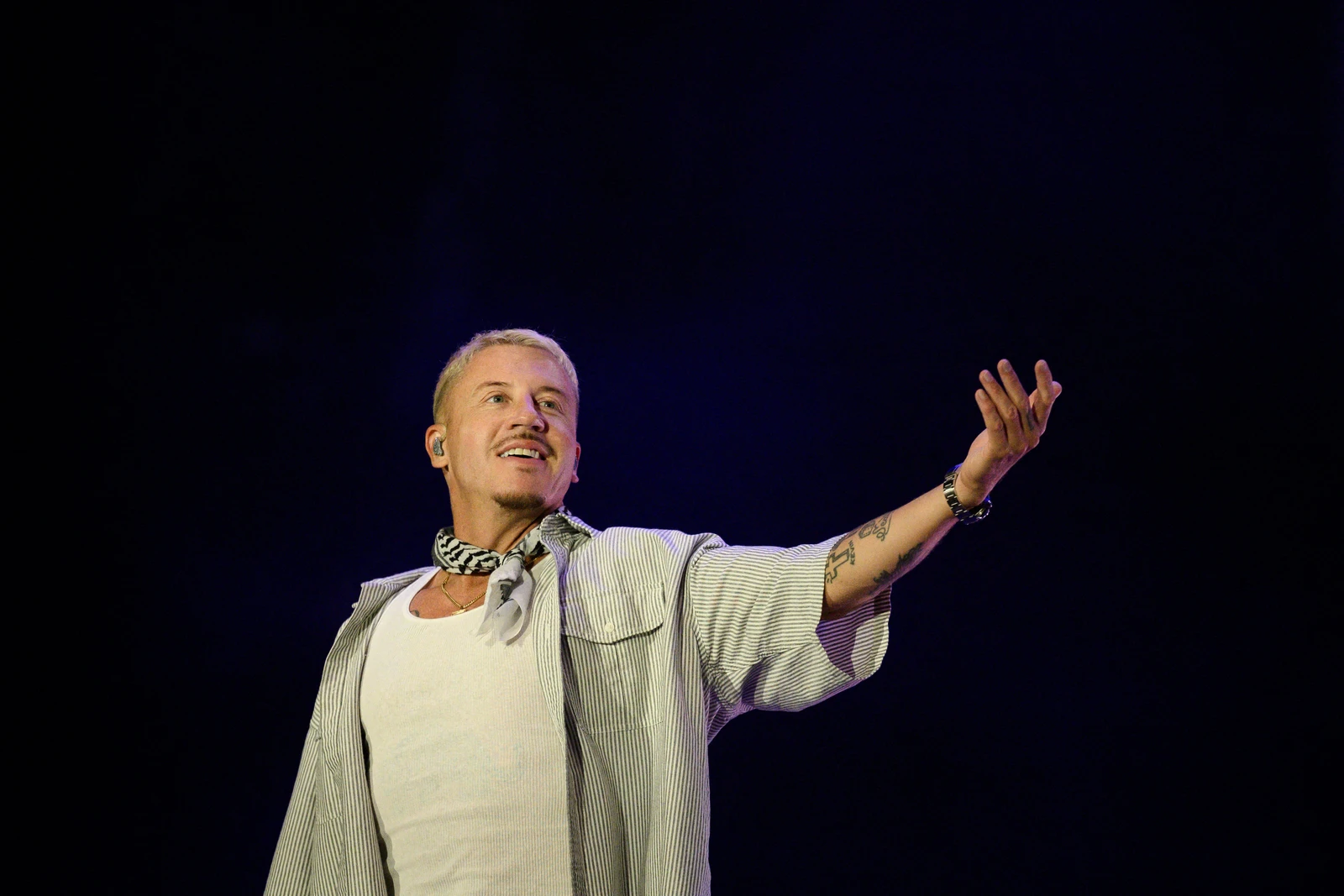
The story, however, extends far beyond Hollywood. Consider the major controversy that erupted in the US this month following Macklemore’s removal from the remaining dates of Ed Sheeran’s “Loop” tour.
The furor placed Kraft, Sheeran and the entertainment establishment as a whole under unprecedented scrutiny
Dr. Ramzy Baroud
Macklemore is far more than a pro-Palestine singer. The Grammy-winning rapper and songwriter is a gifted political storyteller whose career has combined mainstream artistic success with an enduring commitment to social causes. Since the beginning of the genocide, he has emerged as one of the most powerful voices of Palestinian solidarity in the US and beyond.
During Sheeran’s Sept. 4 concert at MetLife Stadium in New Jersey, Macklemore expressed solidarity with Palestinians in Gaza and the West Bank, called for a “free Palestine” and performed “Hind’s Hall,” his protest anthem honoring Hind Rajab, a five-year-old Palestinian child killed by Israeli forces in Gaza.
The response to Macklemore’s courageous stand was immediate and predictable. The billionaires who control the venues where Sheeran was also due to play reached for the key weapon still at their disposal: financial power. Robert Kraft, the owner of Gillette Stadium, refused to allow Macklemore to perform there.
Sheeran, who appeared to underestimate the gravity of the moment, went on the defensive. “I am not complicit,” he declared, insisting that Macklemore’s removal had been the promoter’s decision rather than his own. But such a weak response by one of the world’s most influential musicians, particularly while an artist on his own tour was being punished for speaking out, could hardly be presented as a politically neutral position.
In the past, the story might have ended there. Macklemore would have been isolated and his career placed in jeopardy, with Sheeran, the promoters and the stadium owners continuing largely untroubled.
Those days are gone. Global solidarity with Macklemore — and, by extension, with Palestine — spread so rapidly that the people responsible for his removal were forced to issue a succession of defensive and sometimes contradictory explanations.
By then, however, the damage had been done. Sheeran faced mounting boycott calls, protests and even the removal of his songs from the playlist of an Irish radio station. Finneas, Lukas Graham and Aaron Rowe withdrew from the tour, while Beoga, Sheeran’s backing band, also pulled out. Artists and public figures began speaking openly about the genocide, freedom of expression and the power of billionaires to dictate the political boundaries of art.
Podcasters and social media commentators also mobilized, reaching audiences of millions and digging deeper into the controversy. They began asking who Kraft was, examining his long-standing relationship with Israel, his campaign against the Boycott, Divestment and Sanctions movement and the enormous financial machinery behind his political advocacy.
The attempt to punish Macklemore ultimately placed Kraft, Sheeran and the entertainment establishment as a whole under unprecedented scrutiny. Far from silencing the message of Palestinian freedom, their actions amplified it.
Ultimately, this is not a story about two feuding artists, just as Hollywood’s transformation cannot be reduced to two camps trading open letters. Both are manifestations of a much larger cultural upheaval rooted in grassroots American society, where people from diverse backgrounds are finally opening their eyes to Israeli crimes and to the extraordinary influence Tel Aviv has long exercised over their country.
Beyond the occasional opinion poll, that story rarely makes headlines. But when the pendulum swings this far, neither Kraft’s money nor the stadiums he controls can stop the movement.
Nor can they silence Macklemore’s cry of “Free Palestine” — a cry now echoed by millions of people throughout the world.
Dr. Ramzy Baroud is a journalist, author and the editor of The Palestine Chronicle. His latest book, “Before the Flood,” was published by Seven Stories Press. His website is ramzybaroud.net. X: @RamzyBaroud


