
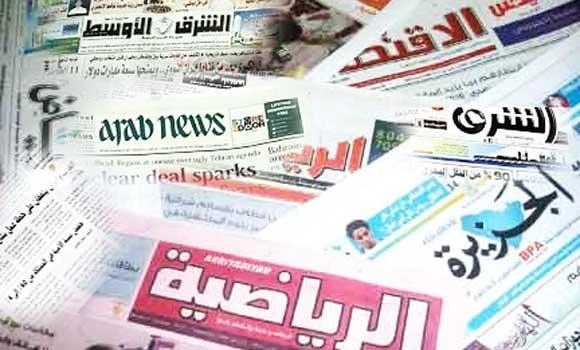
King Salman’s speech
In his recent keynote speech addressing the nation, Custodian of the Two Holy Mosques King Salman gave his vision on the Kingdom’s future while explaining its domestic and foreign policies.
He began his speech by emphasizing that Saudi Arabia would strictly follow the Shariah, work for strengthening national unity and stability and continue its efforts to achieve a comprehensive and balanced development all across the country.
The king also stressed that he would work for establishing justice for all citizens and realizing their hopes and aspirations by giving them access to available opportunities.
During the past 60 years as a veteran administrator, King Salman has been following an open-door policy, dealing with citizens transparently. He gave citizens and residents an opportunity to meet him without any barriers. He asked regional governors to follow the same open-door policy by receiving citizens to solve their problems and accept their development proposals.
King Salman also stressed the important role of media in connecting the leadership with the public, in pointing out negative aspects without exaggeration and finding effective and practical solutions for them.
He instructed the Council of Political and Security Affairs and the Council of Economic and Development Affairs to double their efforts to make things easier for citizens and provide them with the necessary means and facilities to have a decent living, and said he would not show any leniency in this matter. In order to establish justice among citizens, the king announced his plan to revise the systems of monitoring agencies in a way that would strengthen their efficiency and enable them to effectively fight corruption.
King Salman reiterated that Saudi Arabia would continue its efforts to root out terrorism and extremism in cooperation with the international community. He stressed the government’s focus on diversification of revenue sources and excavation of new oil and gas wells.
In his speech, King Salman gave citizens glad tidings of a bright future replete with important achievements, expanding industries, exploiting mineral resources and boosting small and medium enterprises.
King Salman called for the integration of general and higher education and quick solution for the country’s housing problem. He also gave an indirect message that “This is our plan and those who cannot realize these noble national objectives will not have any responsible position in the government.”
—By Mohammed Abdullah Al-Owain, Al-Jazira
Arab media and terrorism
The Arab media’s coverage of terror issues is not up to the mark. When Australian teenager Jake Bilardi carried out a suicide attack in Ramadi, Iraq, most Arab media organizations described him as a naïve teenager and called him Abu Abdullah without describing him as a terrorist.
Here one may wonder whether we should respect terrorists by giving them reputable names. How should we describe terrorists and terrorist organizations? Should we call them as they wish or don’t the media have any stand on them?
In my opinion, we should call a spade a spade. A killer is a killer and a terrorist is a terrorist and this Australian teenager should be called a terrorist. Some media organizations like the BBC call Daesh terrorist group as Islamic State. Many international news agencies also do the same while some others just add extremist in front of that name.
By doing so these media organizations are doing a big service to this terrorist group, as it does not like to be known as Daesh. The name Islamic State gives this terrorist group greater acceptance because of its religious background.
Another surprising thing is why the social media show leniency toward Daesh militants and other terrorists and this is prohibited in the west.
The Arab media should not take any neutral stand while dealing with terrorism and terrorists as well as extremists groups.
The role of the media is to give information and create public awareness. It is time for our media to change their wrong stand.
— By Tariq Alhumayed, Al-Sharq Al-Awsat
Human rights
Saudi Arabia has been facing ferocious attacks in the past on human rights issues. Some international organizations tried to interfere in the Kingdom’s internal affairs and its right to enforce law, saying it contradicted with human rights, ignoring the Kingdom’s humanitarian services which have been applauded by international organizations.
Last week, the Saudi government issued two statements condemning interference in its internal matters. Saudi Arabia feels that it is targeted by a campaign to the extent that Kenneth Roth of Human Rights Watch fabricated a picture of a woman being lashed in a public square and he published it saying it happened in the Kingdom. He later realized the mistake and removed its from his Twitter account.
This is an example of smear campaigns being carried out by such human rights organizations with a suspicious agenda, violating their mission and vision. They put pressure on the Kingdom. They make anti-Saudi statements just before the visit of some western officials to Riyadh and force them to raise the issue of human rights. The Kingdom issued its first statement just before the visit of a western official while the second was related to the Swedish foreign minister’s statement. Saudi Arabia has recalled its ambassador to Sweden. It is true that the Kingdom has longstanding relations with Sweden and the two countries have established strong economic cooperation.
This relations demand mutual respect and should not be used as a justification to interfere in internal matters. It does not mean Saudi Arabia change its regulations in accordance with European laws to appease those organizations and countries.
The Kingdom’s decision to recall its ambassador from Stockholm has given a clear message not only to Sweden but also to other western countries.
—By Ayman Al-Hammad, Al-Riyadh
Golden era for women
Saudi women are living in a golden era when they have received most of their rights. During the past five years several royal decrees and laws have been passed protecting their rights. The following are some of them:
The law to protect them from torture; homes have been asked to receive women who are abandoned by their families; law to establish private homes to receive children and appointment of 30 women to the Shoura Council as members after changing the consultative body’s bylaw.
The government also allowed women to vote and contest municipal elections; provided them with scholarship to pursue higher studies in reputable international universities. They were also given top leadership positions in government. They are also allowed to work as lawyers and given new job opportunities.
We have also witnessed issuance a number of judicial systems that protect women’s rights at courts, removed obstacles that stood in the way of lodging cases while women’s sections have been set up at courts and notaries public.
Women are also given copies of documents related to their rights and stiff punishment will be given to those delay or take away her rights. Women Shoura members were also allowed to express their allegiance to Custodian of the Two Holy Mosques King Salman when he ascended the throne in January 2015.
— By Suhaila Zainul Abideen Hammad, Al-Madinah
Expressing opinion
Expression of opinion has two levels; the first depends on a person’s thought while the second on the way of presentation.
There are opinions that get wide publicity with little effort like the opinions expressed through WhatsApp and other social media platforms. Authors and researchers make lots of efforts to simplify their thoughts and make them easier for their readers to understand. One of the main objectives of the expression of opinion is to leave a positive impact on the society. In all situations, bringing change will take time and one cannot expect speedy results.
There will have different thought movements in a society, depending on its cultural variety. It is quite natural that there could be repeated clashes of thoughts and we cannot expect unity of thoughts and opinions always.
The identity of thoughts in a society means the dominance of certain views while some individuals fearing to express their objection to the dominant views. Our society is now going through an unprecedented phase of openness as an evidence of its cultural and educational progress.
Social media plays an important role in helping people to express their opinion. Although some people express silly and wrong thoughts, the channels for expressing opinion are still in desirable condition.
I am happy to say that we are living in an era where people are eager to listen and read matured thoughts.
— By Hanan Al-Marhabi, Makkah Newspaper
Fighting terror
Eight million Saudis have accounts on Twitter and they represent about 41 percent of the Saudi population. This means all grownup people have their accounts on the social media and they exchange various messages. Abdullah Al-Musnad, spokesman for a social media forum in Riyadh, also pointed out that Saudis are very active on Twitter and everyday they exchange more than a million messages and comments.
This huge number of social media activists in Saudi Arabia also means they receive a large number of messages and some of them target their faith and culture. The Ministry of Islamic Affairs has noticed many Twitter messages that promote hatred and violence.
Some of these messages are sent by extremist organizations targeting Saudis. The ministry pointed out that some 129,600 tweets promote violence, encourage people to join terrorist groups and threaten national security.
The study conducted by the ministry has pointed that Twitter was quick in closing accounts of those individuals who promote violence and terrorism against Western countries and show leniency against those targeting Saudi Arabia. There is no doubt that Saudi youth are targeted by terrorist organizations that call for violence affecting national security. They also mobilize them to fight in violence hit Arab countries, using the social media platforms.
We should be vigilant that these unwanted messages could reach our children without your knowledge. The government is making efforts to fight extremism but it will not be able to find the extremists in our homes.
So it is the duty of every family to make sure their children do not follow or harbor extremist and deviant thoughts and ideologies.
— By Sattam Al-Thaqeel, Al-Eqtasadiah


