
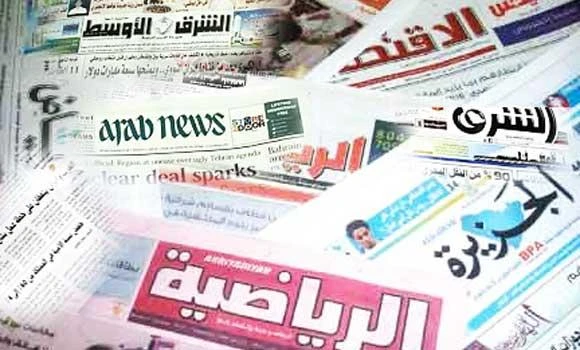
Developing human resources
Following heavy rains, Jeddah was once again flooded. This will continue to happen unless qualified people are appointed to deal with projects related to storm-water drains and sewerage network. Jeddah is expanding at a fast pace and needs proper civic planning to deal with such situations. For that to happen, we need qualified people to plan the city in the best possible manner.
Unlike in the past, the eastern parts of the city did not submerge or suffer losses due to the presence of water disposal system but the center of the city received losses.
Jeddah, unfortunately, is not the only city in the Kingdom, which is facing these development issues. We need concrete plans to deal with any untoward incident and natural disasters. It is very important to plan cities with provision to deal with unexpected situations, natural or otherwise.
Development projects or any other task can never succeed without qualified people. There is a great need to develop our human resources and select qualified and talented people for key positions. Without doing so, proper decision making and effective civic management will continue to remain distant dreams.
Many of our works are undertaken by persons who started their careers 20 years ago or more where most of their assignments were of supervisory or administrative nature and, gradually, took the responsibility of municipalities, water and sewage.
Unfortunately, the biggest problem lies in the belief that prospects of success are existing and applicable with the existence of repeated faltering and failure.
Prospects of success can be summarized as follows:
• Proper planning based on accurate statistics and a clear-cut vision.
• Appointment of the best and qualified cadres on top positions.
• Development of administrative skills on a continuous basis where occupants of higher posts could join training courses in reputed global universities to acquire more developed management skills.
• Governance and integrity where Jeddah badly needs mega consultancy companies and a foreign “corruption control” authority to monitor works and formulate recommendations free from any influence.
— By Birjis Hamoud Al-Birjis, Al-Watan
Learning from French media
FOLLOWING the terrorist acts in Paris that claimed the lives of 129 people and left many more injured, the French media succeeded in effectively covering the events and helped France garner global support and sympathy.
However, our media failed to do that despite the fact that our country was among the first to have faced terrorism in all its forms.
In the wake of terrorist attacks within the Kingdom, our media deals with the situation in a very traditional manner by showing statements of condemnation from prominent local and international personalities. It is correct that our religion and society reject all sorts of terrorism but it is important to give due coverage to such incidents so as to prove this to the world that we are also the victims of terrorism.
At a time when most of our media decided to revolve around the “inner and old cycle,” they forgot to address audience in foreign countries and give them facts in different languages and media tools to show them our sufferings from terrorism together with our intellectual and security efforts to fight it.
The painful result from this situation (inadequate handling of our media) is that people in other countries raise voice against us and unjustly accuse Muslims of terrorism. They should be made to realize that we are also facing the same problem, perhaps more than any other peoples in the world.
Success of the French media in gaining support and sympathy globally in the aftermath of the terrorist attacks should be a lesson to be learned by our media on how to deliver a message affirming that Islam is the religion of moderation, justice and coexistence.
— By Abdullah Munwwar Al-Jimaili, Al-Madinah
Property woes
APART from the differences between the Shoura Council members on fees to be imposed on vacant or developed lands, the approval of a draft law is a good attempt to create a balance in property demand.
This approval comes at a time when the price of properties have skyrocketed by 50 percent compared to the previous rate of 30 percent.
The imposition of fees on developed lands was an expected matter because it was unreasonable that real estate owners (landlords) keep monopolizing hundreds of thousands of meters of lands for tens of years to deprive millions of citizens who were dreaming to own and build their houses.
On the other hand, it is illogical to ignore million meters of white lands located within the cities without being tapped in the form of housing units, projects or public utilities beneficial to citizens.
However, the final approval and practical application of the law may take couple of years, possibly not less than five years, a matter that will raise a question: Will these fees bring land prices to just and reasonable rates, or are landlords going to add these fees on the value of lands whereby potential buyers will bear new and high prices that will destabilize property market?
Some experts say that the landlords will devise many ways to impose land fees on citizens as do land developers who used to impose costs spent on developed lands (including asphalting, pavements, lighting) on the buyers.
— By Yusuf Al-Mihaimaid, Al-Jazira
Knowledge-based economy
COMPREHENSIVE development of a community is realized through the optimal exploitation of human resources and applications of researches produced by universities and research centers.
The development of educational outputs and means to make them adaptable to the requirements of the current era has become a necessity.
Therefore, voices have been raised asking universities to play a bigger role and have their services reached to a variety of community sectors and ages and, further, to help in making the developmental plans a success.
In the developed countries, universities spend 4-6 percent of their allocated budgets on research and development (R&D) for the development purposes, build capabilities and link post-graduate programs and scientific research to community requirements.
In Saudi Arabia, we have good experiences with some universities such as King Saud University (KSU), which plays a leading role in scientific research drive inside and outside the Kingdom.
KSU has provided many projects and specialized research works in a variety of fields and entered into partnerships with private and public sectors aimed to find job opportunities for its graduates.
One of the striking examples in this context is the memorandum of understanding (MoU) signed between KSU and SABIC (Saudi Arabian Basic Industries Corp), whereby the first agreed to provide SABIC with scientific expertise while the latter pledged to provide financial support to the KSU.
This is the role, which universities are supposed to play: Training cadres, activation of partnership with community, raising thinking capacities, working for a sustainable development whereby the national economy be shifted into a knowledge-based economy.
— By Buhairah Mahmoud Al-Halabi, Al-Bilad
Heeding Saudi advice
THE final communiqué of the Antalya G-20 Summit, Turkey, has recalled what the Kingdom had affirmed a decade ago that terrorism has no religion, country or nationality.
This reference (to terrorism) seemingly came too late and only emerged at G-20 Summit at the heels of the terrorist attacks that hit the heart of France.
The Kingdom was the first country to refer to this issue years ago when the late King Abdullah sent out a message to the world saying that the western silence on terror will produce a new generation of believers in violence, the same point reaffirmed by Custodian of the Two Holy Mosques King Salman who firmly emphasized on state terrorism and crimes inflicted on the Palestinian people at the hands of Israeli occupiers.
The Kingdom, which has a leading role in countering terrorism, has warned the G-20 leaders that the whole region is poised to explode and the Arab world is on the brink, which necessitates the search for an effective solution instead of wasting time on hollow claims that achieve nothing on the ground.
The one who carefully reads the King’s address at the G-20 Summit will find out that the Kingdom, led by King Salman, fully acknowledges unpredictable risks of arrogant plans being prepared aimed to create chaos in the region.
But does the world know the significance of the Saudi appeal (at the G-20 Summit) and deal with it deservedly before the fire extends to all?
— By Mohammed Al-Wail, Al-Riyadh


