
Who’s the real culprit?
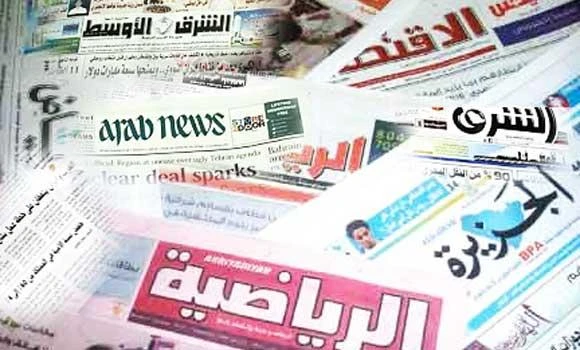
THOSE who have been following the Saudi media during the last few days must have noticed that the “rain” issue remained on top of the priority list of newspapers, television channels and columnists. The social media networks also remained busy discussing the same issue.
Most of the articles, reports and people (in their comments) were critical of absence or inadequacy of drainage projects in the Kingdom. There is no harm in constructive criticism, as it leads to resolution of various problems. But it is surprising to note that most, if not all, of the articles adopted the approach of criticism for the sake of criticism. After criticism, it is important to throw light on the technical aspects of the issue in question and to come up with recommendations to go about things so as to resolve the issue.
The question here arises: Don’t we have qualified people who could educate us about the technical aspects of an issue in an objective manner?
On the other hand, the government bodies tried to defend their positions but ignored the role of contracting companies, which were actually responsible for drainage projects. The government should have ordered these companies to explain the situation instead of leaving the scene for undue criticism directed toward those who were not directly responsible for drainage networks in major cities across the Kingdom.
The contracts, in my view, should contain provisions obliging the companies to have information and media centers to give detailed data on the projects on completion and their suitability to development plans and population growth.
— By Asia Al-Ashiekh, Al-Eqtisadiah
Protect your child
I would not like to show pessimism over the possibility of an emergence of a dangerous phenomenon related to the abduction of children.
But what happened to two-year-old Juri Al-Khaldi, who was kidnapped from inside a clinic in Riyadh, has aroused concerns. The reason of my concern is an extension to the phenomenon of kidnapping children in Egypt by gangs, which aroused panic among Egyptian families.
The gangs were accused of abducting the children either to force them into beggary or settle personal scores with their families. The gangs may use the abducted children for illegal activities such as drug trafficking or demand huge ransoms from families in return of their children.
To avoid abductors and ensure the safety of children, we should pay utmost care to children and must not leave them alone in streets or markets. We should not trust any foreign person and make sure that the children do not wear expensive jewelry.
The situation also necessitates the organization of symposia and lectures inside education, health and cultural institutions and through media on how to protect children, report to the police in case of abduction and not to deal with the abductors directly because the safety of children is a top priority for police.
Citizens are also urged to cooperate and form voluntary groups to keep an eye on children in public places and districts, distribute awareness leaflets and publish photos of the kidnapped children on social media to help find them at the earliest.
— By Ruqiah Al-Huwairini, Al-Jazira
A great decision
SAUDIS belonging to different social segments expressed their pleasure over the Council of Ministers’ decision to impose fees on pieces of vacant (white) lands in cities.
The decision was followed by heartfelt calls from people asking Almighty Allah to extend life of Custodian of the Two Holy Mosques King Salman and to enable him to introduce more “decisive storms” at the domestic level to correct malpractices of land exploiters.
However, fears remained among citizens that invisible hands would succeed in dwarfing the fruit of the decision in various ways:
• That the executive by-laws of the system presented to Ministry of Housing be made free of loopholes that may allow certain elements to bypass the system to serve their own interests.
• That administrative corruption might creep into land evaluation committees in future to introduce fees lower than the required rates.
We have pinned our hopes on the royal decree and are hopeful that steps will be taken for its strict implementation.
— By Mohammed Maruf Al-Shaibani, Al-Bilad
Time to do more
FOLLOWING the Shoura Council’s approval of the move to impose fees on vacant lands, the Council of Ministers has, likewise, supported that drive and passed a resolution to fix the fees at 2.5 percent of the land value.
This clearly demonstrates the care given by legislative and executive bodies to this issue, notably the council of economic and developmental affairs, headed by Deputy Crown Prince Mohammed bin Salman, which played a key role in working out this issue.
However, vacant lands are not only factor leading to housing crisis, rather it is just a part of it. The housing crisis emerged earlier than the appearance of the vacant lands.
The vacant lands had not appeared unless there was poor urban planning, on one hand and inadequacy in legislations regulating real estate activity, on the other.
In light of the urban chaos, buildings were extended horizontally and not vertically. Instead of construction of well-planned buildings, poorly planned and substandard two-story buildings were constructed.
This drive led to deformation of our cities and encouraged ownership of white lands within the cities’ limits.
Lands in our big cities were supposed to be designed in accordance with the architecture and urban engineering specifications to give buildings the required consistency.
On the other hand, any building model alone will not be capable of solving the acute housing crisis unless the funding issue is solved.
—By Abdullah bin Abdulmohsin Al-Faraj, Al-Riyadh
‘Daesh’ of Lebanon
THE Saudi Interior Ministry’s decision to put certain entities and personalities with ties to Hezbollah on its terror watch list is commendable. It is a known fact that the Lebanese party is practicing and promoting terrorism in all its forms and is no less than the much-dreaded Daesh.
Hezbollah is an Iranian tool and has been instrumental in fomenting unrest in the Arab world. It is playing an ugly role in spoiling the Arab youths by brainwashing them along sectarian lines and dubbing it “resistance” to hoodwink the masses.
Hezbollah was supposed to be classified as a terrorist group earlier in all the GCC countries, notably the Lebanese party has previously carried out sabotage acts in Kuwait and extended its destructive activities to other GCC countries, Iraq, Lebanon, Yemen, and Syria.
Hezbollah is not different from other terrorist organizations. It is the Shiite version of Daesh but uses a different way to promote its interests.
The party supports sectarianism, kills on the basis of identity and carry out terrorist operations in the Arab countries. Moreover, Daesh was brought up as the reaction to Hezbollah’s sectarianism and its destructive acts.
Ironically, both have joined hands against the GCC and Arab countries and serve Iran’s interest in their own ways.
Hezbollah raises a Shiite slogan. It is neither a Shiite nor Islamic party but a puppet in the hands of the Iranians.
Hezbollah is part of the Iranian security apparatus, which is designed to intervene in the Arab world and to work for Iranian hegemony in the region.
Hasan Nasrullah, who controls some ministers and parliamentarians in Lebanon, openly declared that he is a “soldier in Vilaya Faqeeh system”. Earlier he said the goal of his party is to establish a republic in Lebanon affiliated with Iran.
Hezbollah is one who declares war and peace on Lebanese territories without consulting the government or the parliament.
Arab countries are, therefore, required to issue strict and decisive resolutions banning Hezbollah from speaking about Arab and Lebanese affairs because it is an Iranian puppet.
—By Mutlaq Al-Inizi, Al-Yaum
Teachers’ training programs
THE National Center for Assessment (Qiyas) has disclosed that 40 percent of candidates who sat for teacher competency tests failed.
These results, which were announced during the 80th session of the Saudi Society for Educational and Psychological Sciences at King Saud University, showed poor position of candidates in certain subjects such as Arabic, Mathematics and English.
If we compare this high rate of failure in the teacher competency tests to the higher rates of failure for the students’ Qiyas tests, we simply find out this circle of failure (on both sides) scuttles our educational efforts and dissipate high costs being borne by the government and community.
We were of the opinion that the merger of the Ministries of Education and Higher Education would allow decision-makers to effectively resolve certain issues. We know the disease but for years we have failed to produce the cure.
If the teacher is the basis and means of the solution, what obstacles are hampering implementation of rehabilitation programs for the teachers or training courses at home or abroad?
— By Abdulmohsin Hilal, Okaz


