
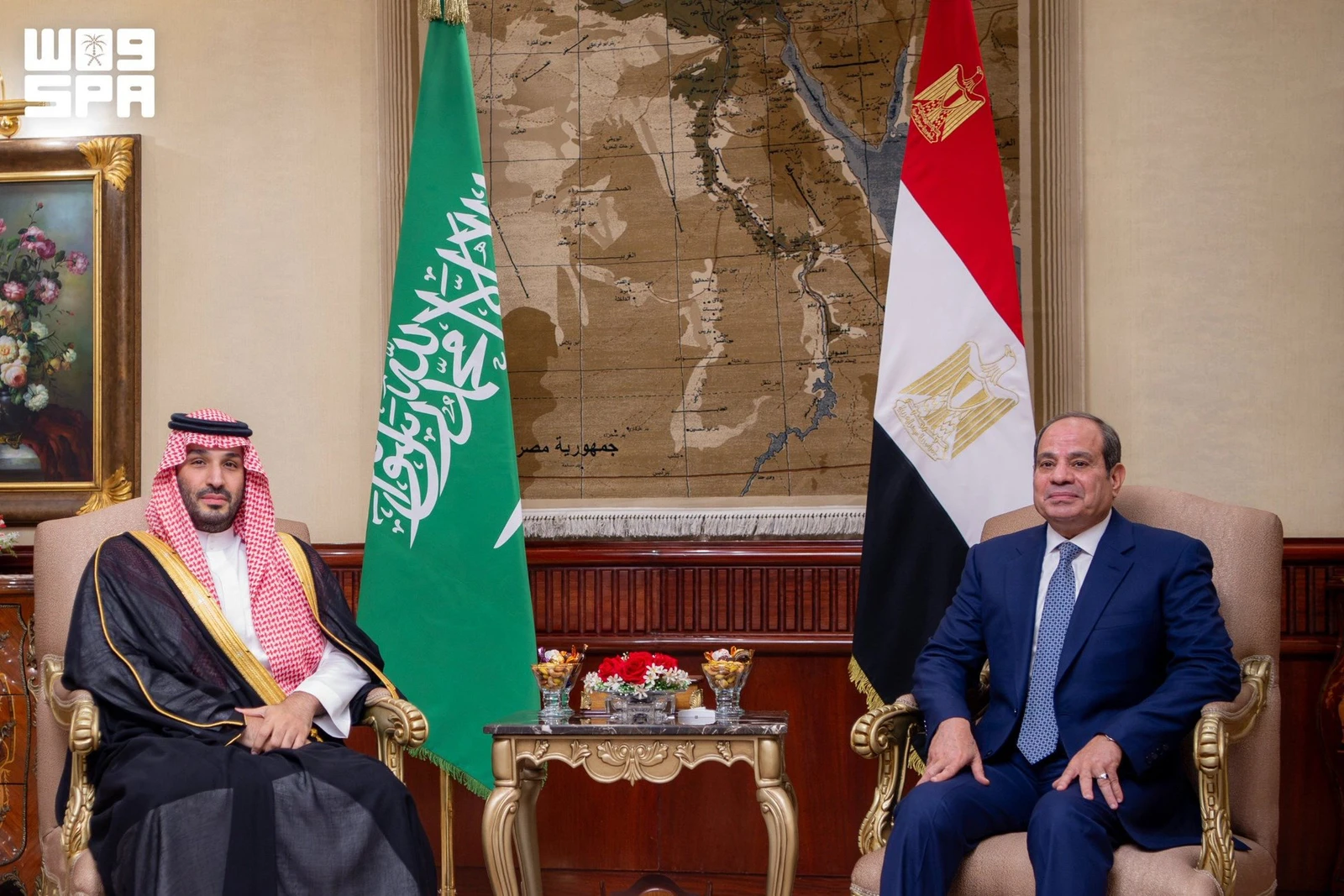

Egypt’s decision to stand with Saudi Arabia and declare its readiness to provide all necessary support to defend the Kingdom’s security, territorial integrity and resources should be welcomed not just as an expression of solidarity between two influential Arab states. It should serve as a call to action for the entire Arab world.
At a time when regional security is increasingly threatened by armed groups and escalating external interference, Cairo’s position must not be treated as an exception. It should be a catalyst for other Arab capitals to translate their commitments to collective security into practical action.
The legal foundation for such solidarity already exists. The Treaty of Joint Defense and Economic Cooperation Between the States of the Arab League, signed on June 17, 1950, establishes a clear principle in Article 2: “The contracting states consider any (act of) armed aggression made against any one or more of them or their armed forces, to be directed against them all.” The article further commits signatories to assist the state or states under attack without delay and to take all available measures, including the use of armed force, to repel the aggression and restore security and peace.
This is not merely diplomatic language intended to adorn Arab summit communiques. It is a collective security commitment designed to ensure that no Arab state stands alone when confronted with armed aggression. Article 3 reinforces this principle by requiring consultations when the territorial integrity, independence or security of a signatory is threatened and the coordination of defensive measures when war or an international emergency arises.
Egypt is demonstrating the spirit of a regional security framework that Arab governments themselves established
Hani Hazaimeh
The distinction matters. When Egypt offers to support Saudi Arabia militarily, it is not simply extending a bilateral favor or making a discretionary political gesture. It is demonstrating the spirit of a regional security framework that Arab governments themselves established. The same principle must apply to every other signatory: the security of an Arab state cannot be treated as an isolated national concern when the consequences of its destabilization extend across the region.
The present circumstances make this obligation particularly urgent. Saudi Arabia faces threats from the Iran-aligned Houthi movement, whose attacks have placed the Kingdom’s security at risk and raised wider concerns about regional stability and the safety of vital maritime routes. Such threats cannot be dismissed as an exclusively Saudi problem or confined to the complexities of Yemen’s internal conflict. Their implications extend to the security of neighboring states, the stability of the Red Sea and the protection of international commerce.
Egypt’s announcement that it stands fully with Saudi Arabia, coupled with its readiness to provide necessary support, therefore carries significance beyond the immediate bilateral relationship. It signals that threats to a major Arab state must be understood within the wider framework of Arab national security. Cairo’s willingness to act should encourage other governments to examine what their own commitments require in practice.
History offers compelling examples of what collective action can achieve. Following Iraq’s invasion of Kuwait in August 1990, Arab states joined the international coalition to defend Saudi Arabia against the possibility of further Iraqi aggression and to liberate Kuwait from occupation. Egypt deployed troops to Saudi Arabia and subsequently contributed substantial forces to the campaign to liberate Kuwait. Syria and other Arab countries also participated in the military effort, demonstrating that political differences need not prevent cooperation when the sovereignty and security of Arab states are at stake.
Collective defense cannot be invoked only during emergencies and forgotten once the immediate crisis subsides
Hani Hazaimeh
That experience remains instructive. The defense of Saudi Arabia was not viewed solely through the lens of Saudi national security; it was recognized as part of a wider effort to prevent aggression from redrawing the region’s political map by force. The liberation of Kuwait likewise demonstrated the importance of translating solidarity into tangible commitments.
The 2015 military intervention in Yemen provides another example of regional cooperation, with Saudi Arabia and Egypt joining a coalition supported by several other Arab states. The operation illustrated both the capacity of Arab countries to coordinate militarily and the strategic importance of regional participation when developments in one country threaten the security of its neighbors. It also offers a reminder that military action must be accompanied by a credible political strategy if it is to produce lasting stability.
These precedents should inform the present moment but the objective should go beyond repeating earlier coalitions. Arab governments need to establish a more dependable system of consultation, intelligence sharing, defensive coordination and practical assistance. Collective defense cannot remain a principle invoked only during emergencies and forgotten once the immediate crisis subsides.
Nor should every Arab state be expected to contribute in precisely the same manner. Military capabilities, geographic circumstances and national resources differ. Some countries may provide defensive systems, intelligence, logistical support or maritime protection; others may be able to offer direct military assistance. What matters is that each government makes a meaningful contribution consistent with its capabilities, applicable legal obligations and the requirements of collective security.
Such cooperation must also be grounded in international law and clear defensive objectives. The purpose is not to encourage an uncontrolled regional confrontation or close the door to diplomacy. It is to ensure that diplomatic efforts are not undermined by the belief that armed aggression can continue without a coordinated response. Deterrence and diplomacy should reinforce one another: credible collective action can reduce incentives for aggression while creating more favorable conditions for political solutions.
For the Arab League, this is an opportunity to demonstrate that its collective defense commitments remain relevant. The organization cannot credibly claim to safeguard Arab national security if its members respond to threats against one another primarily through statements of concern. Its treaty framework provides a basis for consultation and coordinated action; the challenge is to give that framework practical effect.
Egypt and Saudi Arabia, with their considerable political weight and long-standing strategic relationship, can help drive this effort. But responsibility cannot rest on Cairo and Riyadh alone. Other Arab capitals must recognize that hesitation today could weaken the security guarantees they may themselves need tomorrow. A regional system in which every state waits for another to act is not collective security, it is an invitation for adversaries to exploit divisions.
Ultimately, the question is not whether Egypt has established a precedent by offering to stand militarily with Saudi Arabia. The more important question is why such solidarity should be regarded as exceptional in the first place. The 1950 treaty already established the principle that armed aggression against one signatory is a matter for all.
Egypt’s position should therefore become a motive for wider Arab action, not an isolated example to be applauded and then forgotten.
Hani Hazaimeh is a senior editor based in Amman.
X: @hanihazaimeh


