

The war in Syria may be continuing, but there are now more and more discussions about post-conflict reconstruction, with questions around who will fund it and who will benefit.
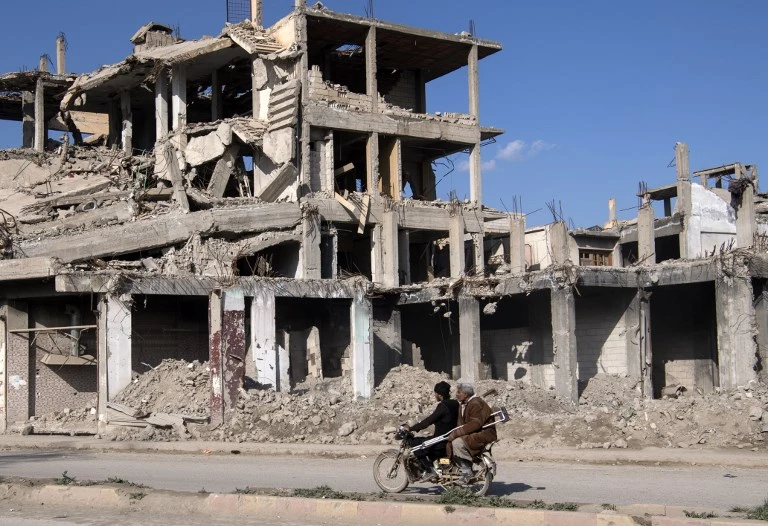
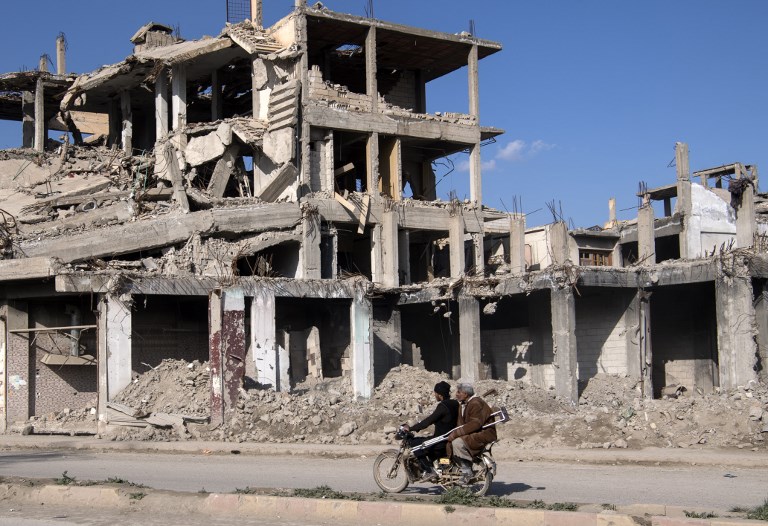
The war has caused extensive destruction throughout Syria, damaging or destroying many schools, homes and roads. It has eroded Syria’s water, electricity and agricultural infrastructure. Health care facilities were particularly targeted in the war and have suffered extensive damage. The cost of reconstruction has been estimated to be around $250 billion, although Syrian government estimates go as high as $400 billion.
The unfortunate reality is that funds spent on reconstruction in government-controlled areas are very likely to benefit the Assad regime, which played a major role in the country’s destruction.
Several countries are keen to assist in rebuilding Syria — and to take home the economic benefits of doing so. Syrian government officials have repeatedly said that reconstruction contracts would only go to companies from countries that have been friendly to the Assad regime, notably Russia and Iran. Both countries have signed a number of economic cooperation agreements and advance contracts with the Syrian government in preparation for rebuilding. The Assad regime owes its survival to Russian and Iranian support, and Moscow and Tehran expect to receive thanks in the form of post-war economic benefits. Over the course of the war, Iran has made moves to ensure that Iranian firms have a strong foothold in Syria’s economy, and the multilateral sanctions on the Syrian government are less of a problem for Iran than for other countries.
Some neighboring countries also hope to benefit. Turkey’s construction sector has been struggling in the wake of the country’s 2018 economic crisis, and participating in rebuilding in Syria could be a boon to Turkish firms. Turkish companies are reportedly involved in some reconstruction in the chunk of territory in northern Syria that Turkish forces control. However, the Ankara government and the Assad regime are not on good terms. Lebanese firms also hope to participate, though complicated relations with the Syrian government and sectarian communities could be an obstacle.
However, none of these countries have the extensive funds that will be required to rebuild Syria. The Russian and Iranian governments are hoping that other countries will pour money into Syria, allowing their businesses to benefit. In 2018, Russian officials tried to persuade the US, European countries and Arab Gulf states to fund reconstruction in Syria, but their efforts have been unsuccessful so far.
It is difficult to ask US or European taxpayers to spend money to help Assad rebuild what his regime often destroyed.
Kerry Boyd Anderson
Under the current circumstances, the US is very unlikely to provide significant funding that could go to regime-held areas. President Donald Trump’s “America first” approach to foreign policy is particularly averse to spending US money abroad. Trump and other officials have been clear that countries closer to Syria should fund its reconstruction. Last year, Trump even halted US funding for stabilization efforts in areas where US allies had defeated Daesh. Furthermore, official US policy states that Washington will not provide reconstruction funds unless there is a UN-approved political transition in Syria.
European governments are also reluctant to provide reconstruction funds to areas under the Assad regime’s control. Key European leaders have said they will not invest until a political transition is underway in Syria. They might be more open to the idea that investing in Syria would allow refugees to return home and alleviate migration pressure on Europe, but many analysts warn that the Assad regime would likely pursue reconstruction in ways that are not conducive to refugee return.
Western governments have several objections to providing funds that would help the Assad regime. They do not want to provide benefits to a regime that has repeatedly violated international norms, such as using chemical weapons. It is difficult to ask US or European taxpayers to spend money to help Assad rebuild what his regime often destroyed. Western governments are not keen to see their money benefit Russian or Iranian firms either. Furthermore, at a time of nationalist politics, Western governments are, in general, reluctant to spend large sums of money abroad.
Some leaders — including Russian officials and Trump — have expressed the hope that Arab Gulf states will provide funds for reconstruction in Syria. Some such states, along with Western allies, have already provided funds for initial reconstruction in post-Daesh areas that are not held by the Syrian government. However, many Arab Gulf states are reluctant to fund the Assad regime and especially do not want reconstruction to benefit Iran. Many have other domestic and foreign policy priorities, including reconstruction in Yemen.
China might be the one actor with the resources and interests to significantly fund reconstruction in Syria. It has already promised some funds and loans, though in limited amounts. If China chooses to provide significant funding, Beijing will very likely want Chinese firms to win many of the contracts. However, given China’s many other foreign policy priorities, it seems unlikely that Beijing would provide the extent of funding necessary to fully rebuild.
Without clear sources of funding, any benefits from reconstruction will be limited. The Syrian people are the likely losers. Without extensive reconstruction funds, it will be difficult for displaced people to return and for Syrians to rebuild their lives. However, even if funds are forthcoming, there is a very high risk that the Syrian and foreign companies who benefit will have a low bar for transparency, and many funds that are badly needed in Syria would likely end up elsewhere.
- Kerry Boyd Anderson is a writer and political risk consultant with more than 14 years’ experience as a professional analyst of international security issues and Middle East political and business risk. Twitter: @KBAresearch


