

When it comes to agreements between states, security or economic deals naturally attract the most attention. Those in other areas, such as education, which is a powerful instrument of soft power, rarely generate the same levels of interest.
However, they should. After all, while security and economic deals are arrangements between states, educational exchanges are arrangements between peoples. They create bonds at the societal level and can have a much more enduring effect on bilateral relationships.
Just a few years ago, after Turkiye normalized relations with some Gulf states and Egypt, I wrote in this column about how both sides could move beyond the traditional limits of their relationship.
I argued that if a new era in Turkish-Gulf relations were to emerge, it would need to extend beyond politics and trade to include a focus on social, cultural, educational, and media dimensions as well. Such a holistic approach, I suggested, would help create more lasting and meaningful benefits for both sides, both on the state and public levels.
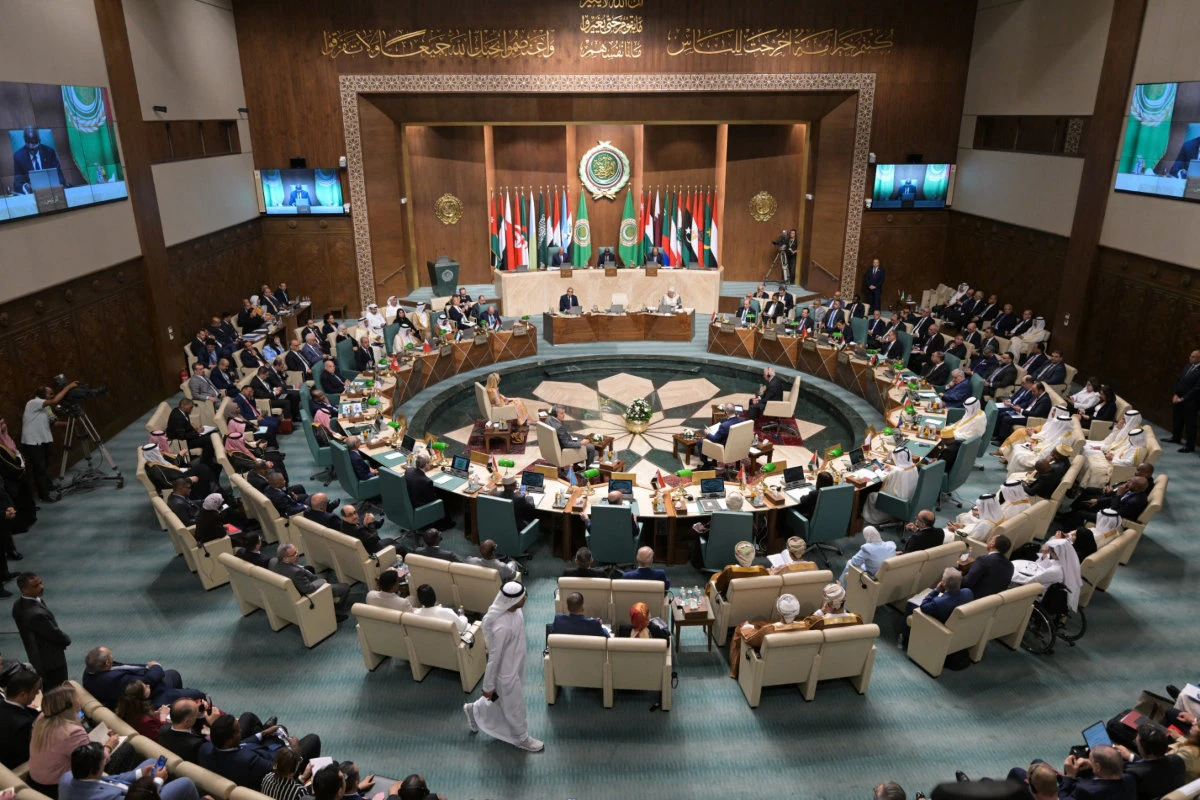
Looking back, I can see that significant steps have been taken in this direction over the past few years. Just last week, the president of Turkiye’s Council of Higher Education held a meeting in Ankara with ambassadors from the Arab League states. The council’s website announced it as marking a “new era of higher education cooperation between Turkiye and the Arab world.”
The aim of this consultation meeting was to launch an institutionalized era of cooperation in the fields of higher education, science, and research. It is envisioned that a Turkiye-Arab Higher Education Forum would take place at least every two years, with the venue alternating between Turkiye and an Arab League member state. In addition, a joint working group would prepare an action plan for a comprehensive framework for cooperation.
In fact, Turkiye and Arab states were already laying the groundwork for deeper cooperation in higher education more than a decade ago. In May 2014, a cooperation plan was agreed during the first Turkish-Arab Congress on Higher Education, which took place in Istanbul.
Educational exchanges create bonds at the societal level.Dr. Sinem Cengiz
The plan included the establishment of a Turkish-Arab university network, the mutual recognition of academic degrees, and greater mobility and exchange opportunities for students and academics. However, it stalled due to several developments in Turkish-Arab relations in the post-Arab Spring era.
In fact, in 2010, just a few months before the uprisings began, Amr Moussa, at the time the secretary-general of the Arab League, proposed an expansion of the organization to include Turkiye — a friendly neighboring major power with significant historical, cultural, and economic ties to the Arab world — in a strategic dialogue. The proposal was postponed and never realized because in the coming years the Arab uprisings severely tested Turkiye’s regional policy.
Against this backdrop, education was just one of the many areas of cooperation that stalled as a result of the developments. The current initiative is therefore not only important for what it aims to achieve but also for what it represents: it is an effort to revive and institutionalize many forms of cooperation that were put on hold in the post-Arab Spring era.
During the recent consultation meeting, the representatives said: “Every new bridge we build in higher education is also a long-term investment in the shared future of our young people.” This approach advocates the process of “winning hearts and minds” as a policy agenda to foster people-to-people interactions and positively shape societal perceptions.
Turkiye’s relations with the Arab states have developed significantly in recent years, with trade volumes rising, cooperation in the defense industry and security sector deepening, and political alignment growing. However, the same momentum and pace have not been so evident in other areas, particularly those regarded as “soft” sectors, such as culture and education.
Now, Turkiye and the Arab states together boast several prominent universities, research centers and, most importantly, qualified scholars and students who can build a shared scientific and knowledge ecosystem. Such an ecosystem, if effectively implemented and developed, has a high potential to address several of the challenges that these countries face, such as water scarcity, climate change, energy and connectivity, and artificial intelligence.
Building this shared ecosystem will require more than commitment; it will require concrete action driven by a common vision.
For instance, Turkiye and Syria have, since the fall of the Assad regime in December 2024, signed several agreements to enhance bilateral relations. One of them was a cooperation agreement covering higher education, scientific research, and technology. They have signed a memorandum of understanding for the establishment of the Syria-Turkiye University in Damascus. This joint effort also aims to establish an annual Turkiye-Syria Universities Forum, implementing a program encompassing universities in both countries.
This shows that Turkiye and Syria aim to go beyond political and security dimensions in their relations, and have included education as a key pillar in the building of sustainable relations.
I believe the current moment offers an important opportunity to deepen this joint commitment to educational cooperation. The growing political alignment between Turkiye and the Arab states, together with growing interest among scholars and students in understanding and analyzing the evolving dynamics of these relations, creates a strong motivation for closer scholarly engagement.
It is, therefore, crucial to maintain this momentum and turn these commitments into lasting and meaningful forms of cooperation.
If Turkiye and the Arab world are able to develop a shared ecosystem for knowledge, this will not only promote knowledge itself but also bring Turkish and Arab societies closer to one another, enabling Turks to better understand the Arab world and vice versa. We need this more than any other form of cooperation.
• Dr. Sinem Cengiz is a Turkish political analyst who specializes in Turkiye’s relations with the Middle East. X: @SinemCngz


