An American photographer has published a book about the life of a traditional desert tribe in Saudi Arabia.
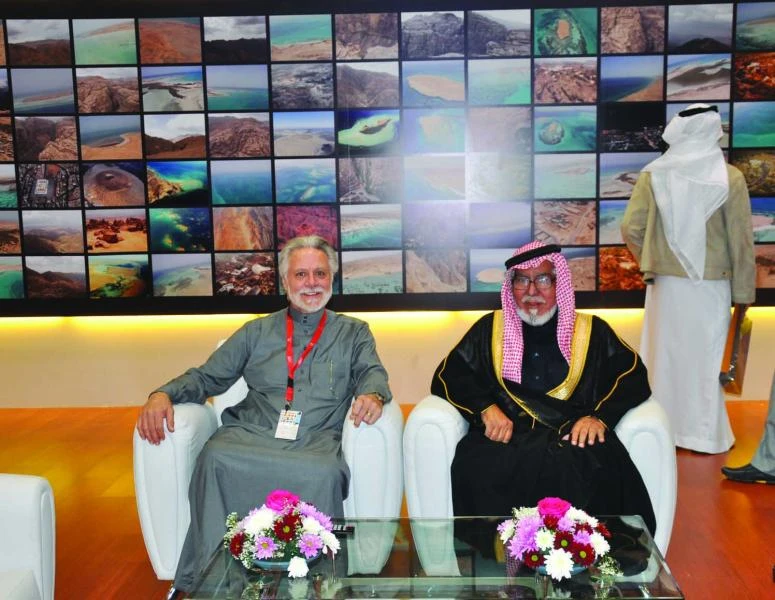
New York photographer Wayne Eastep recently spoke about his book "Bedouins" at the Saudi photography exhibition “Colors of Saudi Arabia” organized by the Saudi Commission for Tourism and Antiquities (SCTA) that concluded here this week.
The book has received multiple awards for best photography, best design and best book. It also won a Golden Award for the most outstanding publication. Eastep has now become an adviser to several international photographers.
Eastep, who is also a writer and documentary filmmaker, holds master's degrees in science, philosophy, religion and culture. He is also adviser and coach for diplomats in the field of history and culture of Central Asia.
He has participated in several films for the National Geographic channel, including a documentary on camel racing in Saudi Arabia. He has also contributed photographs to advertising agencies.
Talking about his experiences, Eastep said: “I came to the Kingdom in 1981 to work within the diplomatic community to document the ancient life of Saudis." He managed to get a visa and stayed in the country at his own expense.
He said he met a local Saudi, Sheikh Nasser Aerk, who introduced him to the Al-Umrah tribe. "He took me into the desert and did all he could to ensure my safety. He helped me get close to the people of the region. Everyone was open and receptive to me and my wife. Everyone kept telling us about their stories and how they spent their lives."
The Al-Umrah tribe agreed to let him document their lives in the desert, but with conditions not to take photographs of the tribe’s women, not to print anything without their consent, to live as they did, and not to bring an interpreter.
"I accepted the conditions despite the difficulty, but I found that it was actually good for me." He said that his wife, a well-known actress from New York, agreed to participate in the project.
She wore a veil like other women of the tribe. “We slept in a tent and moved around by camel, drank camel milk and learned a little Arabic.
He discovered that the tribe lived in difficult conditions, in stark contrast to the romantic views of desert life. "My goal was to learn from the Bedouins. I was confident that they had a lot to teach us.”
He worked on the book for three years, with four-month breaks periodically to travel to New York. "After we finished the book, we completed a film for National Geographic, and an investigative documentary for a major magazine in America that was displayed later at the Smithsonian Museum.
He said more than 40,000 copies of the book were printed both in Arabic and English and have been distributed to the media, politicians and public libraries. It won several awards in the United Kingdom and the United States.
"Sheikh Nasser and I are planning next year with the help and support of Prince Sultan bin Salman, the president of the Saudi Commission for Tourism and Antiquities, to produce a joint book about the Kingdom," Eastep said.
Life of desert dwellers portrayed in new book